Range Map
Origin: → · two fingers to move map
Payload vs. Range
Fuel on board
Cargo
nm
Range
Trip Preview
Name a destination in the map header above and this becomes your trip: time en route, what you burn, what it costs, and whether you get there without stopping — at the load you have set.
→
Over max payload by . At this load it cannot lift a single occupant. Please adjust your payload inputs.
We do not have a cruise speed on file for this aircraft, so there is no honest time or cost to give you for this leg.
En route
Fuel burned
Direct cost
Fuel cost
Tanks run dry about past before at this burn.
Mission Profile
- High-Altitude
- Pressurization
- Multi-Engine
- Instrument
.jpg)
Estimated Ownership Costs
Create a free account to view or request ownership cost data.
About the Cessna 500/Citation I
Type certificated 1971
Overview
The Cessna Citation I (Model 500) is the foundational light jet that brought turbofan-powered business flying within reach of operators stepping up from cabin-class twins and pressurised turboprops. Affectionately (and mockingly) called the Slowtation for its straight-wing design and modest cruise speeds, the Citation I rewards owners with forgiving handling, short-field access, and an airframe with no published life limit. Three principal variants share the type: the original 500 (1971 to 1976, JT15D-1), the upgraded Citation I (1976+, JT15D-1A), and the 501 Citation I/SP (1977+), a single-pilot-certified variant that opened jet ownership to owner-operators who could not justify a two-pilot crew.
For the GA buyer, the Citation I is an accessible turbofan path into cabin-class jet ownership. The Pratt & Whitney JT15D family is parts-supported and well understood, and the airframe’s docile manners make it a viable first-jet transition for pilots stepping up from high-performance turboprops, at a direct operating cost near 1,625 USD per hour. The economic trap is engine overhaul: JT15D hot-section and full-overhaul events are a major capital cost, so a clean engine status at pre-buy carries outsized weight in the value calculus.
Key Features for GA Buyers
- Short field capability. The straight-wing design allows access to regional airports with runways under 3,500 ft, often unreachable by faster swept-wing jets.
- Docile handling. Approach speeds in the 90 to 100 KIAS band and straightforward flight characteristics make for an approachable first-jet transition for pilots stepping up from high-performance turboprops.
- No airframe life limit. Unlike many modern jets, the Citation I carries no structural life limit. A well-maintained airframe can remain in service indefinitely.
- Single-pilot certification on the I/SP. The 501 Citation I/SP variant is type-certificated for single-pilot operations, opening owner-flown turbojet operations to pilots without a second crew member.
Trade-offs
- Speed. A max cruise near 357 KTAS at FL350 is meaningfully slower than swept-wing contemporaries; the Slowtation nickname is earned.
- Engine overhaul economics. The JT15D-1A turbofans are reliable and parts-supported, but a hot-section or full-overhaul event is a significant capital cost that dominates the ownership budget.
- Payload and range. Range is limited to roughly 1,300 nm with reserves, and a full cabin significantly restricts fuel and trip range.
See Also
- Cessna Citation II – direct step-up in cabin and range, same straight-wing family. Compare
- Cessna Citation V – the larger Model 560 family (V, Ultra, Encore), a further step up in performance and avionics. Compare
- Cessna Citation Mustang – modern entry-level Citation, single-pilot certified from the start. Compare
- Beechcraft King Air 90 – the dominant cabin-class turboprop alternative for owner-operators in the same mission band. Compare
- Piper Cheyenne I – pressurised turboprop competitor, similar vintage and mission profile. Compare
Technical Specifications
Dimensions & Weights
- Height
- 14 ft
- Length
- 44 ft
- Parking area (ft²2)
- 2,769 ft²
- Max Takeoff Weight
- 11,850 lbs
- Max Landing Weight
- 11,350 lbs
- Useful Load
- 4,597 lbs
- Fuel Capacity
- Source: FAA Type Certificate Data Sheet 564 gal
Performance
- Cruise Speed
- 357 KTAS
- Never-Exceed (VNE)
- Source: FAA Type Certificate Data Sheet 260 KIAS
- Max Structural Cruise (VNO)
- Source: FAA Type Certificate Data Sheet 260 KIAS
- Approach Speed
- 91 KIAS
- Stall, Clean (VS1)
- 85 KIAS
- Range
- 1325 NM
- Service Ceiling
- 41,000 ft
- Rate of Climb
- 800 - 2719 fpm
- Takeoff over 50 ft obstacle
- 2,930 ft
- Landing over 50 ft obstacle
- 2,300 ft
Engines
Log in to view or request powerplant data.
Sources
Where the figures on this page come from. Cessna 500/Citation I specifications are traced to published references; estimated values are flagged inline next to the figure.
Similar to the Cessna 500/Citation I
Similar TurbofansCessna 501 Citation I/SP
Cessna Citation CJ2
Cessna CitationJet CJ1
Embraer Phenom 100
Cessna Citation M2
Cessna Citation II/SP
Honda HA-420 Elite II
Cessna Citation CJ3
Hawker Beechcraft Premier IA
Learjet 40
Dassault Falcon/Mystère 10
Compare the Cessna 500/Citation I to other aircraft
External Media
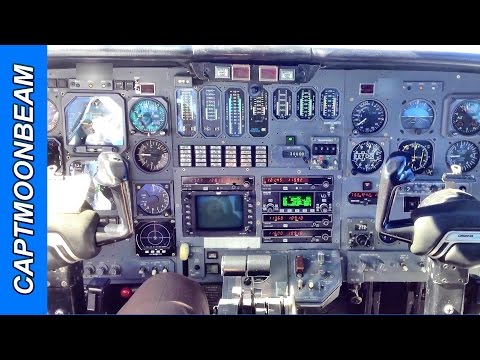

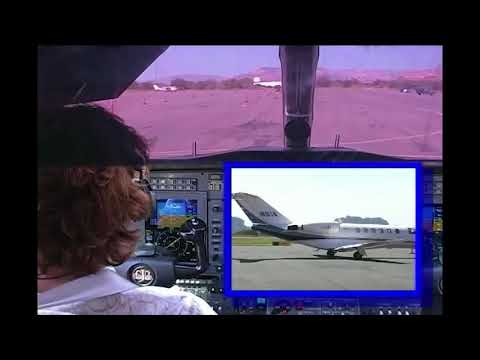
Articles and other links
-
Cessna Citation I - Wikipedia en.wikipedia.org
-
Cessna Citation I - Business Jet Traveler www.bjtonline.com
-
CITATION 500 Specifications, Performance, and Range - Globalair.com www.globalair.com
-
Citation 500 - Jet Advisors jetadvisors.com
-
CESSNA 500 Citation | SKYbrary Aviation Safety skybrary.aero
-
PlanePhD: Cessna Citation I 500 operating cost wizard planephd.com