Range Map
Origin: → · two fingers to move map
Payload vs. Range
Fuel on board
Cargo
nm
Range
Trip Preview
Name a destination in the map header above and this becomes your trip: time en route, what you burn, what it costs, and whether you get there without stopping — at the load you have set.
→
Over max payload by . At this load it cannot lift a single occupant. Please adjust your payload inputs.
We do not have a cruise speed on file for this aircraft, so there is no honest time or cost to give you for this leg.
En route
Fuel burned
Direct cost
Fuel cost
Tanks run dry about past before at this burn.
Mission Profile
- High-Altitude
- Pressurization
- Multi-Engine
- Instrument
_(1-26-2023).jpg)
Estimated Ownership Costs
Create a free account to view or request ownership cost data.
About the Learjet 40
Type certificated 2003
Overview
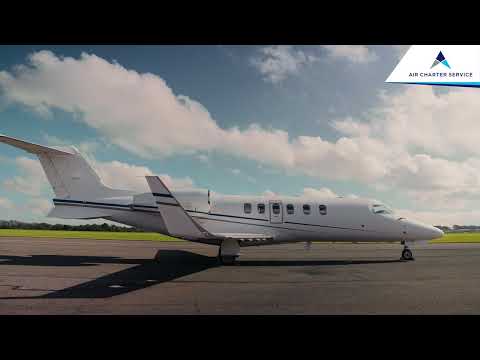
The Learjet 40 entered service in 2004 as the shorter, lighter member of the Learjet 45 family and the successor to the Learjet 31A. It is a Model 45 with roughly two feet removed from the fuselage and about 100 gallons less fuel, sharing the same flat-floor cross-section, Honeywell TFE731-20AR engines rated 3,500 lbf each, and FAR Part 25 transport-category certification. The uprated 40XR added thrust margin for hot-and-high fields; both carry the Pro Line avionics that the later G5000-equipped Learjet 70 would replace.
The 40 suits a buyer who values Learjet speed and a 51,000-foot ceiling over cabin space and is willing to fly the smallest, least expensive airframe in the family to get the lowest entry price. It seats one fewer than the Learjet 45 and carries about 100 gallons less fuel, so range runs near 1,700 nm and the cabin tightens with a full load. The honest competition is the single-pilot light jets: a Cessna Citation CJ4 or Citation Encore will fly the same missions more cheaply and without a second required crew member, and the 40 earns its keep only for an owner who specifically wants the altitude, the cruise speed, and the Learjet badge.
Key Features for GA Buyers
- High-altitude capability. A 51,000-foot service ceiling and Mach 0.81 cruise let the Lear 40 fly above most commercial traffic and weather.
- Cabin comfort. The flat-floor cabin with no spar intrusion offers a cross-section larger than many light-jet competitors, putting mid-size comfort in the light-jet bracket.
- Part 25 safety. Built to FAR Part 25 transport-category standards, including redundant systems not always found at this weight class.
Trade-offs
- Range vs. payload. While capable of approximately 1,700 nm, filling the seats significantly reduces range. The Lear 40 carries about 100 gallons less fuel than the Lear 45.
- Climb performance. Initial climb rate of approximately 2,800 fpm is modest compared to the legacy Learjet 35 and 20-series figures, primarily due to the heavier, robust airframe.
- Two-pilot certification. Like the rest of the Learjet line, the 40 is type-certificated for two pilots, so owner-operator budgets must carry a second crew member or a contract pilot, a real cost difference against the single-pilot light jets it competes with.
See Also
- Learjet 45 – Direct platform predecessor; the Lear 40 is a fuselage-shortened Lear 45. Compare
- Learjet 31 – Prior-generation light Learjet on the typical step-up path. Compare
- Cessna Citation CJ4 – Closest direct competitor in the upper-light-jet bracket on speed, range, and payload. Compare
- Cessna Citation V / Ultra / Encore – Mid-light Citation cross-shopped on cabin and operating cost. Compare
- Hawker 800XP – Older mid-size cousin frequently cross-shopped at the upper end of the light-jet budget. Compare
Technical Specifications
Dimensions & Weights
- Height
- 14 ft
- Length
- 56 ft
- Parking area (ft²2)
- 3,497 ft²
- Max Takeoff Weight
- 20,350 lbs
- Max Landing Weight
- 19,200 lbs
- Useful Load
- 7,610 lbs
- Fuel Capacity
- 802 gal
Performance
- Cruise Speed
- 464 KTAS
- Never-Exceed (VNE)
- Source: FAA Type Certificate Data Sheet 330 KIAS
- Max Structural Cruise (VNO)
- Source: FAA Type Certificate Data Sheet 330 KIAS
- Approach Speed
- 123 KIAS
- Stall, Clean (VS1)
- 119 KIAS
- Range
- 1692 NM
- Service Ceiling
- 51,000 ft
- Rate of Climb
- 710 - 2820 fpm
- Takeoff over 50 ft obstacle
- 4,330 ft
- Landing over 50 ft obstacle
- 2,324 ft
Engines
Log in to view or request powerplant data.
Sources
Where the figures on this page come from. Learjet 40 specifications are traced to published references; estimated values are flagged inline next to the figure.
Similar to the Learjet 40
Similar TurbofansGulfstream G100
Learjet 35/36
Dassault Falcon/Mystère 20
Learjet 55
Learjet 45
Gulfstream G150
IAI 1124 Westwind
Hawker Beechcraft 400XP
Gulfstream G200
Learjet 70
Learjet 60
Learjet 75
Learjet 31
Dassault Falcon/Mystère 10
Hawker 800XP
Cessna Citation CJ3
Cessna Citation Latitude
North American Rockwell Sabre 40/60
Embraer Phenom 300
Learjet 25
North American Rockwell Sabre 75
Dassault Falcon 2000
Cessna 500/Citation I
Dassault Falcon 2000S
Cessna Citation CJ4
Embraer Legacy 450
Cessna Citation II/SP
Dassault Falcon 2000LXS
Compare the Learjet 40 to other aircraft