Range Map
• nm at current load
• click map to move • two fingers to move map
Payload vs. Range
gal
Fuel on board
lbs
Extra weight
nm
Range
Mission Profile
- High-Altitude
- Pressurization
- Multi-Engine
- Instrument
Estimated Ownership Costs
Create a free account to view or request ownership cost data.
About the Cessna 501 Citation I/SP
Type certificated 1977
Overview
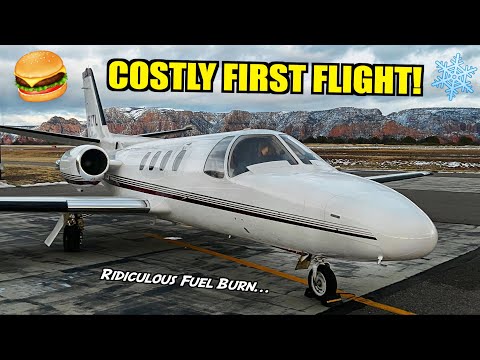
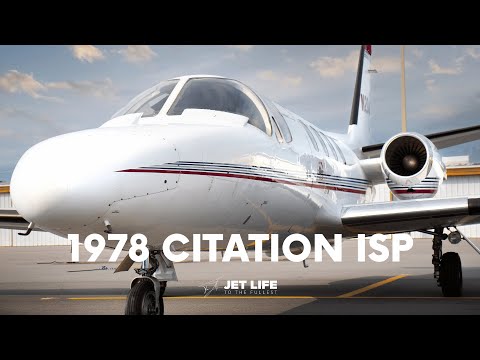
The Cessna 501 Citation I/SP is the single-pilot-certificated version of the original Citation I (Model 500), engineered to let owner-operators step up from high-performance twins and turboprops into a turbofan jet without a required second-in-command. It is mechanically the Model 500 airframe: same straight wing, same Pratt & Whitney Canada JT15D-1A/-1B engines, same 11,850 lb maximum weight, certificated under its own FAA type certificate (A27CE) in January 1977. It shares the family’s Slowtation reputation and rewards owners with docile handling, short-field access, and an airframe with no published fatigue life limit.
Key Features for GA Buyers
- Single-pilot certification. Unlike the two-pilot Model 500, the 501 is factory-certificated for single-pilot operation, cutting crew cost and scheduling friction for owner-flown turbofan operations, the most accessible path into jet ownership of its era.
- Simple, docile systems. Straight wings and straightforward mechanical systems give very forgiving stall behaviour and an easy transition from cabin-class turboprops, more King Air than swept-wing jet.
- Short-field flexibility. The wing extensions and thrust reversers standard on later Citation Is allow operation from runways as short as 3,000-3,500 ft.
- No airframe life limit. Like the rest of the family, the 501 airframe has no fatigue life limit, making it a sustainable long-term asset where corrosion is controlled.
Trade-offs
- Speed. Cruise in the mid-300s KTAS is meaningfully slower than swept-wing contemporaries; the Slowtation nickname is earned.
- Engine overhaul economics. The JT15D-1A/-1B turbofans are reliable and parts-supported, but a hot-section or full-overhaul cycle can approach the airframe’s acquisition cost.
- Legacy avionics. Many 501s still carry early panels and autopilots; modernising to current airspace compliance (e.g. Garmin G600/G700) is a common six-figure investment.
- Range with full seats. A full cabin trades heavily against fuel, often limiting practical range to roughly 500-600 nm.
See Also
- Cessna 500/Citation I – the two-pilot parent; mechanically identical airframe and engines. Compare
- Cessna Citation II/SP – the single-pilot Model 551, the larger straight-wing step-up sharing TCDS A27CE. Compare
- Cessna Citation Mustang – the modern entry-level Citation, single-pilot certified from the start. Compare
Technical Specifications
Dimensions & Weights
- Height
- 14.3 ft
- Length
- 43.5 ft
- Parking area (ft2)
- 2769.35 ft2
- Max Takeoff Weight
- 11,850 lbs
- Max Landing Weight
- 11,350 lbs
- Useful Load
- 4,597 lbs
- Fuel Capacity
- Source: FAA Type Certificate Data Sheet 564 gal
Performance
- Cruise Speed
- 345 KTAS
- Never-Exceed (VNE)
- Source: FAA Type Certificate Data Sheet 260 KIAS
- Max Structural Cruise (VNO)
- Source: FAA Type Certificate Data Sheet 260 KIAS
- Approach Speed
- 96 KIAS
- Stall, Clean (VS1)
- 82 KIAS
- Range
- 910 NM
- Service Ceiling
- 41,000 ft
- Rate of Climb
- 826 - 2719 fpm
- Takeoff over 50 ft obstacle
- 3,500 ft
- Landing ground roll
- 2,930 ft
Engines
Log in to view or request powerplant data.
Sources
Where the figures on this page come from. Cessna 501 Citation I/SP specifications are traced to published references; estimated values are flagged inline next to the figure.
Similar to the Cessna 501 Citation I/SP
Similar TurbofansCessna 500/Citation I
Cessna Citation CJ2
Cessna CitationJet CJ1
Embraer Phenom 100
Cessna Citation M2
Cessna Citation CJ3
Cessna Citation II/SP
Cessna Citation Mustang
Bombardier Challenger 300
See how the Cessna 501 Citation I/SP stacks up against similar aircraft