Range Map
Origin: → · two fingers to move map
Payload vs. Range
Fuel on board
Cargo
nm
Range
Trip Preview
Name a destination in the map header above and this becomes your trip: time en route, what you burn, what it costs, and whether you get there without stopping — at the load you have set.
→
Over max payload by . At this load it cannot lift a single occupant. Please adjust your payload inputs.
We do not have a cruise speed on file for this aircraft, so there is no honest time or cost to give you for this leg.
En route
Fuel burned
Direct cost
Fuel cost
Tanks run dry about past before at this burn.
Mission Profile
- High-Performance

Estimated Ownership Costs
Create a free account to view or request ownership cost data.
About the Cirrus SR22
Type certificated 2000
Overview
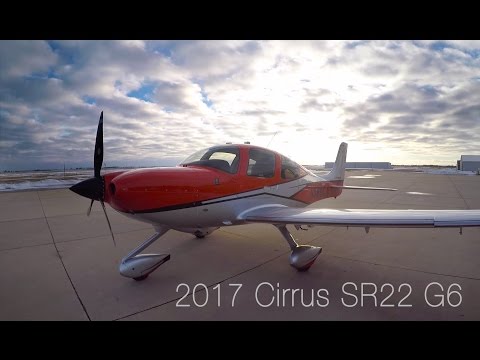
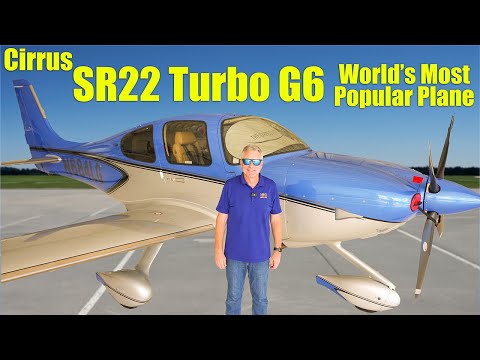
The Cirrus SR22 is the aeroplane that carried the Cirrus formula into the mainstream, and for close to two decades running it has been the best-selling piston single in general aviation. It is the full-size composite Cirrus: fixed gear, side-stick controls, a complete Garmin Perspective+ panel, and standard CAPS, built around a 310 hp normally aspirated Continental IO-550-N. That engine carries it to about 183 KTAS on 16 gph, and a 1,354 lb useful load on 92 gallons buys the four-seat, full-fuel trips the lighter SR20 cannot make. It is the middle of the line, between the entry SR20 and the turbocharged, known-ice SR22T.
For most owners the normally aspirated SR22 is the one to buy. It gives the brand’s safety case and avionics at the lowest running cost of any 310 hp Cirrus, and below about 12,000 feet it is both quicker and thriftier than the turbo. What it cannot do is altitude: with no turbocharger it bleeds power into the high teens, so a long trip through weather spends more time inside the weather than the SR22T would. It is the right aeroplane for fast, modern, four-seat flying at low-to-middle altitudes, for a pilot who does not routinely need to climb over weather or operate from high-elevation strips.
Key Features for GA Buyers
- CAPS parachute, standard. Every SR22 carries the whole-airframe parachute, the safety case that did as much as anything else to sell the type.
- Genuine four-seat range. About 183 KTAS, a 1,354 lb useful load, and 92 gallons turn full-fuel trips with passengers into routine flying rather than a paper figure.
- Glass and side-stick across the line. Cirrus Perspective+ by Garmin and the side-stick cockpit carry through every SR, backed by the largest used fleet and deepest type support in the class.
- The cheaper 310 hp Cirrus. The normally aspirated IO-550-N skips the turbocharger’s upkeep, and below the low teens it flies faster and burns less than the SR22T.
Trade-offs
- No turbocharger. Power falls away with altitude and the aeroplane tops out near 17,500 feet, so it cannot climb over weather the way the SR22T can.
- Fixed-gear speed ceiling. Fixed gear trades a few knots of cruise for simplicity; a retractable such as the Bonanza turns similar power into more speed.
- High-performance endorsement and Cirrus training. The 310 hp engine needs a high-performance endorsement, and insurers want Cirrus-standardised transition and recurrent training before they write a competitive policy.
- CAPS upkeep. The ten-year parachute repack and rocket replacement is a recurring Cirrus-specific bill that a conventional single does not carry.
See Also
- Cirrus SR22T – the turbocharged, known-ice-capable sibling for buyers who need high-altitude and weather capability. Compare
- Cirrus SR20 – the lower-power entry sibling on the same airframe, for training and local missions. Compare
- Beechcraft Bonanza A36 – the classic retractable-gear six-seat single buyers cross-shop for cabin, payload, and metal-airframe longevity. Compare
- Diamond DA50 RG – a newer composite five-seat single with retractable gear and a Jet-A diesel, the modern efficiency-first alternative. Compare
- Cirrus TRAC10 – Cirrus’s clean-sheet, purpose-built flight-school trainer; the SR22 is also offered in a TRAC22 training configuration. Compare
Technical Specifications
Dimensions & Weights
- Height
- 9 ft
- Length
- 26 ft
- Parking area (ft²2)
- 1,497 ft²
- Max Takeoff Weight
- 3,600 lbs
- Max Landing Weight
- 3,600 lbs
- Useful Load
- 1,354 lbs
- Fuel Capacity
- 92 gal
Performance
- Cruise Speed
- Source: third-party reference 183 KTAS
- Never-Exceed (VNE)
- Source: FAA Type Certificate Data Sheet 208 KIAS
- Max Structural Cruise (VNO)
- Source: FAA Type Certificate Data Sheet 179 KIAS
- Approach Speed
- 80 KIAS
- Stall, Clean (VS1)
- 69 KIAS
- Range
- 1169 NM
- Service Ceiling
- 17,500 ft
- Rate of Climb
- 1270 fpm
- Takeoff over 50 ft obstacle
- 1,868 ft
- Landing over 50 ft obstacle
- 2,535 ft
Engine
Log in to view or request powerplant data.
Sources
Where the figures on this page come from. Cirrus SR22 specifications are traced to published references; estimated values are flagged inline next to the figure.
-
FAA TCDS A00009CH (Cirrus SR20/SR22/SR22T), Section II Model SR22 — Airspeed Limits, S/N 3915 and subsequent (3,600 lb MTOW). The normally-aspirated SR22 limit is a flat value in the FAA IAS column (KIAS), not the altitude-banded KCAS of the turbo SR22T takeflightsandiego.com
-
Cirrus SR22 Pilot's Operating Handbook and FAA Approved Airplane Flight Manual (P/N 13772-006), Section 5 Performance Data, 'Landing Distance - Flaps 100%', p. 5-30 inflightpilottraining.com
-
AOPA Aircraft Guide — Cirrus SR22, performance specifications (cruise speed at 75% power, best economy) www.aopa.org
Similar to the Cirrus SR22
Similar PistonsCirrus SR22T
Lancair LC-40 Columbia 300
Cirrus SR20
Tecnam P2010 215 HP
Cessna 182T Skylane
Lancair LC-41 Columbia 400
Van's RV-10
Compare the Cirrus SR22 to other aircraft