Cirrus SR20
Piston single engine • Low Wing • Fixed gear
Range Map
• nm at current load
• click map to move • two fingers to move map
Payload vs. Range
Configure weights
Default: 190 lbs
Default: 30 lbs
gal
Fuel on board
lbs
Extra weight
nm
Range
Mission Profile
- High-Performance
Estimated Ownership Costs
About the Cirrus SR20
Type certificated 1998
Overview
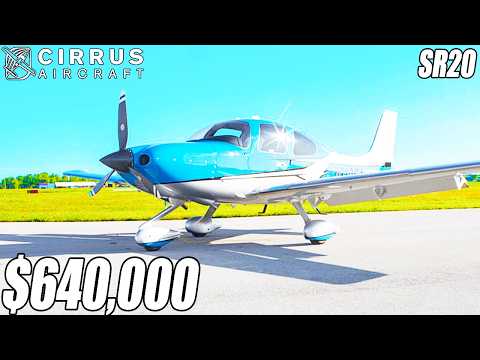
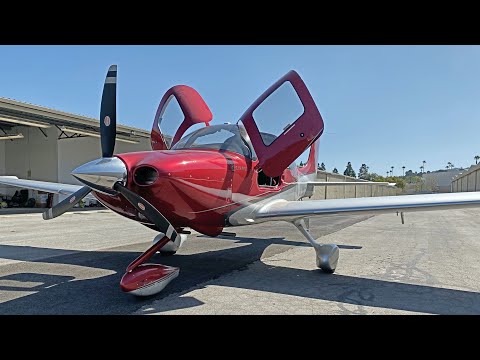
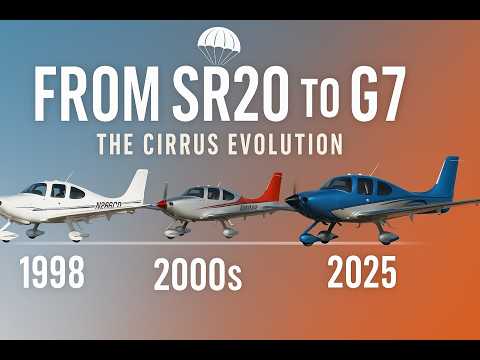
The Cirrus SR20 is the entry point to the Cirrus SR-series: a five-seat, composite, fixed-gear single that introduced the whole-airframe Cirrus Airframe Parachute System (CAPS), side-stick controls, and a full Garmin glass flight deck to a price-accessible trainer-and-tourer. Current G6 and G7 aircraft pair the 215 hp Lycoming IO-390-C3B6 with Cirrus Perspective+ avionics; the airframe is mechanically the SR22’s, so a pilot who learns in an SR20 steps into the more powerful SR22 or SR22T without relearning the cockpit. That shared DNA, the parachute, and benign handling are why flight academies including Lufthansa and United have used the type for ab-initio training.
What the SR20 trades away is speed and load. It cruises about 155 KTAS on 12.5 gph and carries a roughly 1,028-pound useful load and 56 gallons of fuel, so with four aboard its practical range is short and it is the slowest airplane in the SR line. For a buyer that profile is a feature: the lower power keeps insurance and fuel bills down while still delivering the modern avionics, composite cabin, and CAPS safety case that define the brand. Choose the SR20 when you want the Cirrus cockpit, parachute, and ramp presence as a trainer or a local-mission personal airplane, and you do not need the SR22’s cross-country speed and payload.
Key Features for GA Buyers
- CAPS parachute, standard. The whole-airframe Cirrus Airframe Parachute System is fitted to every SR20, the same ballistic-recovery safety backstop carried across the SR-series and the Vision Jet.
- Same cockpit as the SR22. Side-stick controls and Cirrus Perspective+ by Garmin are common across the SR line, so SR20 time transfers directly to the more capable SR22 and SR22T.
- Trainer economics. A 215 hp Lycoming IO-390 burning about 12.5 gph keeps fuel, insurance, and reserves the lowest in the SR family, which is why flight schools and step-up buyers favor it.
- Composite cabin comfort. The same wide, automotive-style composite cabin as the rest of the SR-series, unusual at the trainer end of the market.
Trade-offs
- Slowest in the line. About 155 KTAS cruise trails the SR22 by nearly 30 knots; the SR20 is a local and training airplane more than a long-leg tourer.
- Modest payload and range. A roughly 1,028-pound useful load and 56-gallon fuel capacity make full-seats-and-full-fuel a rare combination, and practical range with passengers is short.
- High-performance endorsement required. The 215 hp engine puts the current SR20 above the high-performance threshold, so it is not the no-endorsement primary trainer its 200 hp predecessors were.
- CAPS upkeep and Cirrus-specific training. The 10-year parachute repack and rocket replacement, plus the standardized transition training insurers require, are ownership costs a conventional trainer does not carry.
See Also
- Cirrus SR22 – the higher-power step up on the same airframe, the natural next airplane for an SR20 pilot. Compare
- Diamond DA40 XLT – the other modern composite four-seat single buyers cross-shop, without a parachute but with a strong safety record. Compare
- Cessna Skylane 182 – the traditional metal four-seat tourer cross-shopped for utility and parts depth over composite-and-glass modernity. Compare
- Diamond DA20 Katana – a lighter two-seat composite trainer for buyers whose mission is primary instruction rather than four-seat touring. Compare
Technical Specifications
Dimensions & Weights
- Height
- 8.92 ft
- Length
- 26.0 ft
- Parking area (ft2)
- 1498.23 ft2
- Max Takeoff Weight
- 3,150 lbs
- Max Landing Weight
- 3,150 lbs
- Useful Load
- 1,028 lbs
- Fuel Capacity
- 56 gal
Performance
- Cruise Speed
- Source: third-party reference 155 KTAS
- Never-Exceed (VNE)
- Source: FAA Type Certificate Data Sheet 201 KIAS
- Max Structural Cruise (VNO)
- Source: FAA Type Certificate Data Sheet 164 KIAS
- Approach Speed
- 78 KIAS
- Stall, Clean (VS1)
- 69 KIAS
- Range
- 627 NM
- Service Ceiling
- 17,500 ft
- Rate of Climb
- 781 fpm
- Takeoff over 50 ft obstacle
- 1,685 ft
- Landing ground roll
- 853 ft
Sources
Where the figures on this page come from. Cirrus SR20 specifications are traced to published references; estimated values are flagged inline next to the figure.
-
FAA TCDS A00009CH (Cirrus SR20/SR22/SR22T), Section I Model SR20 — Airspeed Limits, current high-serial 3,150 lb MTOW configuration (FAA IAS column; the SR20 limit is a flat KIAS value) takeflightsandiego.com
-
AOPA Aircraft Guide — Cirrus SR20, performance specifications (cruise speed at 75% power, best economy, std fuel with 45-min reserve) www.aopa.org
Similar to the Cirrus SR20
Similar PistonsCirrus SR22
Cirrus SR22T
Lancair LC-40 Columbia 300
Cessna Skylane 182
See how the Cirrus SR20 stacks up against similar aircraft
External Media
Report an inaccuracy
Spotted something wrong in the section? Tell us what's off and we'll review it.