Range Map
Origin: → · two fingers to move map
Payload vs. Range
Fuel on board
Cargo
nm
Range
Trip Preview
Name a destination in the map header above and this becomes your trip: time en route, what you burn, what it costs, and whether you get there without stopping — at the load you have set.
→
Over max payload by . At this load it cannot lift a single occupant. Please adjust your payload inputs.
We do not have a cruise speed on file for this aircraft, so there is no honest time or cost to give you for this leg.
En route
Fuel burned
Direct cost
Fuel cost
Tanks run dry about past before at this burn.
Mission Profile
.jpg)
Estimated Ownership Costs
Create a free account to view or request ownership cost data.
About the Diamond 20 Katana
Type certificated 1997
Overview
The Diamond DA20-C1 is a two-seat, low-wing composite single and one of the most popular dedicated training and sport aircraft of the modern era. This record represents the North American DA20-C1 Eclipse/Evolution, the Continental-powered model built in London, Ontario from 1998 onward and by far the most common DA20 on the used market. It descends from the original Austrian DV20 / DA20-A1 Katana of the early 1990s, which used an 80 hp Rotax 912; the C1 replaced that engine with the 125 hp Continental IO-240-B, adding the performance and the avgas simplicity North American flight schools wanted.
The airframe traces its lineage to the HK36 Super Dimona motor glider, and it shows. A slender composite wing, a T-tail, and a one-piece bubble canopy give the DA20 glider-like efficiency and visibility that few trainers match. It cruises at up to roughly 138 KTAS, burns about 5 to 6 gph at economy power, and carries a 584 lb useful load. With a clean stall of 42 KIAS, it is straightforward to fly and economical to operate, which has made it a staple for primary instruction, time-building, and weekend cross-country flying for one or two people.
Key Features for GA Buyers
-
Visibility and feel. The one-piece bubble canopy gives a panoramic view, and the pushrod-actuated center stick gives the airplane a light, responsive feel often described as fighter-like. It is an aircraft people enjoy flying, not only learning in.
-
Operating economy. At roughly 5 to 6 gph, the DA20-C1 is among the least expensive certified aircraft to operate. The fuel-injected IO-240-B runs on 100LL avgas, and the combination of low fuel burn and a long-lived airframe makes it a sensible time-builder.
-
Composite airframe. The glass-composite structure does not corrode and holds a clean, low-drag profile. It does shift the pre-purchase focus to finish, canopy, and control-surface condition, and it should be hangared or covered to protect the gelcoat from UV.
-
Sport-pilot eligible under MOSAIC. With a clean stall well below the sport-pilot threshold, the DA20-C1 qualifies for sport-pilot operation under the FAA’s MOSAIC light-sport rules. That broadens who can fly it and keeps it relevant as a sport aircraft, not only a trainer.
Trade-offs
- Two seats only. The DA20 carries two people and limited baggage. With a 584 lb useful load, you will often choose between full fuel and a second occupant with bags. Buyers who need to carry a family should look at the four-seat DA40 or a Cessna 172.
- Castering nosewheel. The free-castering nosewheel steers with differential braking rather than rudder-linked steering. It is a brief adjustment for pilots used to Cessnas or Pipers, and it makes tight ground handling a learned skill.
- Cockpit heat. The large canopy acts like a greenhouse in summer. A sunshade and good ventilation discipline are worth planning for.
- Limited cross-country and IFR utility. A light useful load and a small cabin make the DA20 a VFR and basic-IFR trainer rather than a serious instrument cross-country platform. Step up to a DA40 or a 172 for that mission.
- Rotax versus Continental. The earlier DA20-A1 Katana used an 80 hp Rotax 912 and is a distinct, slower airplane. This record and its costs reflect the 125 hp Continental C1, so confirm which engine a given airframe has before comparing prices or performance.
See Also
- Diamond DA20-A1 Katana – the original 80 hp Rotax-powered Katana; lighter, slower, mogas-friendly, and the C1’s direct ancestor. Compare
- Cessna 152 – the benchmark two-seat trainer; high-wing, simpler, slower, and ubiquitous in flight schools. Compare
- Piper Tomahawk – the other purpose-built two-seat trainer of its era; roomier cabin, more demanding stall behavior. Compare
- Grumman American AA-1 – a low-wing two-seater with similarly sporty handling; a touch faster but less forgiving. Compare
- Diamond DA40 – the four-seat Diamond step-up; the same composite design language with room for a family and real cross-country range. Compare
Featured in our buying guides
Technical Specifications
Dimensions & Weights
- Height
- 7 ft
- Length
- 24 ft
- Parking area (ft²2)
- 1,314 ft²
- Max Takeoff Weight
- 1,764 lbs
- Max Landing Weight
- 1,764 lbs
- Useful Load
- 584 lbs
- Fuel Capacity
- Source: third-party reference 24 gal
Performance
- Cruise Speed
- Source: third-party reference 138 KTAS
- Never-Exceed (VNE)
- Source: Pilot's Operating Handbook / Aircraft Flight Manual 164 KIAS
- Max Structural Cruise (VNO)
- Source: Pilot's Operating Handbook / Aircraft Flight Manual 118 KIAS
- Approach Speed
- 60 KIAS
- Stall, Clean (VS1)
- Source: Pilot's Operating Handbook / Aircraft Flight Manual 42 KIAS
- Range
- 525 NM
- Service Ceiling
- 13,120 ft
- Rate of Climb
- 500 - 830 fpm
- Takeoff over 50 ft obstacle
- 1,640 ft
- Landing over 50 ft obstacle
- 1,360 ft
Engine
Log in to view or request powerplant data.
Sources
Where the figures on this page come from. Diamond 20 Katana specifications are traced to published references; estimated values are flagged inline next to the figure.
-
NZ CAA Type Acceptance Report 99/21B/4 validating Transport Canada Type Certificate A-191 (Diamond DA20-C1) www.aviation.govt.nz
-
Diamond DA20-C1 AFM airspeed limitations, reproduced in DGAC Chile aircraft operating document for DA20-C1 (registrations CC-AHG / CC-AHF) www.dgac.gob.cl
-
AOPA Diamond DA20 aircraft guide; Wikipedia Diamond DA20 Katana www.aopa.org
-
Wikipedia, Diamond DA20 Katana (DA20-C1 specifications) en.wikipedia.org
Similar to the Diamond 20 Katana
Similar PistonsAero Commander 200
Aviat A-1 Husky
Beechcraft Bonanza 33
Compare the Diamond 20 Katana to other aircraft
External Media
Videos
-

Diamond DA20 - Cost to own
-

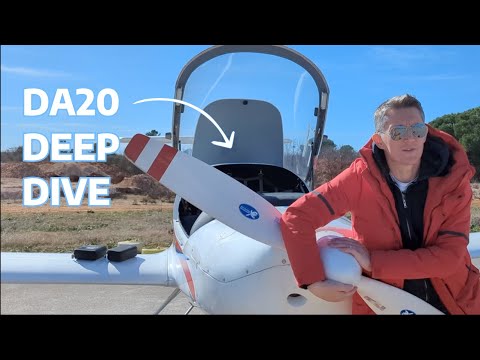
Deep Dive: Why the DA20 is a Perfect Trainer and Cross-Country Machine
-
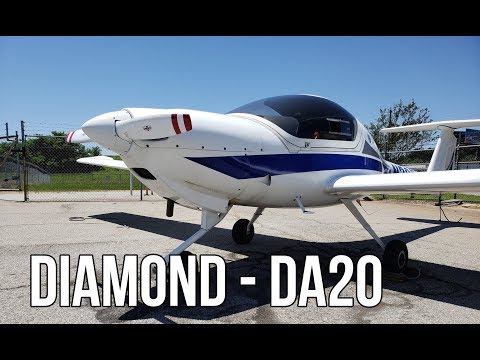
Full Flight Review: One of the Best Modern Trainers
-
Pilot Review: Used Market Value and Ownership Costs
-

Diamond DA20: Most Affordable Modern Stick & Rudder Experience
-
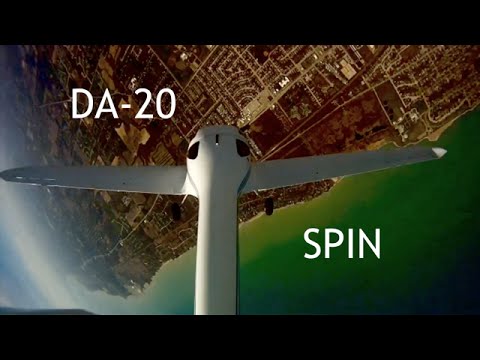
Flight Training Perspective: Spin Training in a DA20
Articles and other links
-
-
Official Diamond DA20 Series: Proven Performance & Reliability www.diamondaircraft.com
-
-
AVweb Review: The DA20's Stellar Safety Record avweb.com
-
Plane + Pilot: Diamond DA20-C1 'Katana' Ownership Profile planeandpilotmag.com