Range Map
• nm at current load
• click map to move • two fingers to move map
Payload vs. Range
gal
Fuel on board
lbs
Extra weight
nm
Range
Mission Profile
- Tailwheel
_(35374856383).jpg)
Estimated Ownership Costs
Create a free account to view or request ownership cost data.
About the Aviat A-1 Husky
Type certificated 1987 Source: third-party reference
Overview
The Aviat A-1 Husky is a certificated backcountry taildragger built by Aviat Aircraft in Afton, Wyoming – a modern, in-production answer to the Piper Super Cub, built for the same short-field mission. Where the classic bush Cubs are decades-old airframes, the Husky is a current-production 14 CFR Part 23 airplane: a welded steel-tube fuselage and metal-leading-edge wings under Dacron fabric, a 180-horsepower Lycoming O-360, and a constant-speed Hartzell propeller as standard equipment. The result is short-field performance close to a Super Cub’s from a newer airframe with factory support.
For the GA buyer, the Husky fills a specific niche: the person who wants genuine backcountry capability – short strips, floats, skis, big tires – from an airplane they can buy new or nearly new rather than restore. Its stall speed also sits well under the FAA’s MOSAIC clean-stall limit, so a sport pilot can fly it despite its utility mission.
Key Features for GA Buyers
- Short-field performance. The Husky clears a 50-foot obstacle in roughly 690 feet and lands over one in about the same, with a short ground roll; it stalls near 46 KIAS in the landing configuration, the low number that makes the STOL performance possible.
- Constant-speed propeller as standard. Unlike the fixed-pitch bush Cubs, the Husky ships with a constant-speed Hartzell propeller, which holds climb performance off short strips without giving up the roughly 121-knot cruise.
- Rugged, field-serviceable structure. The steel-tube fuselage and fabric covering are simple to inspect and repair away from a maintenance base, and the airframe is stressed for backcountry work.
- Built for conversion. The Husky moves readily between standard tires, oversized tundra tires, straight or amphibious floats, and skis – a common configuration for float and backcountry operators.
Trade-offs
- Tandem, narrow cabin. Pilot and passenger sit in tandem in a narrow fuselage; buyers used to the side-by-side seating of a Maule or a Cessna 180 give up cabin width.
- Heavier on the controls than a Super Cub. The Husky is stable and honest, but its controls are firmer and less immediate than the light, quick feel of a Super Cub – a fair trade for many, a drawback for purists.
- New-airplane price. A current-production Husky is expensive against a used Super Cub or Scout; the value case rests on buying a modern, supported airframe rather than the lowest hourly cost.
- Fabric is a periodic cost. The Dacron covering lasts decades but eventually needs replacement, a labor-intensive job; a recent fabric recovery is generally treated as a value-add, so covering age and condition belong on the pre-buy checklist.
See Also
- Piper PA-18 Super Cub – the classic bush taildragger the Husky was built to answer: lighter and cheaper to buy, but older and simpler. Compare
- Maule M-7 Series – a side-by-side STOL utility single with more cabin and seats, a different take on the same mission. Compare
- American Champion Scout (8GCBC) – another fabric backcountry taildragger in the same class and price conversation. Compare
Technical Specifications
Dimensions & Weights
- Height
- 6.58 ft
- Length
- 22.58 ft
- Parking area (ft2)
- 1254.89 ft2
- Max Takeoff Weight
- Source: manufacturer figure 2,250 lbs
- Max Landing Weight
- 2,200 lbs
- Useful Load
- Source: manufacturer figure 925 lbs
- Fuel Capacity
- Source: FAA Type Certificate Data Sheet 50 gal
Performance
- Cruise Speed
- Source: manufacturer figure 121 KTAS
- Never-Exceed (VNE)
- Source: FAA Type Certificate Data Sheet 133 KIAS
- Max Structural Cruise (VNO)
- Source: FAA Type Certificate Data Sheet 103 KIAS
- Approach Speed
- Source: manufacturer figure 50 KIAS
- Range
- Source: manufacturer figure 700 NM
- Service Ceiling
- Source: manufacturer figure 20,000 ft
- Rate of Climb
- 1500 fpm
- Takeoff over 50 ft obstacle
- 690 ft
- Landing ground roll
- 350 ft
Engine
Log in to view or request powerplant data.
Sources
Where the figures on this page come from. Aviat A-1 Husky specifications are traced to published references; estimated values are flagged inline next to the figure.
-
EASA TCDS EASA.IM.A.294 (A-1 Husky series), Section D.III.10 -- cross-references FAA TCDS A22NM www.easa.europa.eu
-
Aviat Aircraft -- Husky A-1C-180 specification (140 mph @ 75% = 121.6 kt) aviataircraft.com
-
Aviat Aircraft / AOPA Aircraft Guide (1,500 fpm sea level) www.aopa.org
-
Wikipedia / vref -- A-1 Husky first type-certificated 1 May 1987 (Christen Industries); the A-1C-180 model was added to the sheet later (2007 per EASA Section D.I.6) en.wikipedia.org
Similar to the Aviat A-1 Husky
Similar PistonsAero Commander 200
Beechcraft Bonanza 33
Beechcraft Bonanza A36
See how the Aviat A-1 Husky stacks up against similar aircraft
External Media
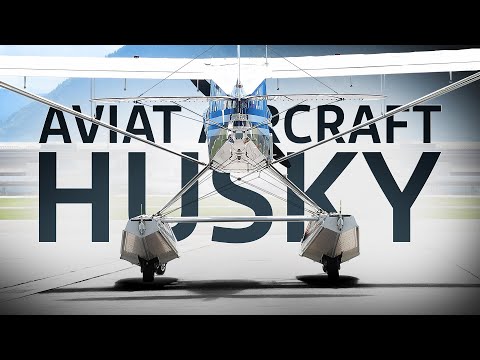
Image Galleries
Articles and other links
-
-
-
-
Aviat Husky - FLYING Magazine www.flyingmag.com
-
Aviat Husky - Aviation Consumer aviationconsumer.com
-
HUSKY A-1 Specifications, Performance, and Range - Globalair.com www.globalair.com