Range Map
Origin: → · two fingers to move map
Payload vs. Range
Fuel on board
Cargo
nm
Range
Trip Preview
Name a destination in the map header above and this becomes your trip: time en route, what you burn, what it costs, and whether you get there without stopping — at the load you have set.
→
Over max payload by . At this load it cannot lift a single occupant. Please adjust your payload inputs.
We do not have a cruise speed on file for this aircraft, so there is no honest time or cost to give you for this leg.
En route
Fuel burned
Direct cost
Fuel cost
Tanks run dry about past before at this burn.
Mission Profile
- Tailwheel
_(7-29-2023).jpg)
Estimated Ownership Costs
Create a free account to view or request ownership cost data.
About the Bellanca 8 Scout
Type certificated 1970
Overview
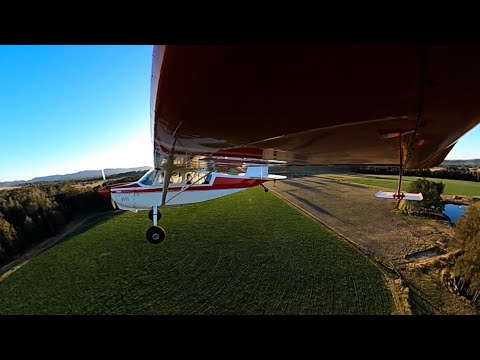
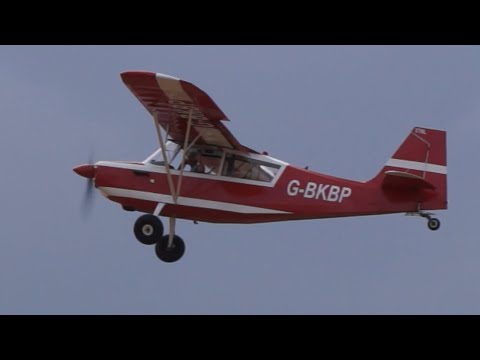
The Bellanca 8 Scout is a tandem two-seat utility taildragger built for backcountry flying and glider towing, an aerial pickup truck that trades cruise speed for the ability to get into and out of short, rough strips. It shares its welded steel-tube, fabric-covered fuselage with the rest of American Champion’s 7-series airplanes, but the Scout is a bigger machine underneath the fabric. It carries a larger wing, a 180-horsepower Lycoming O-360, and, unusually for its class, a constant-speed propeller as standard equipment. American Champion still builds new Scouts today as the 8GCBC, and a 210-horsepower Denali Scout variant on the fuel-injected Lycoming IO-390 is offered for buyers who want more climb.
That combination of a big wing, a constant-speed prop, and a 180-horsepower engine gives the Scout genuine short-field and load-hauling ability, which is why it shows up towing gliders, patrolling pipelines, and flying on floats. It is not a fast cross-country airplane, and the tandem cabin rules it out for anyone who wants a passenger seated alongside. For a buyer who values off-airport capability and utility over speed and cabin comfort, and who is comfortable managing a tailwheel and a fabric airframe, the Scout remains one of the few purpose-built backcountry airplanes still in factory production.
Key Features for GA Buyers
- Constant-speed prop as standard. Unlike most Cub-class taildraggers, the Scout ships with a constant-speed propeller, which sharpens its climb and short-field takeoff performance.
- 180 hp behind a big wing. The Lycoming O-360 and the Scout’s larger wing deliver strong climb and useful-load numbers for glider towing, banner towing, and float operations.
- Backcountry landing gear. The wide-track conventional gear accepts 26 to 31 inch tundra tires and extended bush gear for unimproved strips.
- Optional Denali (210 hp) package. American Champion offers a fuel-injected 210-horsepower Lycoming IO-390 Denali Scout for buyers who want more climb and better high-density-altitude performance.
Trade-offs
- Slow for cross-country. The big wing and draggy, fabric-covered airframe hold cruise to about 113 knots even with the constant-speed prop.
- Tandem seating only. The Scout seats two in tandem, so it lacks the side-by-side seating and cabin-loading versatility of a Maule.
- Fabric airframe upkeep. The covering needs periodic recovering, a labor-intensive job to budget for, and its age materially affects value at pre-buy.
- Tailwheel discipline. Conventional gear requires a tailwheel endorsement and recurrent proficiency, and is less forgiving on the ground than a nosewheel trainer.
See Also
- Bellanca 7GCAA Citabria – the Scout’s lighter, aerobatic-capable 7-series sibling from the same builder. Compare
- Bellanca Viking – the faster, retractable-gear Bellanca single for buyers weighing speed against utility. Compare
- Piper 18 Super Cub – the classic fabric backcountry taildragger the Scout most directly cross-shops against. Compare
- Aviat Husky – a modern in-production tandem bush plane and the Scout’s closest new-airplane rival. Compare
- Maule M-7 – a four-seat STOL utility taildragger for buyers who need side-by-side seating and more cabin. Compare
Featured in our buying guides
Technical Specifications
Dimensions & Weights
- Height
- 10 ft
- Length
- 23 ft
- Parking area (ft²2)
- 1,297 ft²
- Max Takeoff Weight
- Source: FAA Type Certificate Data Sheet 2,150 lbs
- Max Landing Weight
- 2,150 lbs
- Useful Load
- Source: manufacturer figure 810 lbs
- Fuel Capacity
- Source: FAA Type Certificate Data Sheet 70 gal
Performance
- Cruise Speed
- Source: manufacturer figure 113 KTAS
- Never-Exceed (VNE)
- Source: FAA Type Certificate Data Sheet 141 KIAS
- Max Structural Cruise (VNO)
- Source: FAA Type Certificate Data Sheet 113 KIAS
- Approach Speed
- 52 KIAS
- Stall, Clean (VS1)
- Source: manufacturer figure 46 KIAS
- Range
- 695 NM
- Service Ceiling
- Source: manufacturer figure 17,000 ft
- Rate of Climb
- 1075 fpm
- Takeoff over 50 ft obstacle
- 697 ft
- Landing over 50 ft obstacle
- 887 ft
Engine
Log in to view or request powerplant data.
Sources
Where the figures on this page come from. Bellanca 8 Scout specifications are traced to published references; estimated values are flagged inline next to the figure.
Similar to the Bellanca 8 Scout
Similar PistonsAviat A-1 Husky
Piper 18 Super Cub
Maule MX-7
Bellanca 7GCAA Citabria
Stinson 108 Voyager
Compare the Bellanca 8 Scout to other aircraft