Range Map
Origin: → · two fingers to move map
Payload vs. Range
Fuel on board
Cargo
nm
Range
Trip Preview
Name a destination in the map header above and this becomes your trip: time en route, what you burn, what it costs, and whether you get there without stopping — at the load you have set.
→
Over max payload by . At this load it cannot lift a single occupant. Please adjust your payload inputs.
We do not have a cruise speed on file for this aircraft, so there is no honest time or cost to give you for this leg.
En route
Fuel burned
Direct cost
Fuel cost
Tanks run dry about past before at this burn.
Mission Profile
- Tailwheel

Estimated Ownership Costs
Create a free account to view or request ownership cost data.
About the Bellanca 7GCAA Citabria
Type certificated 1965
Overview
The Bellanca 7GCAA Citabria is a two-seat, tandem, high-wing taildragger built for aerobatics and tailwheel training. Its name is “Airbatic” spelled backwards, a nod to the loops and rolls it is certificated to fly. The airframe descends directly from the fabric-covered Aeronca 7AC Champ of 1945, which grew through Champion and Bellanca ownership into the reinforced, more powerful Citabria line. Today the type certificate and current production belong to American Champion Aircraft, which builds the 7GCAA as the “Citabria Adventure” with a 160 hp Lycoming O-320, a metal wing spar, and a 1,750 lb gross weight.
The Adventure pairs honest control feel with genuine acrobatic capability, a strong 1,167 fpm climb, and steel-tube-and-fabric construction that owner-mechanics can inspect and repair. Cruise sits near 110 knots on about 9 gallons an hour, so it trades outright speed for docile handling, short-field manners, and low fuel bills. For a buyer who wants a tailwheel endorsement, weekend aerobatics, or a simple recreational airplane that a sport pilot can fly under MOSAIC, the 7GCAA is a forgiving and affordable way into tailwheel and aerobatic flying.
Key Features for GA Buyers
- Aerobatic certification. The 7GCAA is approved in the Acrobatic category for loops, rolls, spins, and other positive-G maneuvers, making it an entry-level aerobatic trainer.
- Strong climb. A 160 hp Lycoming O-320 lifts the light airframe at about 1,167 fpm at sea level, which helps on short strips and rising terrain.
- Simple, repairable construction. A steel-tube fuselage and fabric covering keep inspection and repair within reach of an owner working with an A&P, and the modern metal wing spar avoids the wood-spar inspection burden.
- MOSAIC sport-pilot access. With a clean stall near 45 knots, the Citabria falls within the sport-pilot privileges of the MOSAIC rule, letting a sport pilot fly it on a driver’s-license medical.
Trade-offs
- Modest cruise. At around 110 knots it is slower than comparably priced tricycle-gear cruisers, so it is a poor pick for long cross-country travel.
- Tailwheel discipline. Conventional-gear landings require a tailwheel endorsement and stay demanding in crosswinds, which lengthens the learning curve for a new owner.
- Two seats, light load. With 550 lb of useful load and tandem seating, two adults plus full fuel leaves little for baggage, and there is no room for a third person.
- Fabric upkeep. Fabric covering has a finite life and eventually needs a costly recover, a recurring expense that metal airframes avoid.
See Also
- Bellanca 8 Scout – the Scout is the utility and glider-tow sibling on the same production line, with flaps and more payload. Compare
- Bellanca Viking – the retractable, high-performance four-seat Bellanca for a buyer who outgrows the two-seat Citabria. Compare
- Aeronca 7AC Champion – the 1945 Champ the Citabria descends from, lighter and slower but the direct ancestor. Compare
- Piper 18 Super Cub – the classic tandem taildragger cross-shopped for backcountry and training roles. Compare
- Cessna 152 – the ubiquitous tricycle-gear trainer a buyer might weigh for primary training. Compare
Technical Specifications
Dimensions & Weights
- Height
- 8 ft
- Length
- 22 ft
- Parking area (ft²2)
- 1,178 ft²
- Max Takeoff Weight
- Source: manufacturer figure 1,750 lbs
- Max Landing Weight
- 1,750 lbs
- Useful Load
- Source: manufacturer figure 550 lbs
- Fuel Capacity
- Source: manufacturer figure 35 gal
Performance
- Cruise Speed
- Source: manufacturer figure 110 KTAS
- Never-Exceed (VNE)
- Source: FAA Type Certificate Data Sheet 141 KIAS
- Max Structural Cruise (VNO)
- Source: FAA Type Certificate Data Sheet 104 KIAS
- Approach Speed
- 61 KIAS
- Stall, Clean (VS1)
- Source: manufacturer figure 45 KIAS
- Range
- 483 NM
- Service Ceiling
- Source: manufacturer figure 15,000 ft
- Rate of Climb
- 1167 fpm
Engine
Log in to view or request powerplant data.
Sources
Where the figures on this page come from. Bellanca 7GCAA Citabria specifications are traced to published references; estimated values are flagged inline next to the figure.
Similar to the Bellanca 7GCAA Citabria
Similar PistonsPiper 18 Super Cub
Cessna 120
Cessna 140
Aviat A-1 Husky
Bellanca 8 Scout
Piper 12 Supercruiser
Compare the Bellanca 7GCAA Citabria to other aircraft
External Media
Videos
-
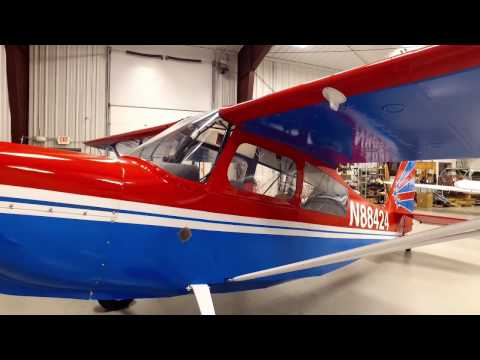
Tailwheel Tuesday! Citabria Facts & Walk Around (1975 Citabria 7GCAA Walkaround)
-
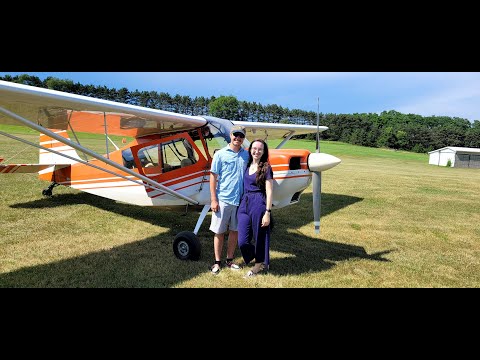
Citabria Airbatics from a cockpit view (Basic Aerobatics in a Citabria)
-
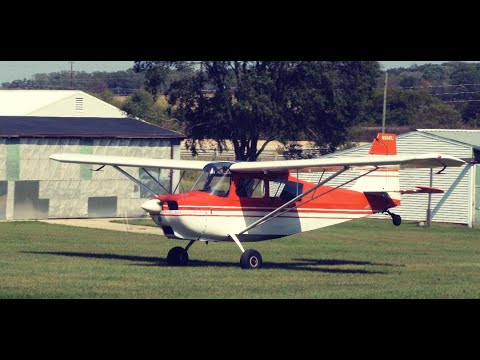
Citabria Airbatics - American Champion Aircraft (Aerobatic maneuvers demonstration)
-

First Look At My New Citabria Airplane | 1972 Model (Walkaround and Interior)
Image Galleries
Articles and other links
-
American Champion Citabria - Wikipedia (Includes Bellanca and Champion history and 7GCAA details) en.wikipedia.org
-
Bellanca "Citabria" - Plane & Pilot Magazine planeandpilotmag.com
-
American Champion Citabria - AOPA (Aircraft Owners and Pilots Association) www.aopa.org
-
Bellanca - Citabria 7ECA, 7GCAA, 7GCBC 1994 & UP - Pilot's Operating Handbook (PDF) hangar50.com