Range Map
Origin: → · two fingers to move map
Payload vs. Range
Fuel on board
Cargo
nm
Range
Trip Preview
Name a destination in the map header above and this becomes your trip: time en route, what you burn, what it costs, and whether you get there without stopping — at the load you have set.
→
Over max payload by . At this load it cannot lift a single occupant. Please adjust your payload inputs.
We do not have a cruise speed on file for this aircraft, so there is no honest time or cost to give you for this leg.
En route
Fuel burned
Direct cost
Fuel cost
Tanks run dry about past before at this burn.
Mission Profile
- Tailwheel

Estimated Ownership Costs
Create a free account to view or request ownership cost data.
About the Aeronca 7AC Champion
Type certificated 1945 Source: FAA Type Certificate Data Sheet
Overview
The Aeronca 7AC Champion (the Champ) is a 65-horsepower taildragger from 1945: fabric over a welded steel tube frame, a high wing overhead, two seats one behind the other, and a wooden propeller you start by swinging. Aeronca built thousands of them in Middletown, Ohio for the flood of students who learned to fly on the GI Bill, and eighty years on it is still one of the cheapest ways to own an aircraft.
Inside Aeronca’s own line, the Champ is the tandem trainer alongside the side-by-side 11 Chief. The Citabria grew out of its airframe: the aerobatic 7-series still lives on the Champ’s type certificate. Buyers may cross-shop a Champ against the Piper J-3 Cub: the Cub has the name and the deeper parts market; the Champ has the view.
Key Features for GA Buyers
- You fly it from the front seat. The single most consequential difference between the Champ and the Cub, and the reason instructors reach for it: forward visibility on the ground, in the climb, and in the flare, where a tailwheel pilot needs it most.
- Cheap in the way old aircrafts are supposed to be cheap. Around $66 an hour in variable-direct cost, 4.5 gallons of avgas, and a 65 hp Continental with an 1,800-hour TBO that a field shop can still overhaul without a specialist.
- Sport Pilot eligible. 1,220 lb gross and a 33-knot clean stall put it inside the legacy light-sport limits: flyable on a driver’s licence, with no medical certificate.
- Forgiving where it counts. Light wing loading and an honest stall make it a natural grass-strip and slow-flight aircraft: the qualities that made it a trainer are the ones that make it a good first taildragger.
Trade-offs
- Sixty-five horsepower. 74 knots of cruise, 175 nm of range on 13 gallons, and 480 lb of useful load: two adults, full fuel, and very little else. On a warm day at altitude the climb is a planning item, not a footnote.
- Fabric, wood and paperwork. The airframe wants a recover reserve, the wooden wing spars want inspecting, and original A-65 parts are less available than the Continental and Lycoming conversions many Champs now fly behind. A converted Champ may differ from the numbers on this page: confirm what you are buying.
- No electrical system as built. No starter, no radio, hand-prop to start. For some buyers that is the entire point; for anyone who wants a panel, it is the end of the conversation.
See Also
- Aeronca 11 Chief – the side-by-side sibling on the same 65 hp engine: sit beside your passenger instead of ahead of them. Compare
- Piper J-3 Cub – the rival, and the benchmark: better name, deeper market, and you solo it from the back. Compare
- Taylorcraft BC – the same era, side by side and slightly quicker on the same power, in a tighter cabin. Compare
- Luscombe 8 – the all-metal answer: no fabric to replace, crisper handling, a higher bill when something bends. Compare
- American Champion 7GCAA Citabria – what the Champ became: same certificate, more power, and cleared to loop and roll. Compare
Technical Specifications
Dimensions & Weights
- Height
- 7 ft
- Length
- 22 ft
- Parking area (ft²2)
- 1,192 ft²
- Max Takeoff Weight
- Source: FAA Type Certificate Data Sheet 1,220 lbs
- Max Landing Weight
- 1,220 lbs
- Useful Load
- 480 lbs
- Fuel Capacity
- Source: FAA Type Certificate Data Sheet 13 gal
Performance
- Cruise Speed
- Source: third-party reference 74 KTAS
- Never-Exceed (VNE)
- Source: FAA Type Certificate Data Sheet 112 KIAS
- Max Structural Cruise (VNO)
- Source: FAA Type Certificate Data Sheet 83 KIAS
- Approach Speed
- 43 KIAS
- Stall, Clean (VS1)
- Source: third-party reference 33 KIAS
- Range
- Source: third-party reference 175 NM
- Service Ceiling
- Source: third-party reference 12,500 ft
- Rate of Climb
- 370 fpm
- Takeoff over 50 ft obstacle
- 632 ft
- Landing over 50 ft obstacle
- 885 ft
Engine
Log in to view or request powerplant data.
Sources
Where the figures on this page come from. Aeronca 7AC Champion specifications are traced to published references; estimated values are flagged inline next to the figure.
Similar to the Aeronca 7AC Champion
Similar PistonsAeronca 11 Chief
Piper J-3 Cub
Taylorcraft BC
Piper PA-11 Cub Special
Piper Vagabond
Luscombe 8
Cessna 140
Cessna 120
Piper 18 Super Cub
Compare the Aeronca 7AC Champion to other aircraft
External Media

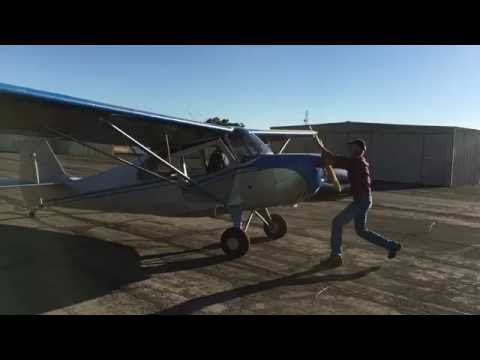

Image Galleries
Articles and other links
-
American Champion Citabria - Wikipedia (History and 7ECA details) en.wikipedia.org
-
-
Citabria Aurora Product Page - American Champion Aircraft www.americanchampionaircraft.com
-
Aeronca 7AC Champion Pilot's Operating Handbook (POH) aerowoodaviation.com