Range Map
Origin: → · two fingers to move map
Payload vs. Range
Fuel on board
Cargo
nm
Range
Trip Preview
Name a destination in the map header above and this becomes your trip: time en route, what you burn, what it costs, and whether you get there without stopping — at the load you have set.
→
Over max payload by . At this load it cannot lift a single occupant. Please adjust your payload inputs.
We do not have a cruise speed on file for this aircraft, so there is no honest time or cost to give you for this leg.
En route
Fuel burned
Direct cost
Fuel cost
Tanks run dry about past before at this burn.
Mission Profile
- Tailwheel
.jpg)
Estimated Ownership Costs
Create a free account to view or request ownership cost data.
About the Taylorcraft BC
Type certificated 1945 Source: FAA Type Certificate Data Sheet
Overview
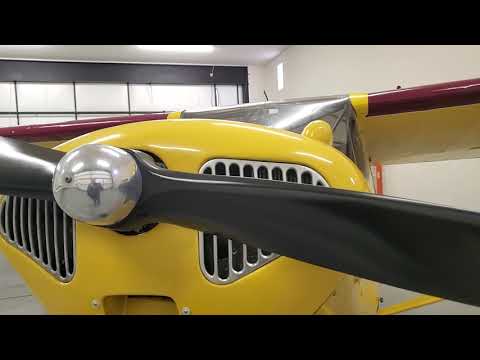
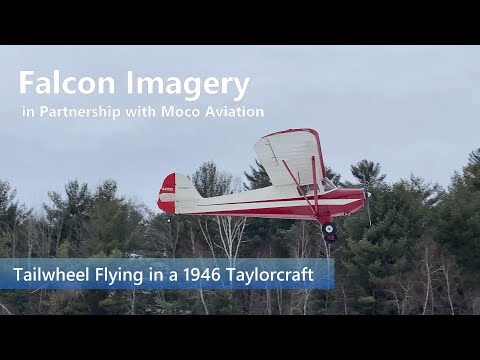
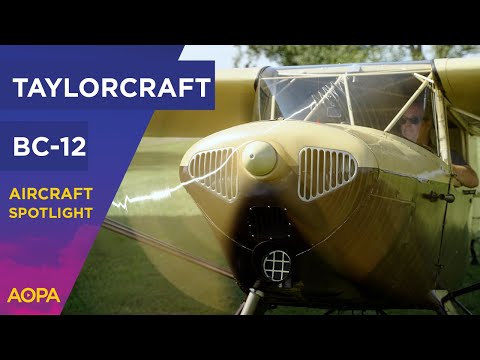
The Taylorcraft BC is a two-seat light aeroplane from the last age of the fabric taildragger: welded steel tube under doped fabric, a strut-braced high wing, sixty-five horsepower on the nose, and two people sitting side by side behind car-style doors. Thousands were built at Alliance, Ohio in 1946 and 1947, and this record is anchored on that post-war aircraft, the BC-12D, approved in November 1945 on FAA TCDS A-696. The letters encode the engine: BC is the Continental branch of the Model B family, where the BL flew behind a Lycoming and the BF behind a Franklin. What separates it from the Cub and the Champ it shared a ramp with is where you sit and what you hold: a passenger beside you rather than behind you, and a control wheel on the panel rather than a stick between your knees.
Sixty-five horsepower buys about 83 kt of cruise and an honest 500 fpm off the runway, which is more than most of its contemporaries extract from the same engine, and the low wing loading that makes those numbers possible also makes the aeroplane a famous floater on landing. The handling is the part the brochures never mentioned: the ailerons are stiff and slow, adverse yaw is pronounced, and the rudder earns its keep on every turn. At 1,200 lb gross and a 30 kt clean stall the BC-12D remains sport-pilot eligible under MOSAIC, which is the buyer this aeroplane is really for now: someone who wants the cheapest honest way into a certified taildragger, a hangar to keep the fabric out of the weather, and no particular need to be anywhere on time.
Key Features for GA Buyers
- Side by side, with wheels. Two occupants sit shoulder to shoulder behind automotive-style doors, working panel-mounted control wheels rather than the tandem sticks of a Cub or a Champ. Instruction, conversation, and shared navigation all get easier; the trade is a cabin narrow enough to bump elbows in.
- Sport-pilot eligible on its own numbers. A 1,200 lb gross weight and a 30 kt clean stall sit well inside the § 61.316 stall gate, so a sport pilot can fly it on a driver’s licence with no medical.
- More speed per horsepower than its rivals. The airframe is slippery for its era: roughly 95 mph cruise on 4.5 gph of avgas, or about $66 an hour in variable direct cost, behind an A-65 that type reviews rate as close to bulletproof.
- Parts and knowledge still circulate. Univair holds PMA approval for B-series parts, and two separate type organisations, the Taylorcraft Foundation in Alliance and the Taylorcraft Owners Club, publish manuals, service history, and the accumulated fixes of eighty years.
Trade-offs
- Stiff in roll, loose in yaw. Aviation Consumer’s type review calls the aileron control sluggish and the adverse yaw pronounced. The aeroplane rewards feet and punishes the pilot who flies it on the wheel alone.
- It will not come down. The same low wing loading that buys the climb makes the BC-12D a notorious floater; a short field asks for real speed control on final, not brakes at the end.
- Fabric and wood age. A recover runs roughly $12,000 to $20,000 every fifteen to twenty years, an outdoor tie-down shortens that interval, and any pre-buy on a 1946 airframe must look hard at frame corrosion, old repairs, and the wing-strut service bulletins.
- Sixty-five horsepower is sixty-five horsepower. Two aboard on a warm day at altitude turns an honest climb into a patient one. This is an aeroplane for the afternoon, not the appointment.
- Tailwheel, and a narrow one. Conventional gear and a light tail mean a tailwheel endorsement and attentive feet in any crosswind.
See Also
- Aeronca 11 Chief – the closest rival: another 65 hp fabric side-by-side of the same year, heavier on the controls but easier to see out of. Compare
- Luscombe 8 – the all-metal alternative: no recover bill, crisper ailerons, a higher purchase price. Compare
- Piper J-3 Cub – the tandem benchmark: stronger resale and more cachet, but you sit fore and aft. Compare
- Aeronca 7AC Champion – the tandem trainer on the same engine: stick and rudder in its purest form. Compare
- Cessna 120 – Cessna’s all-metal side-by-side: a wider cabin and metal skin for more money. Compare
Technical Specifications
Dimensions & Weights
- Height
- 7 ft
- Length
- 22 ft
- Parking area (ft²2)
- 1,242 ft²
- Max Takeoff Weight
- Source: FAA Type Certificate Data Sheet 1,200 lbs
- Max Landing Weight
- 1,200 lbs
- Useful Load
- Source: third-party reference 440 lbs
- Fuel Capacity
- Source: FAA Type Certificate Data Sheet 18 gal
Performance
- Cruise Speed
- Source: third-party reference 83 KTAS
- Never-Exceed (VNE)
- Source: FAA Type Certificate Data Sheet 122 KIAS
- Max Structural Cruise (VNO)
- Source: FAA Type Certificate Data Sheet 91 KIAS
- Approach Speed
- 50 KIAS
- Stall, Clean (VS1)
- Source: third-party reference 30 KIAS
- Range
- Source: third-party reference 174 NM
- Service Ceiling
- Estimated/derived; not a published figure 12,500 ft
- Rate of Climb
- 500 fpm
Engine
Log in to view or request powerplant data.
Sources
Where the figures on this page come from. Taylorcraft BC specifications are traced to published references; estimated values are flagged inline next to the figure.
Similar to the Taylorcraft BC
Similar PistonsLuscombe 8
Aeronca 11 Chief
Piper Vagabond
Aeronca 7AC Champion
Piper PA-11 Cub Special
Piper J-3 Cub
Cessna 140
Cessna 120
Compare the Taylorcraft BC to other aircraft