Range Map
Origin: → · two fingers to move map
Payload vs. Range
Fuel on board
Cargo
nm
Range
Trip Preview
Name a destination in the map header above and this becomes your trip: time en route, what you burn, what it costs, and whether you get there without stopping — at the load you have set.
→
Over max payload by . At this load it cannot lift a single occupant. Please adjust your payload inputs.
We do not have a cruise speed on file for this aircraft, so there is no honest time or cost to give you for this leg.
En route
Fuel burned
Direct cost
Fuel cost
Tanks run dry about past before at this burn.
Mission Profile
- Tailwheel
 (4-11-2024).jpg)
Estimated Ownership Costs
Create a free account to view or request ownership cost data.
About the Cessna 120
Type certificated 1946
Overview
The Cessna 120 is a two-seat, all-metal taildragger introduced in 1946 as the simplified, economical sibling of the Cessna 140. The two share an airframe and the same 85 hp Continental C-85, but the 120 left the factory without flaps and, in its earliest form, without an electrical system at all, a deliberately stripped and affordable airplane built for the wave of newly certificated pilots after the war. Cessna produced it through the end of the 1940s, and surviving examples have since become a staple of the vintage tailwheel community.
For a buyer today, the 120 is a simple, economical route into vintage ownership and a favorite first taildragger: fixed-pitch and light, forgiving once the conventional gear is mastered, and cheap to feed at roughly 5 gallons per hour. It is a genuine two-seater with minimal baggage, so the case for buying one is low running cost and the tailwheel time it builds rather than cabin or cross-country capability.
Key Features for GA Buyers
- Simplicity: No flaps and fewer systems mean less to maintain and, for many owners, lower insurance premiums than a more complex classic.
- Efficiency: The 85 hp Continental C-85 burns roughly 4.5 to 5 gallons per hour, keeping fuel costs low for vintage cross-country flying.
- Short ground run: Cessna’s period Operation Manual publishes a landing ground run of about 330 ft at gross weight on a standard sea-level day, which is genuinely short and much of why the type still earns its keep off small strips. Note that Cessna never published a landing distance over a 50 ft obstacle for the flapless 120, so that figure is withheld here rather than estimated: on this airplane the distance from 50 ft to touchdown is a function of how steeply you are willing to slip, not of a number in a table.
- Durability: The all-metal fuselage and spring-steel main gear are notably more robust than the wood-and-fabric designs of the same era, and many examples have had their original fabric wings metalized.
Trade-offs
- No flaps: Approaches rely on slips rather than flaps, so short-field and high-on-final landings demand genuine slip proficiency.
- Payload: Filling all 25 gallons leaves room for little more than two moderate adults; this is a true two-seater with minimal baggage.
- Vintage systems: Some examples still lack a starter and require hand-propping unless an aftermarket electrical system has been fitted, and any airframe still on original fabric will eventually face a recover or metalize bill. Strut-braced examples carry the recurring AD 2015-08-04 wing lift strut inspection on a 12-month interval.
See Also
- Cessna 140 – the flapped sibling with a more finished cabin, otherwise mechanically identical. Compare
- Luscombe 8 – a faster all-metal two-seat taildragger of the same era, less forgiving on the ground. Compare
- Aeronca 7AC Champion – a fabric tandem classic that trades the 120’s metal ruggedness for an even gentler tailwheel introduction. Compare
- Piper Vagabond – a short-coupled Piper two-seater in the same budget vintage class. Compare
- Taylorcraft B – another lightweight side-by-side classic competing for the same first-taildragger buyer. Compare
Technical Specifications
Dimensions & Weights
- Height
- 6 ft
- Length
- 22 ft
- Parking area (ft²2)
- 1,147 ft²
- Max Takeoff Weight
- 1,450 lbs
- Max Landing Weight
- 1,450 lbs
- Useful Load
- 665 lbs
- Fuel Capacity
- Source: FAA Type Certificate Data Sheet 25 gal
Performance
- Cruise Speed
- 94 KTAS
- Never-Exceed (VNE)
- Source: FAA Type Certificate Data Sheet 122 KIAS
- Max Structural Cruise (VNO)
- Source: FAA Type Certificate Data Sheet 100 KIAS
- Approach Speed
- 61 KIAS
- Stall, Clean (VS1)
- 40 KIAS
- Range
- 395 NM
- Service Ceiling
- 15,500 ft
- Rate of Climb
- 640 fpm
- Takeoff over 50 ft obstacle
- 1,850 ft
Engine
Log in to view or request powerplant data.
Sources
Where the figures on this page come from. Cessna 120 specifications are traced to published references; estimated values are flagged inline next to the figure.
-
FAA TCDS A-768 Rev 35 (Cessna 120/140), Airspeed Limits dyzz9obi78pm5.cloudfront.net
-
Operation Manual for Cessna 120 / 140 (Cessna Aircraft Co., 1946-48), Operation and Performance Data -- WITHHELD: no over-50 landing figure is published for this type, and none can be safely derived www.aeroelectric.com
-
PlanePhD, CESSNA 120 (id 146) vs CESSNA 140 (id 147) -- REJECTED: its landing figures do not differentiate the two types planephd.com
Similar to the Cessna 120
Similar PistonsCessna 140
Piper 18 Super Cub
Bellanca 7GCAA Citabria
Piper PA-11 Cub Special
Aeronca 7AC Champion
Piper Vagabond
Aeronca 11 Chief
Piper 12 Supercruiser
Luscombe 8
Taylorcraft BC
Piper J-3 Cub
Piper PA-16 Clipper
Compare the Cessna 120 to other aircraft
External Media
Videos
-
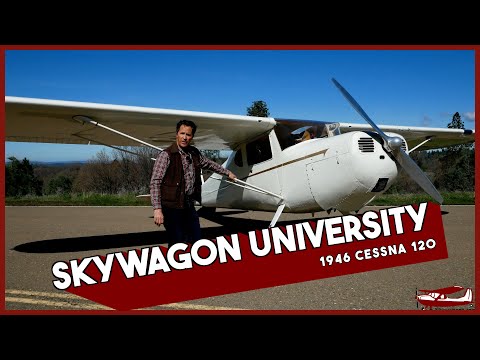
1946 Cessna 120 - YouTube (Walkaround and Flight)
-

Farewell to My Beloved Yellow Cessna 120 - Celebrating 14 Incredible Years with My Little Bush Plane - YouTube
-

Attempting To Start My Abandoned Cessna 120 That I Rebuilt - YouTube
-

Cessna 120 - an honest and affordable tailwheel - YouTube
-
Flying a 1946 Cessna 120 - YouTube Short
Articles and other links
-
Cessna 120 - Pima Air & Space Museum pimaair.org
-
Cessna 140 - Wikipedia (Covers 120, 140, and 140A) en.wikipedia.org
-
Cessna 120 - Wikimedia Commons (Image and Media Gallery) commons.wikimedia.org
-
Cessna 120/140 - Aircraft Owners and Pilots Association (AOPA) www.aopa.org
-
The Cessna 120: The Little Trainer That Could - High Sierra Pilots highsierrapilots.club