Range Map
Origin: → · two fingers to move map
Payload vs. Range
Fuel on board
Cargo
nm
Range
Trip Preview
Name a destination in the map header above and this becomes your trip: time en route, what you burn, what it costs, and whether you get there without stopping — at the load you have set.
→
Over max payload by . At this load it cannot lift a single occupant. Please adjust your payload inputs.
We do not have a cruise speed on file for this aircraft, so there is no honest time or cost to give you for this leg.
En route
Fuel burned
Direct cost
Fuel cost
Tanks run dry about past before at this burn.
Mission Profile
- Tailwheel
_(35374856383).jpg)
Estimated Ownership Costs
Create a free account to view or request ownership cost data.
About the Aviat A-1 Husky
Type certificated 1987 Source: third-party reference
Overview
The Aviat A-1 Husky is a certificated backcountry taildragger built by Aviat Aircraft in Afton, Wyoming – a modern, in-production answer to the Piper Super Cub, built for the same short-field mission. Where the classic bush Cubs are decades-old airframes, the Husky is a current-production 14 CFR Part 23 airplane: a welded steel-tube fuselage and metal-leading-edge wings under Dacron fabric, a 180-horsepower Lycoming O-360, and a constant-speed Hartzell propeller as standard equipment. The result is short-field performance close to a Super Cub’s from a newer airframe with factory support.
For the GA buyer, the Husky fills a specific niche: the person who wants genuine backcountry capability – short strips, floats, skis, big tires – from an airplane they can buy new or nearly new rather than restore. Its stall speed also sits well under the FAA’s MOSAIC clean-stall limit, so a sport pilot can fly it despite its utility mission.
Key Features for GA Buyers
- Short-field performance. The Husky clears a 50-foot obstacle on takeoff in roughly 690 feet, with a short ground roll; it stalls near 46 KIAS in the landing configuration, the low number that makes the STOL performance possible.
- Constant-speed propeller as standard. Unlike the fixed-pitch bush Cubs, the Husky ships with a constant-speed Hartzell propeller, which holds climb performance off short strips without giving up the roughly 121-knot cruise.
- Rugged, field-serviceable structure. The steel-tube fuselage and fabric covering are simple to inspect and repair away from a maintenance base, and the airframe is stressed for backcountry work.
- Built for conversion. The Husky moves readily between standard tires, oversized tundra tires, straight or amphibious floats, and skis – a common configuration for float and backcountry operators.
Trade-offs
- Tandem, narrow cabin. Pilot and passenger sit in tandem in a narrow fuselage; buyers used to the side-by-side seating of a Maule or a Cessna 180 give up cabin width.
- Heavier on the controls than a Super Cub. The Husky is stable and honest, but its controls are firmer and less immediate than the light, quick feel of a Super Cub – a fair trade for many, a drawback for purists.
- New-airplane price. A current-production Husky is expensive against a used Super Cub or Scout; the value case rests on buying a modern, supported airframe rather than the lowest hourly cost.
- Fabric is a periodic cost. The Dacron covering lasts decades but eventually needs replacement, a labor-intensive job; a recent fabric recovery is generally treated as a value-add, so covering age and condition belong on the pre-buy checklist.
See Also
- Piper PA-18 Super Cub – the classic bush taildragger the Husky was built to answer: lighter and cheaper to buy, but older and simpler. Compare
- Maule M-7 Series – a side-by-side STOL utility single with more cabin and seats, a different take on the same mission. Compare
- American Champion Scout (8GCBC) – another fabric backcountry taildragger in the same class and price conversation. Compare
Technical Specifications
Dimensions & Weights
- Height
- 7 ft
- Length
- 23 ft
- Parking area (ft²2)
- 1,255 ft²
- Max Takeoff Weight
- Source: manufacturer figure 2,250 lbs
- Max Landing Weight
- 2,200 lbs
- Useful Load
- Source: manufacturer figure 925 lbs
- Fuel Capacity
- Source: FAA Type Certificate Data Sheet 50 gal
Performance
- Cruise Speed
- Source: manufacturer figure 121 KTAS
- Never-Exceed (VNE)
- Source: FAA Type Certificate Data Sheet 133 KIAS
- Max Structural Cruise (VNO)
- Source: FAA Type Certificate Data Sheet 103 KIAS
- Approach Speed
- Source: manufacturer figure 50 KIAS
- Range
- Source: manufacturer figure 700 NM
- Service Ceiling
- Source: manufacturer figure 20,000 ft
- Rate of Climb
- 1500 fpm
- Takeoff over 50 ft obstacle
- 690 ft
Engine
Log in to view or request powerplant data.
Sources
Where the figures on this page come from. Aviat A-1 Husky specifications are traced to published references; estimated values are flagged inline next to the figure.
-
EASA TCDS EASA.IM.A.294 (A-1 Husky series), Section D.III.10 -- cross-references FAA TCDS A22NM www.easa.europa.eu
-
Aviat Aircraft -- Husky A-1C-180 specification (140 mph @ 75% = 121.6 kt) aviataircraft.com
-
Aviat Aircraft / AOPA Aircraft Guide (1,500 fpm sea level) www.aopa.org
-
Wikipedia / vref -- A-1 Husky first type-certificated 1 May 1987 (Christen Industries) en.wikipedia.org
Similar to the Aviat A-1 Husky
Similar PistonsBellanca 8 Scout
Piper 18 Super Cub
Bellanca 7GCAA Citabria
Maule MX-7
Compare the Aviat A-1 Husky to other aircraft
External Media
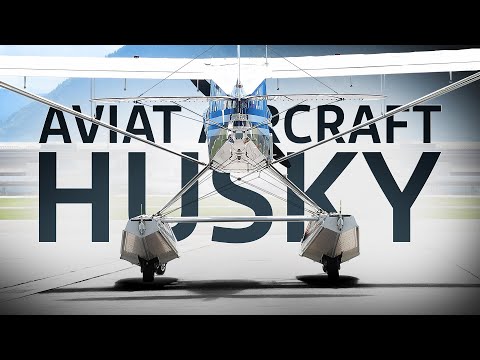
Image Galleries
Articles and other links
-
-
-
-
Aviat Husky - FLYING Magazine www.flyingmag.com
-
Aviat Husky - Aviation Consumer aviationconsumer.com
-
HUSKY A-1 Specifications, Performance, and Range - Globalair.com www.globalair.com