Range Map
Origin: → · two fingers to move map
Payload vs. Range
Fuel on board
Cargo
nm
Range
Trip Preview
Name a destination in the map header above and this becomes your trip: time en route, what you burn, what it costs, and whether you get there without stopping — at the load you have set.
→
Over max payload by . At this load it cannot lift a single occupant. Please adjust your payload inputs.
We do not have a cruise speed on file for this aircraft, so there is no honest time or cost to give you for this leg.
En route
Fuel burned
Direct cost
Fuel cost
Tanks run dry about past before at this burn.
Mission Profile
- High-Altitude
- Pressurization
- Multi-Engine
- Instrument
.jpg)
Estimated Ownership Costs
Create a free account to view or request ownership cost data.
About the Bombardier Challenger 350
Type certificated 2014 Source: FAA Type Certificate Data Sheet
Overview
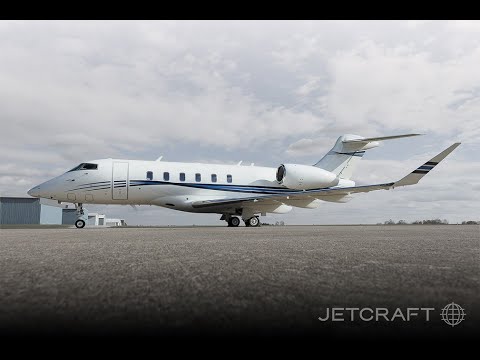
The Bombardier Challenger 350 is a super-midsize business jet, the 2014 evolution of the Challenger 300 and the best-selling jet in its class through the decade that followed. It paired the Challenger 300 airframe with canted winglets, more powerful Honeywell HTF7350 engines, and a refreshed cabin, lifting range to 3,200 nm and later adding the steep-approach certification, earned in 2018, that clears it into London City. Aerodynamically and on the flight deck it is the airplane the later Challenger 3500 refreshes: the same 40,600 lb maximum takeoff weight, the same 45,000 ft ceiling, the same Mach 0.83 top speed, and the same wide BD-100 cabin seating up to ten.
For the buyer, the 350 is the value center of the super-midsize segment. It flies the 3500’s mission exactly; the 3500 changed the cabin and standardized autothrottles, not the wing or the engines, so a used 350 buys identical range, speed, and field performance for materially less than a new-delivery 3500. Against the Embraer Praetor 600, the Challenger trades range and fly-by-wire for a wider cabin and the segment’s largest installed fleet and support base; a buyer who weighs short-field access and slightly longer legs should look at the Gulfstream G280. The decision the 350 really clarifies is the one against the 3500: the same wing, engines, and performance for less money, with the price gap buying a refreshed cabin and standard autothrottles, not additional range.
Key Features for GA Buyers
- The largest installed fleet in the segment. The 350 was the best-selling jet in its class for years, so parts, maintenance expertise, training, and resale activity around it are all plentiful.
- Steep-approach certified. A 2018 Transport Canada steep-approach approval clears the 350 into restrictive fields such as London City, a capability the Challenger 300 never had.
- A wide cabin on proven systems. The BD-100 cross-section is wide for the class, paired here with the Honeywell HTF7350 engines and Collins Pro Line 21 avionics that the 3500 carries over largely unchanged.
Trade-offs
- The 3500 flies the same mission. The 350’s airframe, engines, and performance are identical to the 3500’s; the newer jet adds a wellness cabin and standard autothrottles, not capability, so the choice between them is about cabin vintage, not what the airplane can do.
- Tight full-fuel payload. Like the rest of the family, filling the tanks leaves limited cabin payload, so the 3,200 nm range and a full cabin are not available on the same flight.
See Also
- Bombardier Challenger 3500 – the current-production refresh of this airframe; an updated cabin and standard autothrottles over identical performance. Compare
- Bombardier Challenger 300 – the predecessor this jet evolved from; the same cabin without winglets, steep approach, or the HTF7350 engines. Compare
- Embraer Praetor 600 – the super-midsize cross-shop from Embraer; fly-by-wire and more range for a narrower cabin. Compare
- Gulfstream G280 – the short-field specialist; more runway efficiency and slightly longer legs for a smaller cabin. Compare
Technical Specifications
Dimensions & Weights
- Height
- 20 ft
- Length
- Source: FAA Type Certificate Data Sheet 69 ft
- Parking area (ft²2)
- 5,822 ft²
- Max Takeoff Weight
- Source: FAA Type Certificate Data Sheet 40,600 lbs
- Max Landing Weight
- Source: FAA Type Certificate Data Sheet 34,150 lbs
- Useful Load
- 15,800 lbs
- Fuel Capacity
- Source: FAA Type Certificate Data Sheet 2,096 gal
Performance
- Cruise Speed
- Source: manufacturer figure 459 KTAS
- Never-Exceed (VNE)
- Source: FAA Type Certificate Data Sheet 320 KIAS
- Max Structural Cruise (VNO)
- Source: FAA Type Certificate Data Sheet 300 KIAS
- Approach Speed
- Source: third-party reference 125 KIAS
- Range
- Source: manufacturer figure 3200 NM
- Service Ceiling
- Source: FAA Type Certificate Data Sheet 45,000 ft
Engines
Log in to view or request powerplant data.
Sources
Where the figures on this page come from. Bombardier Challenger 350 specifications are traced to published references; estimated values are flagged inline next to the figure.
Similar to the Bombardier Challenger 350
Similar TurbofansBombardier Challenger 3500
Gulfstream G280
Bombardier Challenger 300
Embraer Praetor 500
Embraer Legacy 450
Cessna Citation Longitude
Cessna Citation Latitude
Embraer Legacy 500
North American Rockwell Sabre 40/60
Cessna Citation Sovereign
North American Rockwell Sabre 75
Learjet 45
Learjet 75
Compare the Bombardier Challenger 350 to other aircraft
External Media

Photos
_@_MAN,_September_2017.jpg)
.jpg)
Articles and other links
-
Bombardier Challenger 300 (Family Overview including 350) - Wikipedia en.wikipedia.org
-
Challenger 350 Solidifies its Segment-defining Capabilities with Steep Approach Certification - Bombardier Official bombardier.com
-
Pilot Report: Bombardier Challenger 350 - Aviation International News www.ainonline.com
-
CHALLENGER 350 Specifications, Operating Cost, Performance - GlobalAir.com www.globalair.com
-
Bombardier Challenger 350 Cabin Layout and Exterior - VistaJet www.vistajet.com