Beechcraft Twin Bonanza
Piston twin engine • Low Wing • Retractable gear
Range Map
• nm at current load
• click map to move • two fingers to move map
Payload vs. Range
Configure weights
Default: 190 lbs
Default: 30 lbs
gal
Fuel on board
lbs
Extra weight
nm
Range
Mission Profile
- High-Performance
- Complex
- Multi-Engine
Estimated Ownership Costs
About the Beechcraft Twin Bonanza
Type certificated 1951
Overview
The Beechcraft Model 50 Twin Bonanza is a six-to-eight-seat piston twin built by Beech Aircraft from 1951 to 1963, derived from the single-engine Bonanza and powered by two geared Lycoming engines. Early models (50, B50) used the 260 hp GO-435; the C50 onward moved to the more capable GO-480, and the representative D50A carries two naturally-aspirated 295 hp GO-480 engines driving the type’s distinctive 54-inch-wide cabin. The military operated the design as the L-23, later U-8, Seminole, and roughly 975 airframes were built across all variants, including about 195 military aircraft.
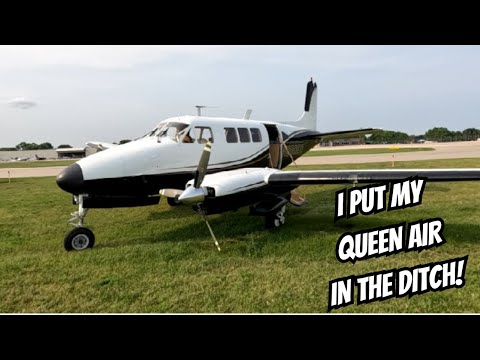
The Twin Bonanza fits the buyer who wants a roomy, stable cabin-class twin with vintage character rather than modern economy. Its wing and center-section carry-through structure seeded the Model 65 Queen Air in 1960 and, through it, the King Air line that still flies the same basic wing design today. Today the type appeals to classic-twin owners and pilots who value the cabin and handling and accept geared-engine discipline and parts scarcity as the price of entry. Choose the Twin Bonanza when you want a wide-cabin 1950s Beech twin with direct King Air lineage and are equipped to maintain a low-production geared powerplant.
Key Features for GA Buyers
- Cabin-class width. The 54-inch cabin seats three across in the front rows and is certificated for up to eight occupants, wider than most period light twins and a direct ancestor of the Queen Air cabin.
- King Air structural lineage. The wing, center-section carry-through, landing gear, and flaps are the basis of the Queen Air and King Air, so the airframe engineering is proven across decades of production.
- GO-480 power on the representative D50A. Two naturally-aspirated 295 hp geared Lycoming GO-480 engines give roughly 165 kt economy cruise and a 20,000 ft service ceiling on a 6,300 lb gross weight.
- Stable, coordinated handling. Pilots report solid stability and coordinated turns with feet on the floor, a Ralph Harmon design trait shared with other Beech models.
Trade-offs
- Geared-engine technique. The GO-480 turns the propeller through a reduction gearbox; the propeller must never drive the engine, and power changes follow a prop-then-throttle sequence to avoid gearbox lash and premature overhaul.
- Fuel burn versus speed. Economy cruise runs about 27 GPH for roughly 165 kt; pushing toward 176 to 178 kt high-cruise raises the burn into the low-to-mid 30s GPH.
- Parts and overhaul scarcity. The low-production geared Lycoming is supported by only a few specialist shops; per-engine overhauls run roughly $40,000 to $65,000, and gearbox and specific structural parts can carry long lead times.
- TBO and twin reserves. A 1,400 hr TBO across two geared engines makes the overhaul reserve a real per-hour line item, not a rounding error.
See Also
- Beechcraft 65 Queen Air – the cabin-class twin the Twin Bonanza wing seeded. Compare
- Beechcraft 70 Queen Air – the stretched Queen Air on the same structural lineage. Compare
- Beechcraft King Air 90 – the turboprop descendant on the same basic wing. Compare
- Beech Baron 55 – the lighter Beech piston twin buyers cross-shop. Compare
- Cessna 421C Golden Eagle – a pressurized cabin-class piston twin that took over the cabin-twin mission. Compare
Technical Specifications
Dimensions & Weights
- Height
- 11.5 ft
- Length
- 31.5 ft
- Parking area (ft2)
- 2016.63 ft2
- Max Takeoff Weight
- 6,300 lbs
- Max Landing Weight
- 6,300 lbs
- Useful Load
- 2,210 lbs
- Fuel Capacity
- 134 gal
Performance
- Cruise Speed
- 165 KTAS
- Never-Exceed (VNE)
- Source: FAA Type Certificate Data Sheet 235 KIAS
- Max Structural Cruise (VNO)
- Source: FAA Type Certificate Data Sheet 178 KIAS
- Approach Speed
- 82 KIAS
- Stall, Clean (VS1)
- 71 KIAS
- Range
- 825 NM
- Service Ceiling
- 20,000 ft
- Rate of Climb
- 290 - 1450 fpm
- Takeoff over 50 ft obstacle
- 1,260 ft
- Landing ground roll
- 1,375 ft
Sources
Where the figures on this page come from. Beechcraft Twin Bonanza specifications are traced to published references; estimated values are flagged inline next to the figure.
Similar to the Beechcraft Twin Bonanza
Similar PistonsCessna 310
Piper PA-34 Seneca
Beech Baron 55
Aero Commander 500
Piper Aztec
Cessna 337 Skymaster
Beech 58 Baron
See how the Beechcraft Twin Bonanza stacks up against similar aircraft
External Media

Articles and other links
-
Wikipedia: Beechcraft Twin Bonanza en.wikipedia.org
-
AOPA Pilot: Beech Twin Bonanza - Built Like a Battleship www.aopa.org
-
GlobalAir: Twin Bonanza B-50 Specifications and Performance www.globalair.com
-
Plane & Pilot: Beechcraft 1958 D50A Twin Bonanza Review planeandpilotmag.com
-
American Bonanza Society (ABS): Twin Bonanza Technical Resources www.bonanza.org
Report an inaccuracy
Spotted something wrong in the section? Tell us what's off and we'll review it.