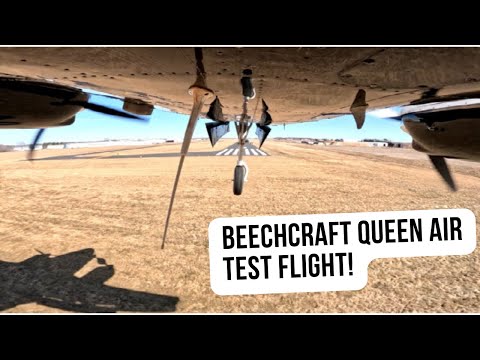
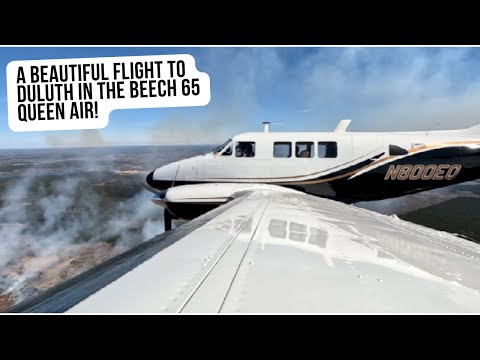
Beech 65 Queen Air
Piston • twin engine • Low Wing • Retractable gear
Range Visualization
Origin: · click map to move · nm at current load
Payload vs. Range
Customize assumptions
Default: 190 lbs (FAA standard)
Default: 30 lbs
Mission Profile
- High-Performance
- Complex
- High-Altitude
- Multi-Engine
About the Beech 65 Queen Air
Overview
The Beechcraft 65 Queen Air, often called the “Straight 65,” was the foundation for one of the most successful lineages in aviation history, directly evolving into the King Air series. Introduced in 1960, it combined the wings and tail of the Twin Bonanza with a much larger “cabin-class” fuselage. This design offered a walk-through cabin and an airstair door, features that were revolutionary for light twins at the time.
Key Features for GA Buyers
- Cabin Class Utility. One of the most affordable ways to get a true cabin-class aircraft with a centre aisle, airstair door, and separate cockpit/cabin areas.
- Payload & Range. With a useful load typically around 2,000 lbs and a standard 180-gallon fuel capacity, it is a formidable cross-country hauler for large families or corporate teams.
- Heritage. Sharing components with the Twin Bonanza and later King Airs means that while specialised, the airframe is robust and well-understood by Beechcraft mechanics.
Trade-offs
- Geared & Supercharged Engines. The Lycoming IGSO-480 engines require specialised pilot technique (gentle throttle movements) and are expensive to overhaul. Geared engines are known for high maintenance costs if not operated strictly by the book.
- Fuel Burn. Operating a Queen Air is a thirsty endeavor, with fuel burns often exceeding 30-35 gallons per hour in total.
- Insurance & Complexity. As a heavy, high-performance twin with geared engines and aging systems, insurance can be a hurdle for low-time pilots, and annual inspections can be costly.
See Also
- Beechcraft Queen Air 70 – hybrid sibling with the 65 fuselage and B80 long wings; better climb. Compare
- Beechcraft B80 Queen Air – most powerful variant; structural bridge to the King Air 90. Compare
- Beechcraft 50 Twin Bonanza – structural ancestor; shares wing and tail with the 65. Compare
- Beechcraft King Air 90 – direct turboprop evolution from this airframe; PT6A power. Compare
- Cessna 421C Golden Eagle – pressurised cabin-twin competitor with geared GTSIO-520 engines. Compare
Technical Specifications
Dimensions
- Wingspan
- 50.67 ft
- Length
- 35.33 ft
- Height
- 14.25 ft
- Parking area (ft2)
- 2446.82 ft2
Weights
- Max Takeoff Weight
- 7,700 lbs
- Max Landing Weight
- 7,700 lbs
- Useful Load
- 2,000 lbs
- Fuel Capacity
- 180 gal
Performance
- Cruise Speed
- 186 KTAS
- Never-Exceed (Vne)
- 208 KIAS
- Max Structural Cruise (Vno)
- 186 KIAS
- Approach Speed
- 95 KIAS
- Stall, Clean (Vs1)
- 70 KIAS
- Range
- 630 NM
- Service Ceiling
- 27,000 ft
- Rate of Climb
- 210 - 1300 fpm
- Takeoff over 50 ft obstacle
- 1,310 ft
- Landing ground roll
- 1,425 ft
Similar to the Beech 65 Queen Air

Beech 70 Queen Air
Beech BE-80 Queen Air

Aero Commander 680FL
See how the Beech 65 Queen Air stacks up against similar aircraft