Quest Kodiak
Turboprop • single engine • High Wing • Fixed gear
Range Visualization
Origin: · click map to move · nm at current load
Payload vs. Range
Customize assumptions
Default: 190 lbs (FAA standard)
Default: 30 lbs
Mission Profile
- High-Performance
About the Quest Kodiak
Overview
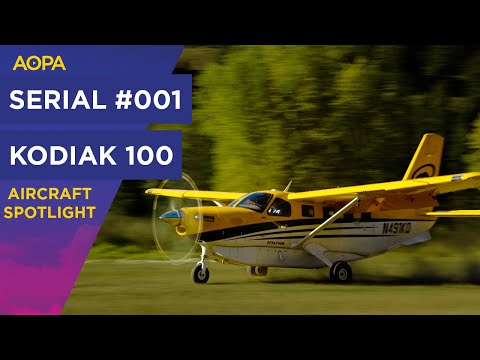
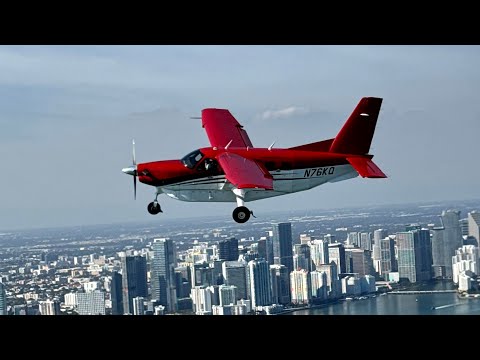
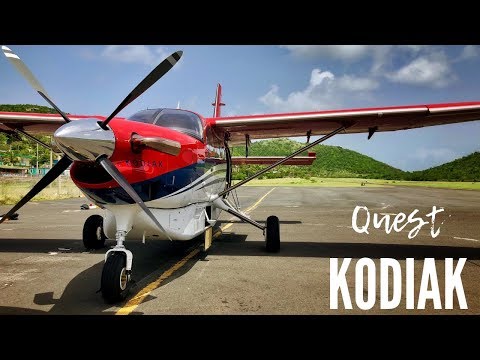
The Daher Kodiak 100 is a clean-sheet utility turboprop designed from the start for rugged, short-field operations, originally built by Quest Aircraft and produced under Daher since the 2019 acquisition. Unlike competitors adapted into the bush role, the Kodiak was engineered for humanitarian and backcountry operations, with a discontinuous leading-edge wing that preserves aileron authority and stall resistance at low speed. A 750-shp Pratt & Whitney PT6A-34 turns it into a STOL hauler that lifts a full cabin off short, unimproved strips.
For the GA buyer, the Kodiak 100 is the affordable end of the new-turboprop market and a genuine go-anywhere single. It carries over 3,500 lb of useful load through a large clamshell cargo door, runs a Garmin G1000 (G1000 NXi on Series II and III airframes), and operates from runways under 1,000 feet at gross weight. It cruises at up to 183 KTAS, slower than retractable turboprops, which is the price of its fixed gear and field performance.
Key Features for GA Buyers
- Purpose-built STOL wing. The discontinuous leading edge holds aileron authority into the stall, and the airframe takes off in under 1,000 feet at maximum gross weight.
- 750-shp PT6A-34. The Pratt & Whitney turbine carries a 4,000-hour TBO.
- 3,500-lb useful load. A large clamshell cargo door and removable seating let the cabin convert between passengers and freight.
- G1000 NXi avionics. Series II and III airframes carry the NXi suite with full IFR capability and synthetic vision.
Trade-offs
- Fixed-gear drag. The robust fixed gear caps cruise speed well below retractable-gear turboprops like the TBM or PC-12.
- Unpressurized. The 25,000-foot ceiling is academic without pressurization; practical cruise stays low enough to limit supplemental-oxygen use, and the airplane works weather rather than climbing over it.
- Slower than retractable singles. At up to 183 KTAS the Kodiak trades block speed for field capability, so it loses to faster singles on long cross-country legs.
- Cabin refinement. The utility focus means a plainer cabin environment than the stretched Kodiak 900 or the cabin-class PC-12.
See Also
- Daher Kodiak 900 – the stretched, 900-shp successor that adds speed and cabin refinement to the same STOL design. Compare
- Cessna Caravan 675 – the established high-wing utility single it competes against on payload and field work. Compare
- Pacific Aerospace P-750 XSTOL – another purpose-built short-field hauler in the single-turboprop utility class. Compare
- Pilatus PC-12 – the pressurized cabin-class single buyers move up to when speed and altitude outweigh rough-field access. Compare
Featured in our buying guides
Technical Specifications
Dimensions
- Wingspan
- 45.0 ft
- Length
- 34.17 ft
- Height
- 15.25 ft
- Parking area (ft2)
- 2154.35 ft2
Weights
- Max Takeoff Weight
- 7,255 lbs
- Max Landing Weight
- 7,255 lbs
- Useful Load
- 3,535 lbs
- Fuel Capacity
- 320 gal
Performance
- Cruise Speed
- 183 KTAS
- Never-Exceed (Vne)
- 182 KIAS
- Max Structural Cruise (Vno)
- 182 KIAS
- Approach Speed
- 74 KIAS
- Stall, Clean (Vs1)
- 77 KIAS
- Range
- 1132 NM
- Service Ceiling
- 25,000 ft
- Rate of Climb
- 867 - 1371 fpm
- Takeoff over 50 ft obstacle
- 934 ft
- Landing ground roll
- 705 ft
Similar to the Quest Kodiak
Pacific Aerospace P-750 Xstol
Kodiak 900
Cessna 208 Caravan 675
See how the Quest Kodiak stacks up against similar aircraft