Range Map
Origin: → · two fingers to move map
Payload vs. Range
Fuel on board
Cargo
nm
Range
Trip Preview
Name a destination in the map header above and this becomes your trip: time en route, what you burn, what it costs, and whether you get there without stopping — at the load you have set.
→
Over max payload by . At this load it cannot lift a single occupant. Please adjust your payload inputs.
We do not have a cruise speed on file for this aircraft, so there is no honest time or cost to give you for this leg.
En route
Fuel burned
Direct cost
Fuel cost
Tanks run dry about past before at this burn.
Mission Profile
- High-Performance
_(2-3-2024).jpg)
Estimated Ownership Costs
Create a free account to view or request ownership cost data.
About the Pacific Aerospace P-750 Xstol
Type certificated 2003 Source: FAA Type Certificate Data Sheet
Overview
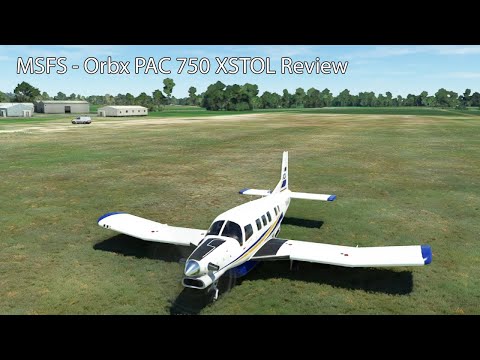
The Pacific Aerospace P-750 XSTOL (Extremely Short Take-Off and Landing), also sold as the PAC 750XL, is a New Zealand single-engine turboprop utility aircraft built around a 750-shp Pratt & Whitney Canada PT6A-34. Type-certificated in 2003, it mates the wing and powerplant of the PAC Cresco agricultural aircraft to an enlarged fuselage purpose-built for skydiving, cargo, and remote bush operations. Pacific Aerospace Ltd ceased operations in 2021; the type certificate now sits with NZAero, which type-certificated the re-engined SuperPac 750XL-II in 2023 and supports the existing fleet, so the original P-750 XSTOL today trades chiefly on the used market.
For the GA buyer, the P-750 XSTOL is a payload-first short-field hauler rather than a cross-country machine. It lifts a useful load greater than its own empty weight off runways under 800 feet, but its fixed gear and unpressurised cabin hold it to roughly 140 knots at low altitude, where it competes with the Daher Kodiak 100 and Cessna 208 Caravan on field performance and load rather than speed. It earns its keep when the mission is maximum payload into short, unimproved strips – high-tempo skydiving or bush cargo above all – and block speed is beside the point.
Key Features for GA Buyers
- Extreme STOL. The ‘XSTOL’ name is no gimmick: at maximum weight its takeoff ground roll is around 700 feet, reaching strips closed to a Cessna 208 Caravan.
- Payload king. With a useful load near 3,900 lb, more than its empty weight; it is one of the rare utility singles that can carry more than it weighs.
- Skydiving workhorse. It lifts up to 17 jumpers to 12,000 feet and is back on the strip in roughly ten minutes, the fast turnaround that made it a fixture at commercial drop zones.
- Configurable utility. A belly-mounted cargo pod of around 1,000 lb capacity adds volume with little cruise penalty, and the airframe is offered in passenger, cargo, and agricultural configurations.
Trade-offs
- Fixed-gear drag. The rugged fixed tricycle gear that suits bush strips holds cruise to around 140 knots, slower than retractable turboprops.
- Unpressurised. With a 20,000-foot ceiling and no pressurisation, it works the weather at low level rather than climbing over it like a TBM or PC-12.
- Niche support. Parts and field expertise are thinner in North America than for domestic types, though the PT6A engine is supported worldwide. With NZAero now building the re-engined 750XL-II, nearly all original P-750 XSTOL examples trade used.
See Also
- NZAero SuperPac 750XL-II – the re-engined, in-production successor on the same airframe: a 900-shp-class PT6A-140A, an extended-range wing, and a Garmin glass panel. Compare
- Daher Kodiak 100 – the in-production high-wing STOL turboprop that shares the same PT6A-34 engine and short-field mission. Compare
- Cessna 208 Caravan – the established utility single it cross-shops against on payload and field work. Compare
- Pilatus PC-12 – the pressurised cabin-class single buyers move up to when speed and altitude matter more than rough-field access. Compare
Technical Specifications
Dimensions & Weights
- Height
- 13 ft
- Length
- 36 ft
- Parking area (ft²2)
- 2,153 ft²
- Max Takeoff Weight
- Source: FAA Type Certificate Data Sheet 7,500 lbs
- Max Landing Weight
- 7,125 lbs
- Useful Load
- 3,900 lbs
- Fuel Capacity
- 227 gal
Performance
- Cruise Speed
- Source: manufacturer figure 140 KTAS
- Never-Exceed (VNE)
- Source: FAA Type Certificate Data Sheet 170 KIAS
- Max Structural Cruise (VNO)
- Source: FAA Type Certificate Data Sheet 140 KIAS
- Approach Speed
- 75 KIAS
- Stall, Clean (VS1)
- Source: manufacturer figure 58 KIAS
- Range
- Source: manufacturer figure 1179 NM
- Service Ceiling
- 20,000 ft
- Rate of Climb
- 1067 fpm
- Takeoff over 50 ft obstacle
- 1,196 ft
- Landing over 50 ft obstacle
- 950 ft
Engine
Log in to view or request powerplant data.
Sources
Where the figures on this page come from. Pacific Aerospace P-750 Xstol specifications are traced to published references; estimated values are flagged inline next to the figure.
-
NZ CAA Type Certificate Data Sheet A-14 (PAC 750XL), Airspeed Limits. Read directly from the sheet (Safari-UA curl + pdftotext). Stored as the indicated value per the catalogue IAS convention; the P-750 is an unpressurized turboprop certificated with separate VNE and VNO (not a single-VMO airframe). www.aviation.govt.nz
-
NZAero published performance (max cruise), corroborated by Wikipedia; the lower 26.2 GPH PlanePhD figure reflects an economy-cruise power setting. www.nzaero.com
-
Pacific Aerospace P-750 XSTOL official brochure, Performance -- Stall Speed (Idle Power) With Flaps Up (VS). A labeled flaps-up clean stall (Vs1), distinct from the landing-configuration Vso; resolves the earlier withhold under the catalogue's Vso-as-clean-stall caution. The same 58 kt appears in the NZAero SuperPac 750XL-II flyer. www.aerospace.co.nz
Similar to the Pacific Aerospace P-750 Xstol
Similar TurbopropsNZAero SuperPac 750XL-II
Daher Kodiak 900
Daher Kodiak 100
Cessna Grand Caravan EX
Cessna 208 Caravan
Pilatus PC-6 Turbo Porter
Compare the Pacific Aerospace P-750 Xstol to other aircraft
External Media


Articles and other links
-
Wikipedia: PAC P-750 XSTOL - Development, Design, and Performance en.wikipedia.org
-
-
AOPA: P-750 XSTOL Expands U.S. Presence and Utility Roles www.aopa.org
-
GlobalAir: P-750 XSTOL Technical Specifications and Performance www.globalair.com
-
-