Kodiak 900
Turboprop single engine • High Wing • Fixed gear
Range Visualization
· nm at current load
· click map to move · two fingers to move map
Payload vs. Range
Configure weights
Default: 190 lbs
Default: 30 lbs
Fuel on board
Extra weight
Range
Mission Profile
- • High-Performance
About the Kodiak 900
Overview
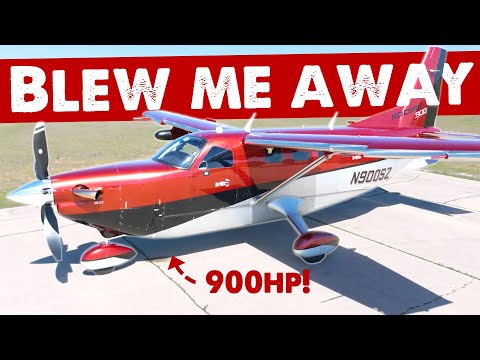
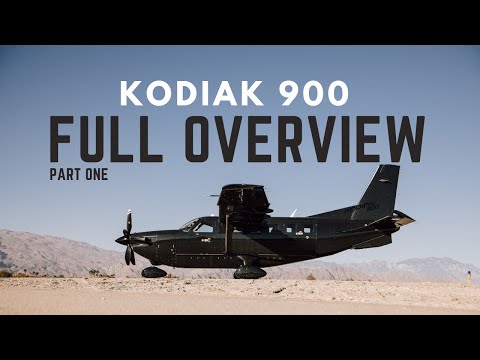
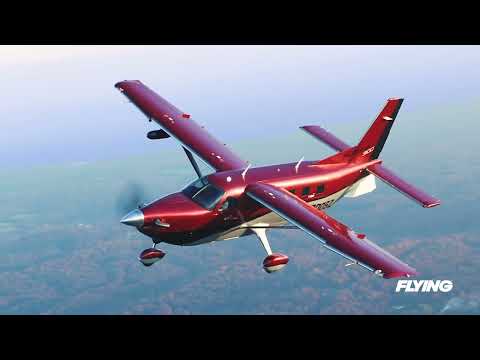
The Daher Kodiak 900 is a stretched, faster evolution of the Kodiak 100, certified by the FAA in 2022. A 3.9-foot fuselage extension and the 900-shp Pratt & Whitney PT6A-140A (up from the 100’s 750-shp PT6A-34) lift maximum cruise to 210 KTAS while preserving the rugged, fixed-gear STOL character of the original. The result is a ten-seat single-turboprop utility aircraft with the Kodiak 100’s STOL and payload capability at a higher cruise speed.
For the GA buyer, the 900 occupies a specific niche: a backcountry-capable hauler refined enough for the owner-pilot and corporate-shuttle roles. A ‘Summit+’ executive interior, track-mounted removable seating, and a Garmin G1000 NXi flight deck sit on an airframe that still operates from short, unimproved strips. It is unpressurized, so its 25,000-foot ceiling carries an oxygen requirement that keeps most missions in the low to mid teens.
Key Features for GA Buyers
- 900-shp PT6A-140A. The stretch is matched by 150 shaft horsepower over the Kodiak 100, held flat to roughly 37 degrees C, which sustains climb and field performance at the larger airframe’s higher weights.
- 210-knot cruise. Aerodynamic cleanup (the ‘fast-back’ aft fuselage and gear fairings) lifts cruise about 35 knots over the Kodiak 100.
- Convertible cabin. Track-mounted, tool-free removable seating converts the interior from ten seats to a cargo hold, served by a large aft cargo door.
- G1000 NXi avionics. The standard suite carries the GFC 700 autopilot, synthetic vision, and PlaneSync connectivity.
Trade-offs
- Unpressurized. Despite the executive interior and 25,000-foot ceiling, the cabin is unpressurized, so practical cruising altitudes stay low enough to limit sustained supplemental-oxygen use, and the airplane works weather rather than topping it.
- Fixed-gear drag. The fixed landing gear, even faired, caps cruise efficiency below retractable turboprops like the TBM or PC-12.
- Slower than the cabin-class singles. At 210 KTAS the 900 trails the PC-12 and the TBM on any long leg; its argument is field access and payload, not block speed.
- New-only market. As a recent design, the 900 trades new or near-new (roughly $3.5M and up), with little used inventory and no established resale price history.
See Also
- Quest Kodiak 100 – the original 750-shp STOL utility single this model stretches and re-powers. Compare
- Cessna Grand Caravan EX – the high-wing utility-turboprop benchmark it competes with on payload and unimproved-field work. Compare
- Pacific Aerospace P-750 XSTOL – a more specialized short-field hauler in the same single-turboprop utility class. Compare
- Pilatus PC-12 – the pressurized cabin-class single a Kodiak buyer cross-shops when ramp speed and altitude matter more than rough-field access. Compare
- Daher TBM 900 – the same manufacturer’s pressurized speed single, the opposite end of the Daher turboprop range. Compare
Technical Specifications
Dimensions & Weights
- Height
- 16.1 ft
- Length
- 37.7 ft
- Parking area (ft2)
- 2348.5 ft2
- Max Takeoff Weight
- 8,000 lbs
- Max Landing Weight
- 7,900 lbs
- Useful Load
- 3,630 lbs
- Fuel Capacity
- 322 gal
Performance
- Cruise Speed
- 210 KTAS
- Never-Exceed (Vne)
- 187 KIAS
- Max Structural Cruise (Vno)
- 187 KIAS
- Approach Speed
- 85 KIAS
- Stall, Clean (Vs1)
- 78 KIAS
- Range
- 1129 NM
- Service Ceiling
- 25,000 ft
- Rate of Climb
- 1273 - 1724 fpm
- Takeoff over 50 ft obstacle
- 1,015 ft
- Landing ground roll
- 1,460 ft
Similar to the Kodiak 900
Similar TurbopropsQuest Kodiak
Pacific Aerospace P-750 Xstol
See how the Kodiak 900 stacks up against similar aircraft
External Media
Other Links
-
Wikipedia: Kodiak 900 - Development, Stretched Fuselage, and Performance en.wikipedia.org
-
Official Kodiak 900 Product Page: Bigger, Faster, More Economical kodiak.aero
-
GlobalAir: Kodiak 900 Specifications, Performance, and Range www.globalair.com
-
Twin & Turbine Flight Review: Evaluating the 210-Knot 'Backcountry Icon' www.twinandturbine.com
-
Daher: Official Manufacturer Overview and Kodiak Family History www.daher.com
-
Kodiak 900 Official Spec Sheet: Weights, Dimensions, and Range/Payload Profile ras.de