Range Map
Origin: → · two fingers to move map
Payload vs. Range
Fuel on board
Cargo
nm
Range
Trip Preview
Name a destination in the map header above and this becomes your trip: time en route, what you burn, what it costs, and whether you get there without stopping — at the load you have set.
→
Over max payload by . At this load it cannot lift a single occupant. Please adjust your payload inputs.
We do not have a cruise speed on file for this aircraft, so there is no honest time or cost to give you for this leg.
En route
Fuel burned
Direct cost
Fuel cost
Tanks run dry about past before at this burn.
Mission Profile
- Complex
_VL3_Evolution_(D-MVLS)_(2).jpg)
Estimated Ownership Costs
Create a free account to view or request ownership cost data.
About the JMB VL3
Overview
The JMB VL3 is a Czech-built two-seat composite aircraft from JMB Aircraft of Choceň, currently offered in four engine packages spanning a fixed-gear light sport trainer up through the company’s flagship retractable cruiser. The lineup runs from a 100 hp normally-aspirated Rotax 912ULS (fixed-gear, intended for the European microlight and historical US LSA categories) to a 115 hp Rotax 914 turbo retract, a 142 hp Rotax 915iS turbo retract that has demonstrated 199 KTAS at 18,000 ft, and most recently a 160 hp Rotax 916iS retract at the top of the range. Construction is autoclave-cured pre-preg carbon fiber with Kevlar elements, with empty weights below 900 lb on the lighter variants and useful loads scaling up with the higher-MTOW retract configurations.
For the GA buyer, the VL3 is the European high-performance ultralight idea taken to its extreme: a Rotax-powered two-seater cruising in the same speed bracket as certified four-seat retractables, with a ballistic recovery parachute standard on most build packages. In the US market the high-performance retract variants ship under experimental exhibition category. They cannot be registered as Light Sport Aircraft because retractable gear and constant-speed propellers are excluded under the classic LSA rules; the MOSAIC modernisation may change pilot-privilege coverage, but the registration category itself is determined at certification. For a pilot chasing certified-retractable cruise speeds on a Rotax budget, little else compares; one who wants a straightforward Light-Sport certificate path or a simple annual should stay with a fixed-gear trainer.
Key Features for GA Buyers
- Speed per dollar. The 915iS retract has demonstrated 199 KTAS at 18,000 ft on roughly 9 GPH; the 916iS extends that envelope.
- Carbon-composite airframe. Pre-preg carbon fiber with Kevlar elements gives empty weights under 900 lb on the lighter variants and a stiff, modern airframe across the lineup.
- Multi-variant lineup. Engine packages from 912ULS / 914 / 915iS / 916iS, with fixed or retractable gear, let buyers pick a configuration that fits training, touring, or top-end performance use.
- Standard ballistic parachute. A full-airframe BRS is standard on most build packages, paralleling the Cirrus CAPS philosophy at a fraction of the airframe cost.
- Constant-speed propeller on the retracts. Retractable variants ship with a Woodcomp three-blade constant-speed prop, which is the lever you need to actually use the high-altitude turbocharged power.
Trade-offs
- Experimental exhibition in the US. The high-performance retract variants combine retractable gear and a constant-speed prop, which excludes them from the original Light Sport rules. They ship under experimental exhibition category, with operating limitations meaningfully different from a standard-category certified aircraft.
- Tight cabin and useful load. A two-place ultralight platform with high-performance kit installed leaves limited margin: two adults plus full fuel often pushes near MTOW, and the cockpit is narrower than typical certified two-seaters.
- Maintenance complexity for the class. Retractable gear, constant-speed prop, and turbo-injected Rotax add inspection and overhaul complexity that buyers stepping up from a fixed-gear LSA should plan and budget for.
- Insurance. As a high-performance composite retract in experimental category, expect hull and liability quotes well above a basic fixed-gear trainer. Verify rates before committing.
- US parts and support. JMB ships from the Czech Republic. Owners report that parts logistics and service-network depth lag the larger US-based composite manufacturers.
See Also
- Blackshape Prime – Italian carbon-composite two-seater in the same micro-light retract niche; tandem rather than side-by-side. Compare
- Pipistrel Panthera – Slovenian four-seat composite cross-country in a similar speed bracket but a different category and price. Compare
- Lancair IV – US kit equivalent: composite, fast, cross-country focused, at the upper end of the experimental piston market. Compare
- Cirrus SR22 – the certified comparison the VL3 invites: same cruise-speed bracket, four seats, and a CAPS-equipped composite airframe. Compare
- Cessna TTx – the fast certified composite single in the same speed class: turbocharged Continental, four seats, fixed gear. Compare
Technical Specifications
Dimensions & Weights
- Height
- 7 ft
- Length
- 20 ft
- Parking area (ft²2)
- 959 ft²
- Max Takeoff Weight
- 1,323 lbs
- Max Landing Weight
- 1,323 lbs
- Useful Load
- 518 lbs
- Fuel Capacity
- 37 gal
Performance
- Cruise Speed
- 199 KTAS
- Never-Exceed (VNE)
- 229 KIAS
- Max Structural Cruise (VNO)
- 151 KIAS
- Approach Speed
- 60 KIAS
- Stall, Clean (VS1)
- 44 KIAS
- Range
- 810 NM
- Service Ceiling
- 18,000 ft
- Rate of Climb
- 2000 fpm
Engine
Log in to view or request powerplant data.
Similar to the JMB VL3
Similar PistonsPorto Aviation Risen SV 916
Pelegrin Tarragon
Blackshape Prime
Compare the JMB VL3 to other aircraft
External Media
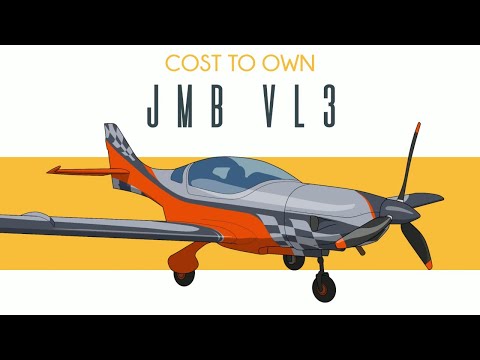
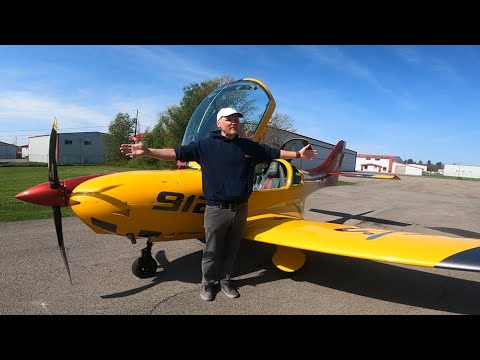


Articles and other links
-
JMB VL-3 Sprint - Wikipedia en.wikipedia.org
-
JMB Aircraft VL3 RG - Official Product Page www.jmbaircraft.com
-
JMB VL3 - AOPA Aircraft Guide www.aopa.org
-
-
We Fly: The JMB Aircraft VL-3 - Flying Magazine www.flyingmag.com
-