Range Map
Origin: → · two fingers to move map
Payload vs. Range
Fuel on board
Cargo
nm
Range
Trip Preview
Name a destination in the map header above and this becomes your trip: time en route, what you burn, what it costs, and whether you get there without stopping — at the load you have set.
→
Over max payload by . At this load it cannot lift a single occupant. Please adjust your payload inputs.
We do not have a cruise speed on file for this aircraft, so there is no honest time or cost to give you for this leg.
En route
Fuel burned
Direct cost
Fuel cost
Tanks run dry about past before at this burn.
Mission Profile
- High-Performance
- Complex
- Multi-Engine
.jpg)
Estimated Ownership Costs
Create a free account to view or request ownership cost data.
About the Aero Commander 560
Type certificated 1957 Source: FAA Type Certificate Data Sheet
Overview
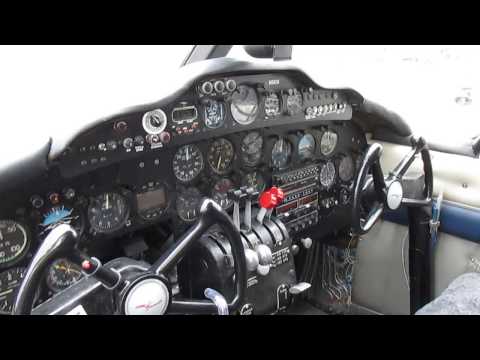
The Aero Commander 560E is a 1957 cabin-class twin piston, the mature geared-engine member of Ted Smith’s original Aero Design and Engineering Commander twin family. It seats up to seven (one pilot plus six passengers), rides on retractable tricycle landing gear, and shares the family’s signature high-wing layout with the spar passing above the cabin. Two Lycoming GO-480-C/G geared engines of 295 hp each drive three-blade Hartzell constant-speed feathering propellers, and the 223 US gal fuel system gives the type genuine cross-country range for a 1950s light twin.
The 560 line evolved quickly. The base 560 entered production in 1954 with 250 hp Lycoming GO-435 engines, a 44 ft wing, and a 6,000 lb MTOW. The 560A followed in 1955 with revised systems and a longer fuselage. The 560E, certified in 1957 and the canonical airframe for this record, added 30-inch wing tip extensions, a reinforced landing gear, an outboard fuel system, and the 295 hp GO-480-C/G installation, which together lifted MTOW to 6,500 lb. The later 560F continued the formula at the same horsepower before North American Rockwell’s acquisition pushed the family toward the simpler, ungeared 500-line variants and ultimately the Shrike Commander. About 93 Model 560Es were built; the line is certificated under FAA Type Certificate 6A1 and remains supported today by Twin Commander Aircraft LLC, the current TC holder.
What distinguishes the 560E in market terms is the combination of stand-up cabin, generous fuel, and the period distinction of serving as an Eisenhower-era presidential transport in the form of the VC-3. In airframe character it is over-engineered to military standards, slow by modern light-twin reckoning, and quietly capable on long legs.
Key Features for GA Buyers
- Cabin-class twin layout. Stand-up cabin volume, club-style seating for seven, and a flat unobstructed floor courtesy of the over-cabin wing carry-through, uncommon at this weight class.
- Long legs on the standard fuel system. 223 US gal of fuel and the geared 295 hp GO-480s yield roughly 1,400 nm of range with reserve at economy cruise, real cross-country capability for the era.
- High service ceiling. 22,500 ft published gives meaningful over-the-weather margin for an unpressurised 1950s twin, with oxygen the practical limit on prolonged altitude work.
- Robust airframe and gear. Built to military standards under Ted Smith’s design philosophy; main gear rated to roughly twice aircraft weight, and the type has a reputation for durability that has carried it well into a seventh decade of service.
- Active TC holder support. Twin Commander Aircraft LLC continues to maintain parts, manuals, an AOG line, and an authorized service center network under TC 6A1, an unusually live support footprint for a 1950s airframe.
Trade-offs
- Geared GO-480 economics. The geared Lycomings are more complex and more expensive to overhaul than the carbureted O-540 and IO-540 engines on the later 500-line variants; budget accordingly for top and major intervals.
- Slower than its peers. 182 KTAS at 70% power and 10,000 ft sits roughly 20 kt below a Baron, Cessna 310, or Aerostar of comparable era; the 560E trades cruise speed for cabin and load.
- Recurring spar inspection. A three-year wing inspection driven by mid-1990s spar cap corrosion ADs runs in the 9,000 to 11,000 USD range, and lower spar cap replacement, when needed, can exceed the value of older airframes.
- Unreliable fuel gauging. The single-sump system is forgiving in concept but the original gauges have been implicated in fuel-related accidents; budget for an electronic fuel totalizer at acquisition.
- Variant confusion in market data. Listings, broker spec sheets, and even some published aircraft references freely conflate 560, 560A, 560E, and 560F figures; verify the specific airframe’s serial number, engine fitment, and weight schedule against TCDS 6A1 before trusting any quoted performance number.
- Unpressurised. The cabin is not pressurised; useful cruise altitudes with passengers in comfort fall well below the 22,500 ft ceiling, and any sustained altitude work requires supplemental oxygen.
See Also
- Aero Commander 500 – Intra-family lighter sister; simpler ungeared O-540 evolution at lower acquisition cost. Compare
- Piper Aztec – Direct period competitor; lower acquisition cost and broader parts pool. Compare
- Cessna 310 – Direct period competitor; sleeker low-wing twin prioritizing cruise speed over cabin volume. Compare
- Beechcraft 50 Twin Bonanza – Same-class 1950s cabin-class twin; closest direct contemporary in mission profile. Compare
- Beechcraft Baron 55 – Successor-generation upgrade path; modern light cabin twin that displaced much of the 560 family. Compare
Technical Specifications
Dimensions & Weights
- Height
- 14 ft
- Length
- 35 ft
- Parking area (ft²2)
- 2,388 ft²
- Max Takeoff Weight
- 6,500 lbs
- Useful Load
- 2,300 lbs
- Fuel Capacity
- 223 gal
Performance
- Cruise Speed
- Source: manufacturer figure 182 KTAS
- Never-Exceed (VNE)
- Source: FAA Type Certificate Data Sheet 234 KIAS
- Max Structural Cruise (VNO)
- Source: FAA Type Certificate Data Sheet 182 KIAS
- Approach Speed
- 83 KIAS
- Stall, Clean (VS1)
- 66 KIAS
- Range
- 1412 NM
- Service Ceiling
- 22,500 ft
- Rate of Climb
- 1450 fpm
- Takeoff over 50 ft obstacle
- 1,452 ft
- Landing over 50 ft obstacle
- 1,500 ft
Engines
Log in to view or request powerplant data.
Sources
Where the figures on this page come from. Aero Commander 560 specifications are traced to published references; estimated values are flagged inline next to the figure.
Similar to the Aero Commander 560
Similar PistonsAero Commander 500A
Aero Commander 500
Cessna 303 Crusader
Piper PA-34 Seneca
Cessna 310
Cessna 320 Skyknight
Beechcraft Twin Bonanza
Piper Aztec
Beechcraft Baron 58
Compare the Aero Commander 560 to other aircraft
External Media

Articles and other links
-
Twin Commander | 560E www.twincommander.com
-
Aero Commander 500 family en.wikipedia.org
-
AERO COMMANDER 560 planeandpilotmag.com
-
Twin Commander 500 Shrike avweb.com
-
-
Aero Commander 560E - airliner in miniature airwaysmuseum.com
-
An Aero Commander Restoration www.aopa.org