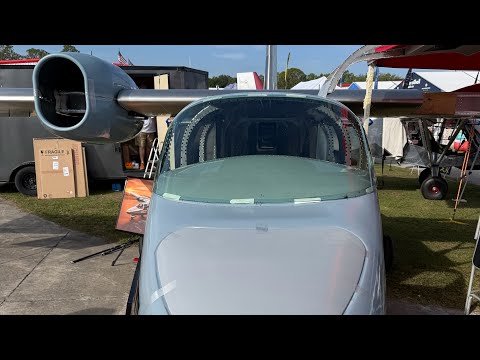
Viking V-42
Piston twin engine • High Wing • Fixed gear
Range Visualization
Origin: · click map to move · nm at current load
Payload vs. Range
Configure weights
Default: 190 lbs
Default: 30 lbs
Fuel on board
Extra weight
Range
Mission Profile
- Multi-Engine
About the Viking V-42
Overview
The Viking V-42 is a four-seat, high-wing experimental amateur-built twin from Viking Aircraft of Edgewater, Florida, the company behind the Honda-derived Viking auto-conversion engines. It pairs an all-aluminum, matched-hole, pull-rivet airframe with two 150-hp Viking 150 engines on fixed tricycle gear. Jan Eggenfellner unveiled the prototype at Sun ‘n Fun in April 2026.
As of mid-2026 the V-42 is a single prototype rather than a shipping product. Kits are planned but not yet for sale, and the first flight was targeted for AirVenture Oshkosh in July 2026. Every performance figure below is a manufacturer forecast rather than a flight-tested number, and should be read that way until the aircraft has flown and a kit is offered.
Key Features for GA Buyers
- Light twin on automotive-derived power. Two liquid-cooled Viking 150 engines, each based on a 1.8-liter Honda HR-V, drive the design toward a forecast 160 mph (about 139 KTAS) cruise on 80 gallons of fuel.
- All-aluminum, simple build. Matched-hole construction with pull-rivets is aimed at fast, repeatable assembly and straightforward inspection and repair.
- Fixed gear, four seats. Fixed tricycle gear and a forecast 3,100-lb gross weight target an 1,100-lb useful load with 200 lb of baggage.
- Multi-engine redundancy in the experimental class. A second engine is unusual at this weight and price in a homebuilt market where most kits are singles.
Trade-offs
- Not yet flying, no kits for sale. This is a forecast aircraft. There is no flight data, no published price, and no delivered kit; the performance figures are manufacturer design targets the builder has still to demonstrate.
- Multi-engine experimental ownership. Two engines mean two of everything to maintain, a multi-engine rating and currency to hold, and single-engine handling that a clean-sheet light twin has to prove before its safety case is settled.
- Auto-conversion powerplant. The Viking 150 is an adapted automotive engine managed by its automotive engine-control unit, not a certified aircraft engine with a published TBO. It runs on auto fuel and carries the support and resale profile of the experimental world.
- Forecast ground rolls. Viking forecasts an 800-ft takeoff roll and a 600-ft landing roll. These are unobstructed ground-roll targets, not over-50-ft obstacle distances, and remain unverified.
See Also
- Cessna 310 – the classic cabin-class light piston twin and a common used-market benchmark. Compare
- Piper PA-34 Seneca – a widely flown certified light twin in the same mission space. Compare
- Cessna 337 Skymaster – another unconventional light twin, using centerline thrust. Compare
- Diamond DA62 – a modern, certified light twin for buyers weighing experimental against factory-built. Compare
Technical Specifications
Figures below are manufacturer projections for an aircraft that has not yet completed flight testing.
Dimensions & Weights
- Height
- Source: manufacturer figure 11.875 ft
- Length
- Source: manufacturer figure 30.0 ft
- Parking area (ft2)
- 1684.38 ft2
- Max Takeoff Weight
- Source: manufacturer figure 3,100 lbs
- Useful Load
- Source: manufacturer figure 1,100 lbs
- Fuel Capacity
- Source: manufacturer figure 80 gal
Performance
- Cruise Speed
- Source: manufacturer figure 139 KTAS
- Approach Speed
- Source: manufacturer figure 65 KIAS
- Stall, Clean (Vs1)
- Source: manufacturer figure 50 KIAS
- Range
- Source: manufacturer figure 869 NM
- Rate of Climb
- 1200 fpm
Similar to the Viking V-42
Similar PistonsAero Commander 500
Aero Commander 500A
Aero Commander 560
See how the Viking V-42 stacks up against similar aircraft