Range Map
Origin: → · two fingers to move map
Payload vs. Range
Fuel on board
Cargo
nm
Range
Trip Preview
Name a destination in the map header above and this becomes your trip: time en route, what you burn, what it costs, and whether you get there without stopping — at the load you have set.
→
Over max payload by . At this load it cannot lift a single occupant. Please adjust your payload inputs.
We do not have a cruise speed on file for this aircraft, so there is no honest time or cost to give you for this leg.
En route
Fuel burned
Direct cost
Fuel cost
Tanks run dry about past before at this burn.
Mission Profile
- High-Performance
- Complex
- High-Altitude
- Pressurization
- Instrument
_2025-09-24_Andre_Gerwing_Collection_ID_025641.jpg)
Estimated Ownership Costs
Create a free account to view or request ownership cost data.
About the Daher TBM 940
Type certificated 2018 Source: FAA Type Certificate Data Sheet
Overview
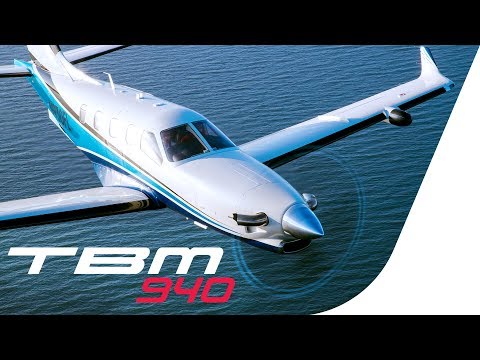
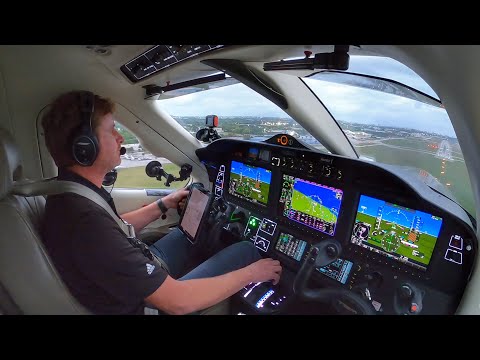
The Daher TBM 940 is the 2019 evolution of the TBM 900-series single-engine turboprop. It is built around the same 850-shp Pratt & Whitney Canada PT6A-66D and aerodynamically-cleaned airframe as the 900, 910, and 930, but is distinguished by two automation firsts in its class: an integrated autothrottle, the first fitted to a production turboprop in the TBM weight category, and, on 2020 and later airframes, Garmin’s HomeSafe emergency autoland. The autothrottle manages power from climb through approach off the Garmin G3000 touchscreen deck, easing the hand-flying workload that has always been the cost of single-pilot turbine speed.
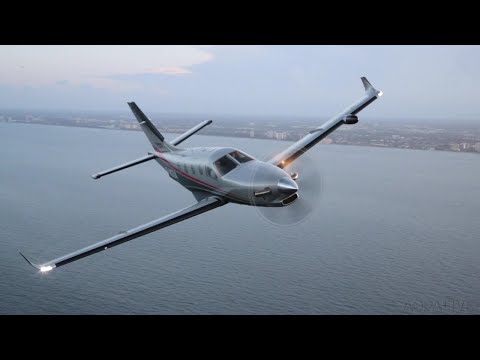
Underneath the avionics, the 940 is the familiar TBM: a pressurised, six-seat airplane that cruises at 330 KTAS at FL280 on a single PT6A’s fuel, with 1,730 nm of range and a 31,000 ft ceiling. It shares the 900’s 7,394 lb MTOW and core performance, so the 940’s real contribution is workload and safety automation rather than raw numbers. It was produced from 2019 until the 2022 arrival of the TBM 960, which replaced the PT6A-66D and its manual power lever with the digitally-governed PT6E-66XT and single-lever e-throttle. Choose the TBM 940 when the autothrottle and HomeSafe safety automation are the priority and a used 940 is more compelling than a new 960 or 980.
Key Features for GA Buyers
- Autothrottle workload relief. The first production-turboprop autothrottle in the TBM class manages power automatically from climb to approach, easing the single-pilot task at near-light-jet speeds.
- HomeSafe emergency autoland (2020+). Garmin’s autoland can take control and land the aircraft at a suitable airport if the pilot becomes incapacitated, a meaningful margin for the owner-flown mission.
- Near-jet cruise on one turbine. 330 KTAS at FL280 from a single 850-shp PT6A-66D, with the operating economics of one engine rather than a cabin-class twin.
- Pressurised FL310 cabin with short-field access. A pressurised cabin to 31,000 ft paired with sub-2,500 ft runway capability opens airports closed to most jets.
Trade-offs
- Single-engine in the flight levels. The TBM routinely flies over terrain and weather where an engine failure is consequential; buyers cross-shopping the King Air or PC-12 accept one engine for the economics and speed.
- Demanding qualification. High-performance, complex, high-altitude, pressurisation, and instrument competence are required, and insurers typically mandate type-specific initial and recurrent training for owner-pilots.
- Superseded by the 960. The 2022 PT6E-66XT and e-throttle make the 940 the last manual-power-lever TBM, a distinction that can weigh on residuals against the current-production model.
- Cabin narrower than the PC-12. The TBM trades cabin volume and an aft cargo door for speed and a smaller frontal area.
See Also
- Daher TBM 900 – the airframe predecessor; same PT6A-66D, pre-autothrottle. Compare
- Daher TBM 960 – the current-production successor with the digital PT6E-66XT and e-throttle. Compare
- Pilatus PC-12 – the single-turboprop competitor with a larger cabin and slower cruise. Compare
- Epic E1000 – composite single turboprop matching the TBM on speed. Compare
- Piper M600 – pressurised single-turboprop competitor a tier down on speed and price. Compare
Technical Specifications
Dimensions & Weights
- Height
- 14 ft
- Length
- 35 ft
- Parking area (ft²2)
- 2,095 ft²
- Max Takeoff Weight
- Source: FAA Type Certificate Data Sheet 7,394 lbs
- Max Landing Weight
- 7,024 lbs
- Useful Load
- 2,765 lbs
- Fuel Capacity
- 291 gal
Performance
- Cruise Speed
- Source: manufacturer figure 330 KTAS
- Never-Exceed (VNE)
- Source: manufacturer figure 266 KIAS
- Max Structural Cruise (VNO)
- Source: manufacturer figure 266 KIAS
- Approach Speed
- 85 KIAS
- Stall, Clean (VS1)
- Source: third-party reference 81 KIAS
- Range
- Source: manufacturer figure 1730 NM
- Service Ceiling
- 31,000 ft
- Rate of Climb
- 2005 fpm
- Takeoff over 50 ft obstacle
- 2,380 ft
- Landing over 50 ft obstacle
- 2,430 ft
Engine
Log in to view or request powerplant data.
Sources
Where the figures on this page come from. Daher TBM 940 specifications are traced to published references; estimated values are flagged inline next to the figure.
-
Daher TBM 900-series Pilot's Information Manual, airspeed limitations. Single-VMO airframe (no separate VNO). Stored as the indicated value per the catalogue IAS convention; EASA TCDS A.010 §B.III.10 gives the same limit as 271 KCAS. www.tbm.aero
-
EASA TCDS A.010 Issue 22 §B.I.5 — TBM940 EASA Type Certificate Date www.easa.europa.eu
-
Aviation Week aircraft overview / AOPA aircraft guide: Daher TBM 940 — maximum cruise speed aviationweek.com
-
AOPA Aircraft Guide: Daher TBM — stall speeds (type-common across the TBM700N line). Vs1 is the clean/flaps-up stall; landing-configuration Vs0 is the lower 65 KIAS. www.aopa.org
Similar to the Daher TBM 940
Similar TurbopropsEpic E1000
Daher TBM 850
Epic LT
Piper M700
Piper M600
Daher TBM 700/700A
Compare the Daher TBM 940 to other aircraft
External Media
Articles and other links
-
Wikipedia: SOCATA TBM Family (including TBM 940) en.wikipedia.org
-
-
-
Technical Deep Dive: TBM 940 Autothrottle - A Game Changer elliottjets.com
-
Manufacturer Homepage: Daher Aircraft www.daher.com