Range Map
• nm at current load
• click map to move • two fingers to move map
Payload vs. Range
Fuel on board
Extra weight
nm
Range
Mission Profile
_(7-29-2023).jpg)
Estimated Ownership Costs
Create a free account to view or request ownership cost data.
About the Sling High Wing
Overview
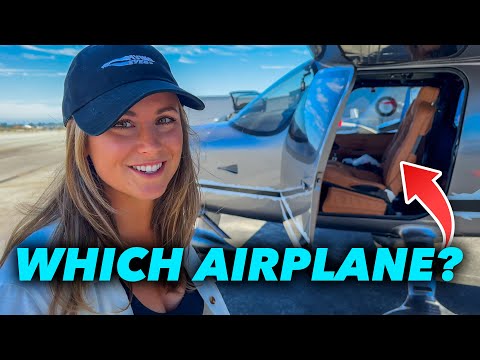
The Sling High Wing is a four-seat, high-wing Experimental Amateur-Built kit aircraft from South Africa’s Sling Aircraft, powered by a turbocharged Rotax 916 iS (160 hp; earlier builds used the 141 hp 915 iS) and cruising about 145 knots true. First flown in December 2020, it is the newest Sling and the only high-wing in the line, developed in response to customers who wanted a Sling with the visibility and easy cabin access of a high-wing layout, and it carries a Garmin G3X Touch glass panel and a ballistic recovery parachute as standard.
The High Wing shares its cantilever wing with the low-wing Sling TSi but grafts it to a wider fuselage with straight-in doors, trading a few knots of cruise for cabin access, ground visibility, and backcountry friendliness, with an available taildragger configuration sharpening that role. Buyers cross-shop it most directly against the certified high-wing benchmark, the Cessna 172 Skyhawk, which it beats on altitude performance and avionics for far less money while giving up type-certificated status and a factory-built airframe. It rewards the buyer who wants a modern glass-panel four-seat high-wing for touring and light backcountry work, and who reads the Experimental category and the build time as fair payment for the savings over a certified high-wing.
Key Features for GA Buyers
- High-wing visibility and access. The high wing and wide straight-in cabin doors make loading and boarding far easier than any low-wing four-seater, and the downward view suits sightseeing and backcountry operations.
- Turbonormalised altitude performance. The Rotax 916 iS holds rated power to roughly 15,000 ft, so above 8,000 ft the High Wing outruns a normally aspirated Cessna 172, holding 135 to 145 KTAS at altitude cruise settings.
- Glass panel and parachute standard. A Garmin G3X Touch suite and a whole-airframe ballistic recovery parachute come standard, a safety-and-avionics package unavailable on comparable certified high-wings.
- Taildragger option. An available taildragger configuration, combined with the high wing’s ground clearance and visibility, makes it a credible backcountry tourer in a way most kit four-seaters are not.
Trade-offs
- Experimental category. As an E-AB aircraft it must be built (roughly 900 to 1,400 hours) or bought pre-completed; builder-assist programmes cut the time but add cost, and the recent design means the used market is still thin.
- Not sport-pilot eligible. With a clean stall near 60 KIAS the High Wing sits above the 59-knot clean-stall limit for MOSAIC sport-pilot operation, so it requires at least a private pilot certificate; the lighter Sling 2 is the sport-pilot option in the line.
- Fixed gear. The fixed tricycle or tailwheel undercarriage simplifies maintenance and insurance but caps cruise speed against retractable certified competitors, though at 145 KTAS the gap is modest for most missions.
- Rotax ecosystem. The 916 iS runs on mogas or avgas with a 2,000-hour TBO and adds calendar-driven service such as the 5-year rubber-and-hose replacement and the 6-year parachute repack; Rotax-trained mechanics are common but not universal.
See Also
- Sling TSi – the low-wing sibling on the same wing: faster cruise and sportier handling for a higher cabin step. Compare
- Cessna 172 Skyhawk – the certified high-wing benchmark the High Wing is built to challenge on performance and value. Compare
- Cessna 180 Skywagon – the classic certified taildragger high-wing: simpler and slower, a very different ownership proposition. Compare
- Diamond DA40 – a modern certified four-seat composite tourer for buyers weighing factory-built simplicity against the kit’s cost savings. Compare
Technical Specifications
Dimensions & Weights
- Height
- 8 ft
- Length
- 24 ft
- Parking area (ft²2)
- 1,178 ft²
- Max Takeoff Weight
- 2,315 lbs
- Max Landing Weight
- 2,315 lbs
- Useful Load
- 1,080 lbs
- Fuel Capacity
- 52 gal
Performance
- Cruise Speed
- Source: manufacturer figure 145 KTAS
- Never-Exceed (VNE)
- Source: manufacturer figure 155 KIAS
- Approach Speed
- 62 KIAS
- Stall, Clean (VS1)
- 60 KIAS
- Range
- 900 NM
- Service Ceiling
- 23,000 ft
- Rate of Climb
- 900 fpm
- Takeoff over 50 ft obstacle
- 1,475 ft
- Landing ground roll
- 1,476 ft
Engine
Log in to view or request powerplant data.
Sources
Where the figures on this page come from. Sling High Wing specifications are traced to published references; estimated values are flagged inline next to the figure.
Similar to the Sling High Wing
Similar PistonsAero Commander 200
Beechcraft Bonanza 33
Beechcraft Bonanza A36
Compare the Sling High Wing to other aircraft