Range Map
Origin: → · two fingers to move map
Payload vs. Range
Fuel on board
Cargo
nm
Range
Trip Preview
Name a destination in the map header above and this becomes your trip: time en route, what you burn, what it costs, and whether you get there without stopping — at the load you have set.
→
Over max payload by . At this load it cannot lift a single occupant. Please adjust your payload inputs.
We do not have a cruise speed on file for this aircraft, so there is no honest time or cost to give you for this leg.
En route
Fuel burned
Direct cost
Fuel cost
Tanks run dry about past before at this burn.
Mission Profile
- High-Performance
- Tailwheel
 (4-11-2024).jpg)
Estimated Ownership Costs
Create a free account to view or request ownership cost data.
About the Cessna 180 Skywagon
Type certificated 1952
Overview
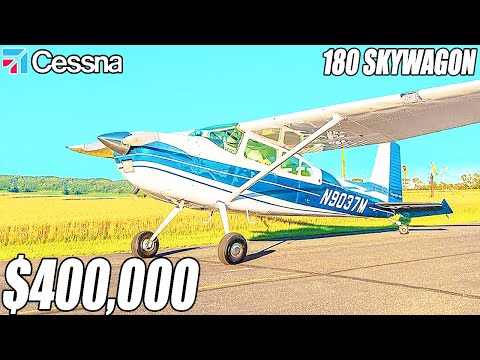
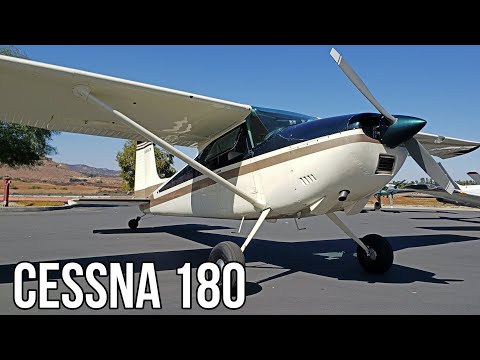
The Cessna 180 Skywagon is a high-wing, conventional-gear utility single built from 1953 to 1981, and the airplane that established the Cessna backcountry line. It pairs a 230 hp Continental O-470 with rugged flat-spring landing gear and a roomy high-wing cabin, cruising around 140 knots and reaching roughly 695 NM on its 84-gallon usable tanks. Late 180J and 180K airframes were certified for up to six seats, though a useful load near 1,100 lb usually makes it a four-adults-plus-fuel airplane in practice. It sits between light STOL taildraggers and the heavier 300 hp Cessna 185 Skywagon that grew from it.
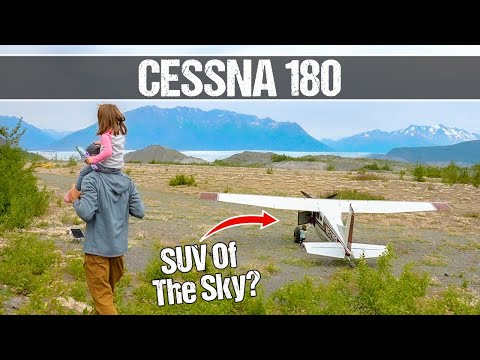
Choose a 180 when you want a do-it-all taildragger that is as comfortable on a paved runway as on a gravel bar, and you can support a high-performance conventional-gear airplane. It asks for a tailwheel endorsement, a high-performance endorsement, meaningful tailwheel time, and the insurance that class carries, and filling all six seats means trading fuel or baggage against payload. For a buyer who wants genuine backcountry capability backed by the parts and overhaul support of a long-production Cessna, the 180 is a proven and versatile choice.
Key Features for GA Buyers
- A True Do-It-All Utility Airplane. With the long-range 84-gallon tanks the 180 reaches roughly 695 NM, and the cabin will take four adults and real baggage. The late 180J and 180K were certified for up to six seats, though weight-and-balance usually limits you to four full-size occupants plus fuel.
- Rugged Spring-Steel Gear. The 180’s flat-spring main gear handles rough-field operation well and is mechanically simpler than the oleo struts used on some competing bush planes, which is part of why so many survive decades of hard use.
- The Proven Continental O-470. The 230 hp O-470 (O-470-U on the 180K) has a strong reputation for reaching TBO in demanding service, and parts and overhaul support remain excellent.
- High-Wing Visibility. Sitting under the wing gives a clear view of a gravel bar or a herd of caribou on short final.
Trade-offs
- Insurance and a Tailwheel Checkout. As a high-performance taildragger, the 180 commands meaningful tailwheel time and a CFI checkout before most insurers will write a policy; budget for both.
- Six Seats on Paper, Four in Practice. Although certified for up to six occupants, the 180’s useful load means you are usually choosing between people, fuel, and baggage rather than filling every seat.
- Firm Control Feel. The 180’s controls take meaningful physical effort, especially loaded at aft CG.
- Corrosion and Gear-Box Inspections. Float- and bush-operated airframes warrant a careful look at the lower firewall, gear-box bulkhead, and seat rails (subject to a recurring AD); a thorough prebuy is essential.
See Also
- Cessna 185 Skywagon – the bigger, 300 hp six-seat sibling for heavier hauling Compare
- Cessna 182 Skylane – the tricycle-gear cousin that trades backcountry grit for easier handling Compare
- Cessna 206 Stationair – the larger fixed-gear hauler when you need a true six-seat load Compare
- Maule M-7 – a modern STOL taildragger alternative in the same backcountry mission Compare
Featured in our buying guides
Technical Specifications
Dimensions & Weights
- Height
- 8 ft
- Length
- 26 ft
- Parking area (ft²2)
- 1,403 ft²
- Max Takeoff Weight
- 2,800 lbs
- Max Landing Weight
- 2,800 lbs
- Useful Load
- 1,100 lbs
- Fuel Capacity
- Source: FAA Type Certificate Data Sheet 84 gal
Performance
- Cruise Speed
- 140 KTAS
- Never-Exceed (VNE)
- Source: FAA Type Certificate Data Sheet 169 KIAS
- Max Structural Cruise (VNO)
- Source: FAA Type Certificate Data Sheet 139 KIAS
- Approach Speed
- 61 KIAS
- Stall, Clean (VS1)
- 48 KIAS
- Range
- 695 NM
- Service Ceiling
- 19,600 ft
- Rate of Climb
- 1100 fpm
- Takeoff over 50 ft obstacle
- 1,205 ft
- Landing over 50 ft obstacle
- 1,365 ft
Engine
Log in to view or request powerplant data.
Sources
Where the figures on this page come from. Cessna 180 Skywagon specifications are traced to published references; estimated values are flagged inline next to the figure.
-
FAA TCDS 5A6 Rev 68 (Cessna 180 series), Model 180K Airspeed Limits (IAS) dyzz9obi78pm5.cloudfront.net
-
Cessna Model 180K Pilot's Operating Handbook (1 October 1978), Section 5 Performance, Figure 5-10 LANDING DISTANCE / SHORT FIELD, p. 5-25 www.aeroelectric.com
-
PlanePhD, CESSNA 180K -- Specifications & Performance (model id 222) -- CORROBORATION and diagnosis of the original defect planephd.com
Similar to the Cessna 180 Skywagon
Similar PistonsHelio H-295 Super Courier
Maule M-9
Maule M-7
Cessna 185 Skywagon
Maule M-4
Cessna 195
Compare the Cessna 180 Skywagon to other aircraft
External Media


Articles and other links
-
Cessna 180 Skywagon - Wikipedia en.wikipedia.org
-
Cessna 180 Aircraft Fact Sheet - AOPA www.aopa.org
-
Cessna 180 Skywagon Performance & History - Plane + Pilot Magazine planeandpilotmag.com
-
Lord of the Bushbirds: The Cessna 180 - Cessna Owner Organization cessnaowner.org
-