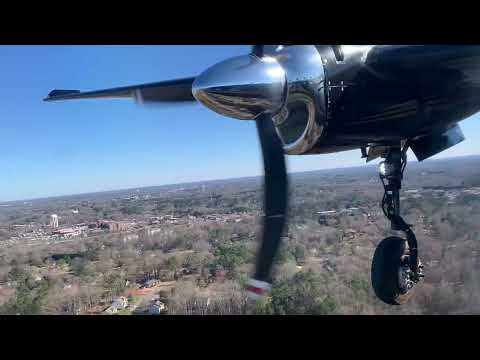
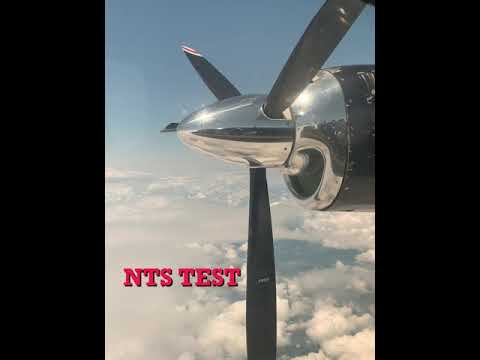
Range Map
Origin: → · two fingers to move map
Payload vs. Range
Fuel on board
Cargo
nm
Range
Trip Preview
Name a destination in the map header above and this becomes your trip: time en route, what you burn, what it costs, and whether you get there without stopping — at the load you have set.
→
Over max payload by . At this load it cannot lift a single occupant. Please adjust your payload inputs.
We do not have a cruise speed on file for this aircraft, so there is no honest time or cost to give you for this leg.
En route
Fuel burned
Direct cost
Fuel cost
Tanks run dry about past before at this burn.
Mission Profile
- High-Performance
- Complex
- High-Altitude
- Pressurization
- Multi-Engine
- Instrument
_(4-13-2024).jpg)
Estimated Ownership Costs
Create a free account to view or request ownership cost data.
About the Gulfstream Jetprop Commander 1000
Type certificated 1981 Source: manufacturer figure
Overview
The Gulfstream Jetprop Commander 1000 is the stretched, top-of-line evolution of the Aero Commander twin-turboprop family, type-certified in April 1981 under FAA model designation 695A. Marketed as the Jetprop 1000 and produced from 1982 to 1985 under Gulfstream Aerospace ownership of the Twin Commander line, the type fitted Garrett TPE-331-10 engines rated at 820 shp per side to the stretched 695 airframe, completing a series progression that began with the 690 and continued through the 690B (TPE-331-5), 690C/Jetprop 840, 690D/Jetprop 900, and 695/Jetprop 980. The 1000 designation refers to the 1,000 shaft-horsepower-class TPE-331-10 powerplants. Production totaled 101 aircraft of the 695A and a further 6 of the closely related 695B/Jetprop 1000B (heavier MTOW, otherwise similar).
In its operating envelope the 1000 is a cabin-class twin turboprop: pressurised to 6.7 psi differential for FL350 cruise at a 10,000 ft cabin altitude, max-cruise speed of around 300 KTAS, max range of 2,080 NM on 482 gallons of fuel, and useful load near 3,900 lb. The high-wing layout, fast roll rate, and the Commander’s signature forward-set cockpit give it a handling character that owners describe as more responsive than the King Air, while the cabin (12.4 ft long, 4.1 ft wide, 4.8 ft tall) seats up to nine with the rear lavatory installed. Twin Commander Aircraft, the type’s continuing support organisation, maintains parts and authorised service centers for the in-service fleet.
Key Features for GA Buyers
- Longest cabin in the family. The 695A airframe carries the longest cabin of any Aero Commander variant, with a true executive layout and lavatory option that the unstretched 690 family cannot match.
- TPE-331-10 muscle. 820 shp per side delivers an initial climb near 2,800 fpm and FL350 cruise capability, comfortably above most weather and turbulence on a typical mid-continent leg.
- High-wing visibility and cabin access. The Aero Commander signature configuration gives passengers an unobstructed downward view and makes ramp handling and boarding straightforward, with the cabin floor close to the ground.
- Long legs on reasonable fuel. 482 gallons total fuel supports 2,080 NM at long-range cruise, putting transcontinental US legs in single-stop reach with a comfortable reserve.
- Continuing factory-aligned support. Twin Commander Aircraft sustains a parts pipeline, service-center network, and modernisation programs (including RVSM STCs) that keep aging airframes commercially viable.
Trade-offs
- Garrett TPE-331 ownership profile. The TPE-331-10 is a sophisticated, manually-controlled single-shaft turboprop with a hot-section inspection at roughly half-TBO and an overhaul schedule that, while manageable, runs more expensive than a comparable PT6A. Schools and shops with depth on the engine type are concentrated, not ubiquitous.
- Small fleet relative to King Air alternatives. With only 107 airframes built across 1000 and 1000B combined, the resale market is thinner than the King Air 200 and parts for some legacy systems require dedicated sourcing.
- Older systems require ongoing modernisation budget. Avionics, autopilot, and pressurisation control on a 40-plus year old airframe typically need a substantive upgrade pass to align with current part 91 expectations, on top of the routine inspection cycle.
- Variant disambiguation matters. The 1000 (695A) and 1000B (695B) carry the same marketing name but different MTOW, and the 980 (695) is a separate variant entirely. Pre-buy and insurance discussions need the data-plate designation, not the cabin badge.
- Single-engine ceiling and cabin altitude warrant mission-fit review. Single-engine service ceiling around 21,000 ft and a 10,000 ft cabin altitude at FL350 are typical of the class but worth confirming against owner mission profile before purchase.
See Also
- Beechcraft King Air 200 – Direct competitor in cabin-class twin turboprop bracket. Compare
- Cessna Conquest II – Direct competitor with similar engines. Compare
- Mitsubishi Marquise/Solitaire – Speed-focused MU-2 alternative for the same mission. Compare
- Piper Cheyenne II – Contemporary cabin-class twin turboprop competitor. Compare
- Aero Commander 680FL – Family lineage; piston cabin-class predecessor. Compare
Technical Specifications
Dimensions & Weights
- Height
- 15 ft
- Length
- 43 ft
- Parking area (ft²2)
- 2,981 ft²
- Max Takeoff Weight
- Source: manufacturer figure 11,200 lbs
- Max Landing Weight
- 10,550 lbs
- Useful Load
- 3,911 lbs
- Fuel Capacity
- 482 gal
Performance
- Cruise Speed
- Source: manufacturer figure 300 KTAS
- Approach Speed
- 100 KIAS
- Stall, Clean (VS1)
- 79 KIAS
- Range
- 2080 NM
- Service Ceiling
- 35,000 ft
- Rate of Climb
- 929 - 2800 fpm
Engines
Log in to view or request powerplant data.
Sources
Where the figures on this page come from. Gulfstream Jetprop Commander 1000 specifications are traced to published references; estimated values are flagged inline next to the figure.
Similar to the Gulfstream Jetprop Commander 1000
Similar TurbopropsBeechcraft King Air F90
Cessna 441 Conquest II
Cessna 425 Conquest I
Fairchild Swearingen Merlin IIIB
Beechcraft King Air 90
Compare the Gulfstream Jetprop Commander 1000 to other aircraft

![Rockwell Jetprop Commander 1000 Takeoff From Idaho Falls [N695GK]](https://img.youtube.com/vi/C3D_-QdEot4/0.jpg)