Range Map
Origin: → · two fingers to move map
Payload vs. Range
Fuel on board
Cargo
nm
Range
Trip Preview
Name a destination in the map header above and this becomes your trip: time en route, what you burn, what it costs, and whether you get there without stopping — at the load you have set.
→
Over max payload by . At this load it cannot lift a single occupant. Please adjust your payload inputs.
We do not have a cruise speed on file for this aircraft, so there is no honest time or cost to give you for this leg.
En route
Fuel burned
Direct cost
Fuel cost
Tanks run dry about past before at this burn.
Mission Profile
- High-Performance
- Complex
- High-Altitude
- Pressurization
- Multi-Engine
- Instrument

Estimated Ownership Costs
Create a free account to view or request ownership cost data.
About the Commander 690
Type certificated 1976 Source: FAA Type Certificate Data Sheet
Overview
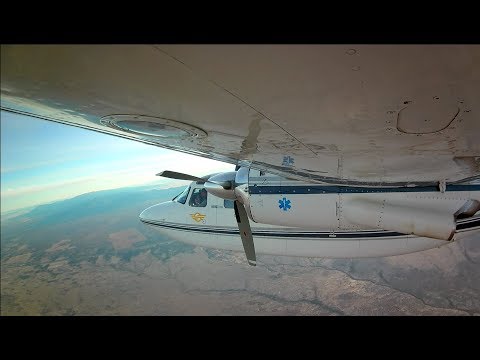
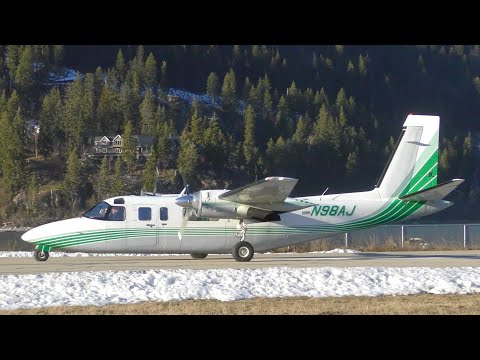
The Rockwell Commander 690B is the matured form of the Commander 690 turboprop series, produced from 1976 to 1979 and certified under FAA TCDS 2A4. It is a pressurised, high-wing, twin-turboprop cabin-class aircraft powered by two Honeywell (originally Garrett AiResearch) TPE-331-5-251K engines, each rated at roughly 717 shaft horsepower and driving three-blade Hartzell propellers. About 217 airframes were built.
The 690 family traces directly back to the piston Aero Commander 680 line: when Aero Commander engineers shopped for more performance than the IGSO-540 supercharged piston engine could give, the choice was the then-new Garrett TPE-331 single-shaft turboprop. The 690 added a fully pressurised cabin, a redesigned wing with the engines moved further outboard, and modern turbine reliability to an airframe whose stout high-wing layout was already a known quantity in U.S. business and utility flying. The 690B refined that recipe with a higher MTOW (10,325 lb), better soundproofing, an internal lavatory, and minor systems updates.
For a buyer evaluating one today, the 690B sits in a narrow band of the used-turboprop market: about 279 KTAS cruise, a 31,000 ft service ceiling, and a 10,325 lb MTOW give it genuine cabin-class turbine capability in a high-wing airframe. The high wing buys ground clearance, easy cabin access, and unobstructed views from passenger seats, but the airplane is unambiguously a serious turbine that wants two crew and a Type Rating-grade approach to systems management.
Fleet support is the single most important contextual fact. Twin Commander Aircraft LLC (the type-club and TCDS holder) actively maintains the type with the Service Center network, mandatory inspection guidance, and the long-running Grand Renaissance airframe refurbishment program. A 690B that has been kept current at a Twin Commander Service Center is meaningfully more operable than one that has not.
Key Features for GA Buyers
- Turbine reliability with serious cabin. Pressurised to 5.2 psi for a sea-level cabin to roughly 12,000 ft, a 31,000 ft service ceiling, and twin Garrett TPE-331-5s with a 5,400-hour TBO under current Honeywell SOAP/CAM programs. Real all-weather, IFR-without-asterisks transport.
- Cruise that earns the fuel burn. Normal cruise of about 279 KTAS at FL200 and up to 284 KTAS at lower altitudes, with a 1,419 NM long-range cruise range at 45-minute reserve.
- High-wing utility. Long, unobstructed cabin entry; props well clear of the ground for unimproved-field operations; passenger sightlines that piston-twin and Beech-cabin buyers immediately notice. Useful load of about 4,180 lb leaves room for full fuel plus six adults and bags.
- Type-club support is real. Twin Commander Aircraft LLC maintains an active Service Center network, factory-supported continued airworthiness program, and the Grand Renaissance refurbishment line. Type-specific recurrent training is widely available; this is not a given on a 1970s turboprop.
- Strong short-field numbers for the weight class. About 2,259 ft takeoff and 2,084 ft landing over a 50 ft obstacle at sea level, with an initial climb rate near 2,849 fpm at MTOW. The Commander gets in and out of airfields that nominally belong to lighter airplanes.
Trade-offs
- TPE-331 hot-section economics. The -5-251K is a single-shaft engine with a well-documented but expensive maintenance profile: hot-section inspection roughly every 1,800 hours, full overhaul at 5,400, and labor-intensive negative-torque-system and fuel-control attention. Budget for engine reserves accordingly; this is not a Pratt PT6 in cost behavior.
- Single-shaft start and handling discipline. TPE-331 starts require deliberate technique; mismanaged starts are a known way to ruin a hot section in seconds. Type-specific training is non-negotiable for a new-to-type owner.
- Cabin is comfortable, not large. Typical executive seating is 2 crew plus 5 passengers (the certification allows up to 10 in a commuter layout, but that is rare in surviving airframes). Cabin height about 4 ft 5 in, adequate, not stand-up.
- Aging avionics in many airframes. Many 690Bs still fly with 1970s panels unless they have been through a major upgrade or the Renaissance program. Plan on $150k-$400k for a modern Garmin or Collins panel if the airplane has not had one.
- Fuel burn at altitude. Roughly 70-90 gph combined in cruise depending on power setting and altitude. The -5 engines are less efficient than the later -10 dash that flies on the 690C/D and 695-series; if mission economics matter, the -10 conversions sold by Twin Commander Service Centers are worth pricing.
- Parts and AD currency. The TCDS is mature and the type has a long AD history (wing spar, flight-control attach hardware, and others). A pre-buy at a Twin Commander Service Center, not a generalist shop, is the only sensible approach.
See Also
- Aero Commander 680FL – Piston-Commander predecessor; the high-wing IGSO-540 piston twin that the 690 turboprop grew out of. Compare
- Gulfstream Jetprop Commander 1000 – Stretched, re-engined successor; the 695A with TPE-331-10s and a longer cabin is the natural step-up for buyers who need more. Compare
- Mitsubishi MU-2B-60 Marquise – Direct era competitor; the other 1970s pressurised cabin-class twin on TPE-331 power, with a very different handling reputation. Compare
- Beechcraft King Air 90 – Direct era competitor; the canonical PT6-powered alternative at similar size and cabin: Garrett vs Pratt economics in one comparison. Compare
- Piper Cheyenne II – Direct era competitor; PT6A-28-powered low-wing alternative at similar mission and seat count. Compare
Technical Specifications
Dimensions & Weights
- Height
- 15 ft
- Length
- 44 ft
- Parking area (ft²2)
- 2,791 ft²
- Max Takeoff Weight
- Source: FAA Type Certificate Data Sheet 10,325 lbs
- Max Landing Weight
- 9,675 lbs
- Useful Load
- 4,180 lbs
- Fuel Capacity
- 384 gal
Performance
- Cruise Speed
- 279 KTAS
- Never-Exceed (VNE)
- Source: FAA Type Certificate Data Sheet 243 KIAS
- Approach Speed
- 97 KIAS
- Stall, Clean (VS1)
- 82 KIAS
- Range
- 1419 NM
- Service Ceiling
- Source: FAA Type Certificate Data Sheet 31,000 ft
- Rate of Climb
- 2849 fpm
- Takeoff over 50 ft obstacle
- 2,259 ft
- Landing over 50 ft obstacle
- 2,084 ft
Engines
Log in to view or request powerplant data.
Sources
Where the figures on this page come from. Commander 690 specifications are traced to published references; estimated values are flagged inline next to the figure.
Similar to the Commander 690
Similar TurbopropsPiper Cheyenne II
Cessna 425 Conquest I
Compare the Commander 690 to other aircraft
External Media

Articles and other links
-
Quick Look: Commander 690 series www.aopa.org
-
Grand Renaissance Commander Levels Up the Twin Turboprop www.flyingmag.com
-
Rockwell Turbo Commander 690A/B planeandpilotmag.com
-
-
-
Aero Commander 500 family en.wikipedia.org