Range Map
Origin: → · two fingers to move map
Payload vs. Range
Fuel on board
Cargo
nm
Range
Trip Preview
Name a destination in the map header above and this becomes your trip: time en route, what you burn, what it costs, and whether you get there without stopping — at the load you have set.
→
Over max payload by . At this load it cannot lift a single occupant. Please adjust your payload inputs.
We do not have a cruise speed on file for this aircraft, so there is no honest time or cost to give you for this leg.
En route
Fuel burned
Direct cost
Fuel cost
Tanks run dry about past before at this burn.
Mission Profile
- High-Altitude
- Pressurization
- Instrument
.jpg)
Estimated Ownership Costs
Create a free account to view or request ownership cost data.
About the Cirrus Vision SF50
Type certificated 2016
Overview
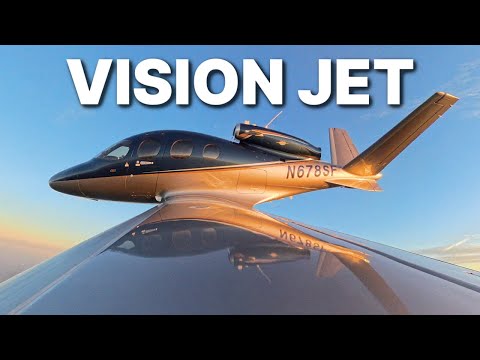
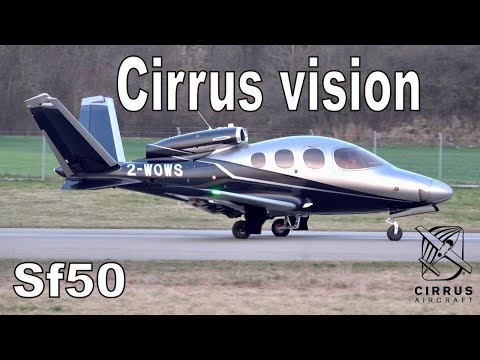
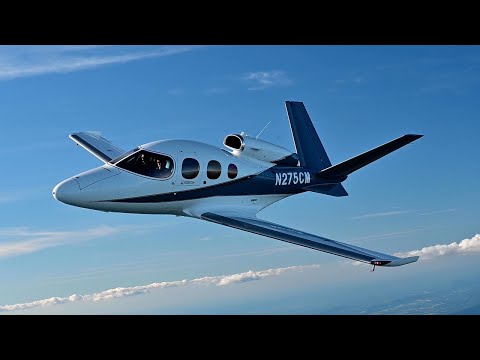
The Cirrus Vision SF50 (Vision Jet) is a single-engine very light jet built for the owner-pilot stepping up from a high-performance piston or turboprop, not for a company that hires crew. A single Williams International FJ33-5A turbofan sits above the rear fuselage, feeding a distinctive V-tail, and the whole aeroplane follows the logic that made the SR-series work: keep the pilot inside a forgiving envelope, and hang a parachute on the airframe for the day everything else fails. It is the first civil jet certified with a whole-airframe ballistic recovery parachute (CAPS), and from the G2+ it adds Safe Return autoland as standard, which a passenger can trigger to have the jet navigate, descend, and land itself if the pilot is incapacitated. The panel is Cirrus Perspective Touch+, and the jet is certified single-pilot.
By jet numbers the performance is modest, and on purpose. It cruises around 317 KTAS, tops out at 31,000 feet, and reaches roughly 1,275 nm, while a pressurised cabin seats up to five adults and two children and the whole thing tucks into a standard 40-foot tee hangar, so it lives on the same general-aviation infrastructure its owners already use for a piston single. That is the pitch: turbine simplicity, pressurised comfort, and the CAPS backstop in a jet one person flies, for a pilot who does not need the speed, range, or flight levels of a twin-engine light jet and would rather not pay for them.
Key Features for GA Buyers
- Whole-airframe parachute (CAPS). The first jet certified with a ballistic recovery parachute that brings the entire aircraft down under canopy, the same backstop Cirrus pioneered on the SR-series.
- Safe Return autoland (G2+). Standard from the G2+: a passenger can press one button and have the aircraft navigate, talk to ATC, descend, and land itself if the pilot is out of action.
- Single-pilot, owner-flown. Certified for one pilot behind Cirrus Perspective Touch+, it is a genuine step-up jet for someone coming off piston or turboprop singles rather than a crewed business aircraft.
- Fits a standard tee hangar. A 38.7-foot span and 30.9-foot length let it share a conventional 40-foot tee hangar, so it slots into the infrastructure GA owners already rent.
- Pressurised comfort off short runways. The cabin climbs to 31,000 feet to get above weather, yet the jet lands in about 1,628 feet of ground roll, reaching airports most light jets would pass over.
Trade-offs
- One engine. With a single turbofan the parachute is the redundancy story, not a second engine; some buyers, and some insurers, weigh that differently.
- Modest speed and range. At about 317 KTAS and up to roughly 1,275 nm it trails twin-engine light jets like the Phenom 300 and Citation M2 on both counts.
- Seats or fuel, rarely both. Filling the cabin and filling the tanks pull against each other; a long leg at high cruise comes out of payload.
- Lower ceiling than the bigger jets. A 31,000-foot maximum keeps it under most business jets, so it spends more time in weather and traffic than a FL410 aeroplane.
- Jet running costs in a single-engine wrapper. Turbofan maintenance, training, and reserves sit well above any piston single or turboprop, even where the mission overlaps.
See Also
- Cirrus SR22T – the turbocharged SR-series piston single most Vision Jet buyers step up from, sharing the CAPS parachute and Cirrus cockpit. Compare
- Cessna Citation M2 – entry twin-engine Citation that owner-pilots cross-shop against the SF50 for single-pilot jet ownership. Compare
- Cessna Citation Mustang – original owner-flown very light twinjet, the closest historical peer to the Vision Jet’s mission. Compare
- Embraer Phenom 300 – twin-engine light jet a clear tier up in speed, range, and cabin, for buyers weighing a crewed-capable step beyond a single. Compare
- Daher TBM 960 – single-engine pressurised turboprop that competes directly on the owner-flown step-up mission at lower operating cost. Compare
Technical Specifications
Dimensions & Weights
- Height
- 11 ft
- Length
- 31 ft
- Parking area (ft²2)
- 1,748 ft²
- Max Takeoff Weight
- 6,000 lbs
- Max Landing Weight
- 5,550 lbs
- Useful Load
- 2,400 lbs
- Fuel Capacity
- 296 gal
Performance
- Cruise Speed
- Source: manufacturer figure 317 KTAS
- Never-Exceed (VNE)
- Source: FAA Type Certificate Data Sheet 250 KIAS
- Max Structural Cruise (VNO)
- Source: FAA Type Certificate Data Sheet 250 KIAS
- Approach Speed
- 85 KIAS
- Stall, Clean (VS1)
- 86 KIAS
- Range
- 1275 NM
- Service Ceiling
- 31,000 ft
- Rate of Climb
- 1609 fpm
- Takeoff over 50 ft obstacle
- 3,192 ft
- Landing over 50 ft obstacle
- 1,628 ft
Engine
Log in to view or request powerplant data.
Sources
Where the figures on this page come from. Cirrus Vision SF50 specifications are traced to published references; estimated values are flagged inline next to the figure.
-
Cirrus Aircraft — Vision Jet official product page, Specs section (Max Cruise Speed). Current-production (G2+/G7) figure; supersedes the stale G1-era ~305 KTAS previously stored cirrusaircraft.com
-
EASA TCDS EASA.IM.A.615 (Cirrus SF50), maximum operating limit speed VMO/MMO; corroborated by Aviation Week Network, Cirrus Vision Jet aircraft overview. A single-engine VLJ has no structural Vne, so v_ne carries the VMO airspeed limit (250 KIAS / Mach 0.53) aviationweek.com
Compare the Cirrus Vision SF50 to other aircraft