Range Map
Origin: → · two fingers to move map
Payload vs. Range
Fuel on board
Cargo
nm
Range
Trip Preview
Name a destination in the map header above and this becomes your trip: time en route, what you burn, what it costs, and whether you get there without stopping — at the load you have set.
→
Over max payload by . At this load it cannot lift a single occupant. Please adjust your payload inputs.
We do not have a cruise speed on file for this aircraft, so there is no honest time or cost to give you for this leg.
En route
Fuel burned
Direct cost
Fuel cost
Tanks run dry about past before at this burn.
Mission Profile
- Complex
.jpg)
Estimated Ownership Costs
Create a free account to view or request ownership cost data.
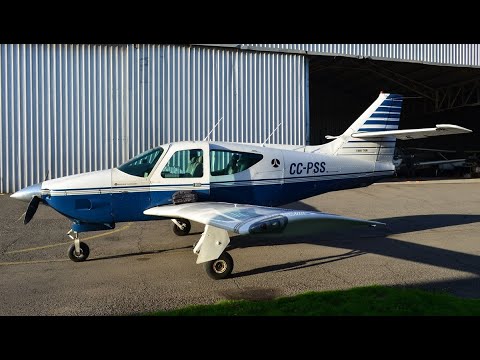
About the Rockwell Commander 112
Type certificated 1972 Source: third-party reference
Overview
The Rockwell Commander 112 is a four-seat, single-engine retractable that Rockwell designed from a clean sheet in the early 1970s, FAA type-certificated under TCDS A12SO in 1972 and built at the Bethany, Oklahoma factory alongside the Commander twins. It is powered by a 200 hp Lycoming IO-360-C1D6 driving a constant-speed propeller, with a low wing, retractable tricycle gear, and a cabin that was the whole point of the airplane: at 47 inches across it is one of the widest in the 200 hp retractable class, entered through doors on both sides.
Rockwell built the 112 to out-comfort the Piper Arrow and Beechcraft Sierra rather than out-run them, and that is how it turned out. The airframe is heavy and strongly built, which gives it a solid, big-airplane feel and a forgiving ride but leaves the 200 hp engine working hard: cruise sits around 140 knots, a figure a fixed-gear Piper Archer will match. Production ran from 1972 through the end of the decade across the 112, 112A, 112B, and turbocharged 112TC; the 260 hp Commander 114 is the higher-output sibling for buyers who found the 112 underpowered.
The 112 suits a buyer who wants a comfort-first cross-country single and accepts a specific set of trade-offs. The cabin, the visibility, and the trailing-link landing gear still distinguish it from its contemporaries; the performance is modest, the useful load is tight with full fuel, and the original manufacturer is long gone, so parts and type-specific maintenance knowledge are the things to verify before buying. An active owners’ community and the surviving Commander parts lineage keep well-supported examples flying.
Key Features for GA Buyers
- Class-leading cabin width. At about 47 inches the cabin is wider than the contemporary Piper Arrow or Beechcraft Sierra, with real shoulder room and a finished, big-airplane interior.
- Doors on both sides. Unlike most Cessna and Piper singles, the Commander has a door for each front occupant, which makes entry, egress, and loading noticeably easier.
- Trailing-link landing gear. The trailing-link main gear soaks up firm arrivals and gives the airplane a reputation for making ordinary landings look polished.
- Solid, stable IFR platform. The heavy airframe and low wing give a planted feel in cruise and on instruments that owners value on longer trips.
Trade-offs
- Modest cruise for a retractable. Expect roughly 135 to 140 knots on 200 hp; a simpler fixed-gear Archer keeps pace, so the 112 does not convert its retractable gear and added complexity into much extra speed.
- Tight useful load with full fuel. The stout airframe eats into payload; with the tanks full, cabin load for people and baggage is limited, and honest four-adult trips usually mean trading fuel for weight.
- Orphaned manufacturer, thinning parts pool. Rockwell left the single-engine business decades ago; some airframe-specific parts and the trailing-link gear components need a shop and a parts network that know the type. Budget for a knowledgeable pre-buy.
- Wing-spar and gear inspection items. The type carries airworthiness-directive history on the wing spar and attention items on the retractable gear; a type-experienced annual is the sensible approach, not a generalist one.
See Also
- Piper Cherokee Arrow – The direct period rival: a 200 hp retractable Cherokee that trades the Commander’s cabin width for slightly better speed and a far deeper parts network. Compare
- Beechcraft Sierra 24 – The closest cabin-comfort competitor: a roomy 200 hp retractable single with a similar comfort-over-speed character. Compare
- Cessna 177 Cardinal RG – Same 200 hp retractable-single bracket with wide doors and good visibility; a high-wing alternative to the Commander’s low-wing layout. Compare
- Mooney M20F – The efficiency counterpoint: the same 200 hp IO-360 in a much faster airframe, the airplane the Commander is most often accused of losing to on speed. Compare
Technical Specifications
Dimensions & Weights
- Height
- 8 ft
- Length
- 25 ft
- Parking area (ft²2)
- 1,275 ft²
- Max Takeoff Weight
- 2,650 lbs
- Max Landing Weight
- 2,550 lbs
- Useful Load
- 969 lbs
- Fuel Capacity
- 68 gal
Performance
- Cruise Speed
- Source: third-party reference 140 KTAS
- Approach Speed
- 71 KIAS
- Stall, Clean (VS1)
- 62 KIAS
- Range
- 780 NM
- Service Ceiling
- 13,900 ft
- Rate of Climb
- 1020 fpm
- Takeoff over 50 ft obstacle
- 1,585 ft
- Landing over 50 ft obstacle
- 1,310 ft
Engine
Log in to view or request powerplant data.
Sources
Where the figures on this page come from. Rockwell Commander 112 specifications are traced to published references; estimated values are flagged inline next to the figure.
Similar to the Rockwell Commander 112
Similar PistonsCessna 172 Cutlass RG
Mooney M20J 201
Piper Cherokee Arrow
Cessna 177 Cardinal RG
Mooney M20F
Mooney M20E
Mooney M20C
Piper 28T Arrow 4
North American Navion
Compare the Rockwell Commander 112 to other aircraft
External Media


Articles and other links
-
Wikipedia: Rockwell Commander 112 (History & Design) en.wikipedia.org
-
AOPA Aircraft Fact Sheet: Rockwell Commander 112/114 www.aopa.org
-
Plane & Pilot: Rockwell Commander 112 Specifications & Review planeandpilotmag.com
-
Flying Mag: Why the Commander 112 is a Smooth-Flying Top Pick www.flyingmag.com
-