Range Map
Origin: → · two fingers to move map
Payload vs. Range
Fuel on board
Cargo
nm
Range
Trip Preview
Name a destination in the map header above and this becomes your trip: time en route, what you burn, what it costs, and whether you get there without stopping — at the load you have set.
→
Over max payload by . At this load it cannot lift a single occupant. Please adjust your payload inputs.
We do not have a cruise speed on file for this aircraft, so there is no honest time or cost to give you for this leg.
En route
Fuel burned
Direct cost
Fuel cost
Tanks run dry about past before at this burn.
Mission Profile
- Complex
- High-Altitude
- Multi-Engine
.jpg)
Estimated Ownership Costs
Create a free account to view or request ownership cost data.
About the Piper PA-30 Turbo Twin Comanche
Type certificated 1963 Source: FAA Type Certificate Data Sheet
Overview
The Piper PA-30 Turbo Twin Comanche is the turbocharged version of Piper’s fuel-efficient light twin, built on the laminar-flow Comanche airframe and produced from 1963, with turbocharging arriving on the B model in 1966. Two small 160-horsepower Lycoming engines give it cruise speeds that rival larger twins on roughly half the fuel, and manual RayJay turbocharging lets it hold power into the mid-twenties and ceiling at 30,000 feet.
For buyers it is the efficiency play in the twin market: a second engine for redundancy at a fuel burn close to a high-performance single. With optional 15-gallon tip tanks bringing fuel to 120 gallons, range exceeds 1,100 nautical miles. Set against Piper’s own Aztec, the Turbo Twin Comanche is the efficiency choice: it cruises faster on roughly 17 gallons an hour where the Aztec burns near 27, and tip tanks stretch it past 1,100 nautical miles, but it gives up the Aztec’s cabin and payload to do it. It suits the pilot who flies long legs at altitude and counts fuel, not the one who needs to haul a full cabin.
Key Features for GA Buyers
- Roughly 15 to 17 GPH combined. Two Lycoming TIO-320 fours, 160 hp each.
- High-altitude turbocharging. Manual RayJay wastegates maintain power into the mid-twenties for a 30,000-foot service ceiling.
- Tip-tank range. Optional 15-gallon tip tanks raise total fuel to 120 gallons and range past 1,100 nm.
- Laminar-flow Comanche airframe. Clean aerodynamics deliver the speed, and the type has an established owner and parts community.
- Counter-rotating PA-39 option. Later airframes eliminate the critical engine, simplifying single-engine handling.
Trade-offs
- Manual turbo management. Older turbo models use manual wastegates, so the pilot manages throttle and wastegate together in the climb to avoid over-boosting.
- Demanding landings. The laminar-flow wing and short gear make it a known floater that punishes excess approach speed.
- Marginal single-engine climb. Like its peers, engine-out climb is modest (roughly 200 to 260 fpm) and rewards a current, proficient pilot who respects Vmc and Vsse.
- Tight cabin. The four-seat cabin (six PCLM with the optional rear jump seats) is narrow, and the aft seats suit children or baggage more than adults.
- Aging turbo systems. Turbochargers, wastegates, and induction plumbing add maintenance items beyond a naturally aspirated twin.
See Also
- Piper PA-23 Apache – Piper’s entry-level twin on similar 160-horsepower engines. Compare
- Piper PA-23-250 Aztec – Piper’s larger, load-hauling six-place twin. Compare
- Piper PA-34 Seneca – Piper’s later, roomier turbocharged twin. Compare
- Beechcraft Travel Air – a contemporary light twin cross-shop. Compare
Featured in our buying guides
Technical Specifications
Dimensions & Weights
- Height
- 8 ft
- Length
- 25 ft
- Parking area (ft²2)
- 1,385 ft²
- Max Takeoff Weight
- Source: FAA Type Certificate Data Sheet 3,600 lbs
- Max Landing Weight
- 3,600 lbs
- Useful Load
- 1,317 lbs
- Fuel Capacity
- 120 gal
Performance
- Cruise Speed
- Source: third-party reference 194 KTAS
- Never-Exceed (VNE)
- Source: FAA Type Certificate Data Sheet 200 KIAS
- Max Structural Cruise (VNO)
- Source: FAA Type Certificate Data Sheet 168 KIAS
- Approach Speed
- 75 KIAS
- Stall, Clean (VS1)
- 69 KIAS
- Range
- 1100 NM
- Service Ceiling
- Source: third-party reference 30,000 ft
- Rate of Climb
- 260 - 1460 fpm
- Takeoff over 50 ft obstacle
- 1,590 ft
- Landing over 50 ft obstacle
- 1,900 ft
Engines
Log in to view or request powerplant data.
Sources
Where the figures on this page come from. Piper PA-30 Turbo Twin Comanche specifications are traced to published references; estimated values are flagged inline next to the figure.
Similar to the Piper PA-30 Turbo Twin Comanche
Similar PistonsAero Commander 500
Aero Commander 500A
Aero Commander 560
Compare the Piper PA-30 Turbo Twin Comanche to other aircraft
External Media

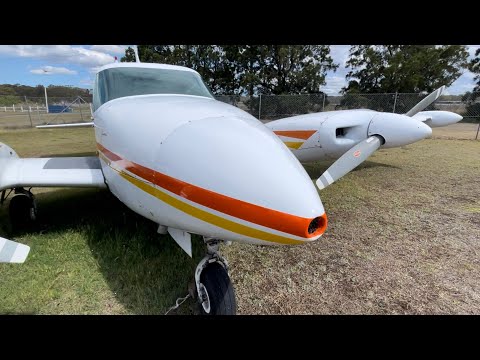
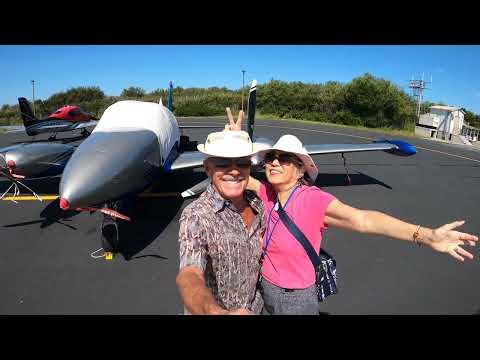
Articles and other links
-
Piper PA-30 Twin Comanche - Wikipedia en.wikipedia.org
-
AOPA Aircraft Fact Sheet: Piper Twin Comanche www.aopa.org
-
Aviation Consumer: Piper Twin Comanche Used Aircraft Guide aviationconsumer.com
-
AVweb: The Twin Comanche – Fast, Frugal, and Iconic avweb.com
-
Plane + Pilot: 1969 Piper Twin Comanche Review planeandpilotmag.com