Range Map
Origin: → · two fingers to move map
Payload vs. Range
Fuel on board
Cargo
nm
Range
Trip Preview
Name a destination in the map header above and this becomes your trip: time en route, what you burn, what it costs, and whether you get there without stopping — at the load you have set.
→
Over max payload by . At this load it cannot lift a single occupant. Please adjust your payload inputs.
We do not have a cruise speed on file for this aircraft, so there is no honest time or cost to give you for this leg.
En route
Fuel burned
Direct cost
Fuel cost
Tanks run dry about past before at this burn.
Mission Profile
- High-Performance
- Complex
- High-Altitude
- Multi-Engine
.jpg)
Estimated Ownership Costs
Create a free account to view or request ownership cost data.
About the Piper Navajo PA-31
Type certificated 1966 Source: FAA Type Certificate Data Sheet
Overview
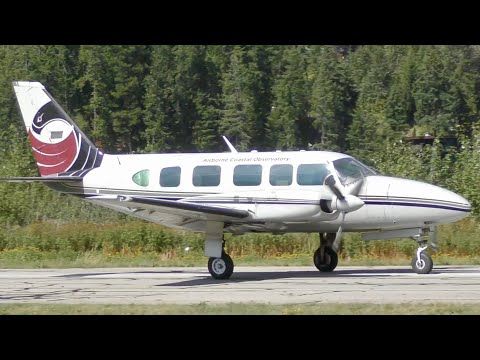
The Piper PA-31 Navajo is the airplane that created the entry-level cabin-class twin: a low-wing, eight-seat piston twin with an airstair door, a center-aisle cabin, and a pair of 310 hp turbocharged Lycoming TIO-540 engines. Certificated under FAA Type Certificate A20SO in February 1966 and built at Lock Haven through the early 1980s, the Navajo gave charter and corporate operators a true cabin-class ride: walk-in airstair entry and a center-aisle cabin, at a fraction of the cost of the pressurised twins and light turboprops above it. It is the parent of an entire family: the stretched PA-31-350 Chieftain, the pressurised PA-31P, and the late piston-Cheyenne PA-31P-350 Mojave all descend from this airframe.
The trade for that capability is conventional engine rotation. Both TIO-540-A2C engines turn the same way, so an engine failure leaves a defined critical engine and a real directional-control task, the handling problem Piper later cured on the Chieftain with counter-rotating propellers. Turbocharging holds the 310 hp to high altitude, giving the Navajo the legs to top weather and terrain that ground a normally aspirated twin, and a useful load above 2,500 lb makes it a genuine load-hauler. The Navajo belongs to the operator who fills it: the Part 135 charter or owner-flier who needs eight seats, a useful load above 2,500 pounds, and walk-in airstair access on a piston budget. It is a working airplane bought by people who keep it loaded, not by owners after an easy step-up.
Key Features for GA Buyers
- Cabin-class comfort. Club seating for four behind the crew, an airstair entry door, and a center-aisle cabin give the Navajo interior volume and headroom that lighter twins cannot match.
- Turbocharged altitude capability. Twin 310 hp TIO-540-A2C engines hold sea-level power to roughly 15,800 ft, letting the Navajo cruise near 194 KIAS in the mid-to-high teens and climb over weather that traps normally aspirated twins.
- True load-hauler. Useful load above 2,500 lb supports a full cabin and meaningful fuel at the same time, the payload-with-range that lighter twins must trade one for the other to reach.
- Deep support base. Decades of Part 135 charter and freight service mean type-experienced mechanics, parts, and training are widely available, an advantage over rarer cabin-class twins.
Trade-offs
- Conventional rotation. Both engines turn the same way, so the Navajo has a critical engine and a more demanding engine-out directional task than the counter-rotating Chieftain, a reason insurers scrutinize multi-engine time closely.
- Fuel and maintenance. Cruise burn around 36-40 GPH total, turbocharged-engine thermal management, and retractable gear put operating and annual costs well above any light twin; the economics work when seats or cargo are filled.
- Unpressurised. Cabin comfort is cabin-class, but without pressurisation the practical cruise sits in the low-to-mid teens; the pressurised PA-31P and PA-31P-350 Mojave siblings exist precisely for higher, smoother flight levels.
- Insurance and currency. As a heavy, high-performance, turbocharged twin, the Navajo sits in a strict pilot-experience and recurrent-training bracket; budget for recurrent training and multi-engine currency each year.
See Also
- Piper PA-31-350 Chieftain – the stretched, counter-rotating, 350 hp commuter development of this airframe. Compare
- Piper PA-31P Pressurized Navajo – the pressurised family member for true flight-level cabin comfort. Compare
- Cessna 402 – the Wichita commuter-twin rival in the same charter and freight mission. Compare
- Beechcraft Baron 58 – the lighter, faster cabin-class twin for owner-flown missions with smaller loads. Compare
- Cessna 421C Golden Eagle – the step up to a pressurised piston twin in the same cabin-class bracket. Compare
Technical Specifications
Dimensions & Weights
- Height
- 13 ft
- Length
- 33 ft
- Parking area (ft²2)
- 1,907 ft²
- Max Takeoff Weight
- 6,500 lbs
- Max Landing Weight
- 6,500 lbs
- Useful Load
- 2,570 lbs
- Fuel Capacity
- 192 gal
Performance
- Cruise Speed
- 215 KTAS
- Never-Exceed (VNE)
- Source: FAA Type Certificate Data Sheet 236 KIAS
- Max Structural Cruise (VNO)
- Source: FAA Type Certificate Data Sheet 188 KIAS
- Approach Speed
- 95 KIAS
- Stall, Clean (VS1)
- 70 KIAS
- Range
- 1011 NM
- Service Ceiling
- 26,300 ft
- Rate of Climb
- 240 - 1445 fpm
- Takeoff over 50 ft obstacle
- 2,200 ft
- Landing over 50 ft obstacle
- 1,690 ft
Engines
Log in to view or request powerplant data.
Sources
Where the figures on this page come from. Piper Navajo PA-31 specifications are traced to published references; estimated values are flagged inline next to the figure.
Similar to the Piper Navajo PA-31
Similar PistonsCessna 414A Chancellor
Piper PA-31P-350 Mojave
Cessna 401
Piper PA-31P Pressurized Navajo
Cessna 335
Compare the Piper Navajo PA-31 to other aircraft