Cessna Citation VI
Turbofan twin engine • Low Wing • Retractable gear
Range Visualization
• nm at current load
• click map to move • two fingers to move map
Payload vs. Range
Configure weights
Default: 190 lbs
Default: 30 lbs
Fuel on board
Extra weight
Range
Mission Profile
- • High-Altitude
- • Pressurization
- • Multi-Engine
- • Instrument
About the Cessna Citation VI
Overview
The Cessna Citation VI (Model 650) is the economy-interior version of the Citation III, built on the same swept-wing airframe, T-tail, and Honeywell TFE731-3B-100S turbofans under the same FAA type certificate (A9NM, Section I). Cessna offered it in the early 1990s with a standardized interior and a simplified avionics package to lower acquisition cost while keeping the III’s 51,000 ft ceiling and high-altitude cruise. Only 39 were built before the line advanced to the more powerful Citation VII.
Key Features for GA Buyers
- Citation III performance at a lower entry price. The VI matches the III’s airframe, engines, and 51,000 ft ceiling, so it cruises in the same high-altitude band at a lower acquisition cost.
- Standardized cabin and systems. A single non-custom interior and avionics fit simplifies pre-buy evaluation and keeps parts commonality high across the small fleet.
- Stand-up cabin. The Model 650 cabin carries the same dropped-aisle headroom and enclosed aft lavatory as the III.
Trade-offs
- TFE731 maintenance economics. The same Honeywell TFE731-3B engines as the III carry midsize-jet overhaul and hot-section costs; budget engine reserve well above light-jet levels.
- Thin production run. Only 39 VIs were built, so comparable sales, parts familiarity, and variant-specific support are scarcer than for the III or VII.
- Two-pilot operation. The Model 650 is certificated for a minimum crew of two and is not single-pilot eligible.
- Legacy avionics. The simplified early-1990s panel typically needs upgrades for current airspace compliance.
See Also
- Cessna Citation III – the full-interior original on the same Model 650 airframe and engines. Compare
- Cessna Citation VII – the uprated Model 650 with more powerful TFE731-4R engines and higher performance. Compare
- Bombardier Learjet 55 – a contemporary midsize cross-shop with a stand-up cabin and similar mission. Compare
Technical Specifications
Dimensions & Weights
- Height
- 16.83 ft
- Length
- 55.5 ft
- Parking area (ft2)
- 3841.75 ft2
- Max Takeoff Weight
- 22,000 lbs
- Max Landing Weight
- 20,000 lbs
- Useful Load
- 8,100 lbs
- Fuel Capacity
- 1100 gal
Performance
- Cruise Speed
- 468 KTAS
- Never-Exceed (Vne)
- Source: FAA Type Certificate Data Sheet 346 KIAS
- Max Structural Cruise (Vno)
- Source: FAA Type Certificate Data Sheet 305 KIAS
- Approach Speed
- 115 KIAS
- Stall, Clean (Vs1)
- 97 KIAS
- Range
- 2054 NM
- Service Ceiling
- 51,000 ft
- Rate of Climb
- 3699 fpm
- Takeoff over 50 ft obstacle
- 5,150 ft
- Landing ground roll
- 2,900 ft
Sources
Where the figures on this page come from. Cessna Citation VI specifications are traced to published references; estimated values are flagged inline next to the figure.
Similar to the Cessna Citation VI
Similar TurbofansCessna Citation III
Cessna Citation VII
Gulfstream G550
See how the Cessna Citation VI stacks up against similar aircraft
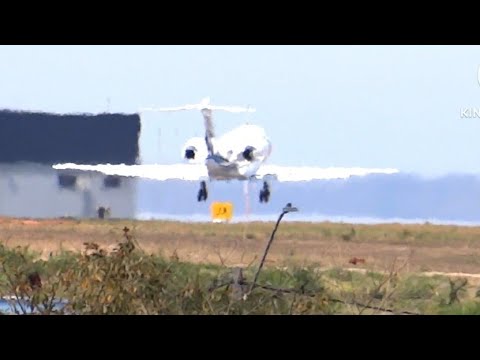
External Media
Report an inaccuracy
Spotted something wrong in the section? Tell us what's off and we'll review it.