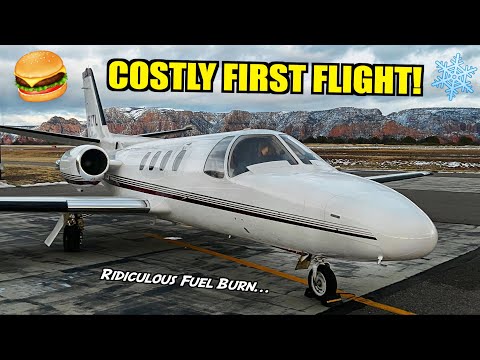
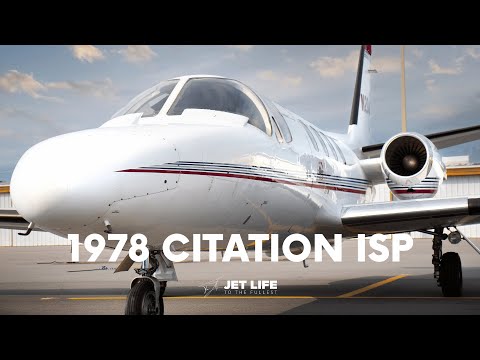
Cessna 1SP
Turbofan • twin engine • Low Wing • Retractable gear
Range Visualization
Origin: · click map to move · nm at current load
Payload vs. Range
Customize assumptions
Default: 190 lbs (FAA standard)
Default: 30 lbs
Passengers
lbs
@ lbs / pax
0 lbs
Fuel on board
gal
+ Weight
Range
Available Range
/ nm
Mission capable —
Aircraft can handle the current load with full fuel tanks.
Fuel tradeoff required —
You'll need to leave gallons of fuel behind
( gal usable for nm range).
Over max gross weight —
Reduce payload by lbs
to safely operate this aircraft.
Mission Profile
Endorsements & ratings:
- High-Altitude
- Pressurization
- Multi-Engine
- Instrument
345
KTAS
Cruise Speed
7
Occupants
910
nm
Max Range
818
lbs
Wet Payload
About the Cessna 1SP
The Cessna 501 Citation I/SP is the single-pilot certified version of the original Citation I. It was specifically engineered to allow owner-operators to step up from high-performance twins and turboprops into the jet world without the requirement of a second-in-command. While it shares the ‘Slowtation’ reputation, it offers unparalleled simplicity and safety for solo jet operations.
Key Features for GA Buyers
- Single-Pilot Certification: Unlike the standard Model 500, the 501 is factory-certified for single-pilot flight, significantly reducing operational costs and scheduling complexity for owner-operators.
- Simplified Systems: Features straight wings and simple mechanical systems that are more reminiscent of a King Air than a complex swept-wing jet, leading to very docile stall characteristics.
- Runway Flexibility: The 501 includes the wing extensions and thrust reversers that became standard on later Citation Is, allowing for operation on runways as short as 3,000–3,500 ft.
- No Structural Life Limit: Like its sibling, the 501 airframe has no fatigue life limit, making it a sustainable long-term asset if corrosion is kept at bay.
Trade-offs
- Legacy Avionics: Many 501s still carry legacy ‘steam gauges’ and early autopilot systems; modernizing the panel (e.g., Garmin G600/G700) is a common but significant six-figure investment.
- Fuel Efficiency: The JT15D-1A engines are thirsty by modern standards, particularly at lower altitudes where the aircraft is often forced to fly due to RVSM constraints on non-upgraded airframes.
- Range with Full Seats: With a maximum payload of 2,100 lbs, carrying 5–6 passengers and their bags will significantly trade off fuel, often limiting range to roughly 500–600 nm.
Technical Specifications
Dimensions
- Wingspan
- 47.1 ft
- Length
- 43.5 ft
- Height
- 14.3 ft
- Parking area (ft2)
- 2769.35 ft2
Weights
- Max Takeoff Weight
- 11,850 lbs
- Max Landing Weight
- 11,350 lbs
- Useful Load
- 4,597 lbs
- Fuel Capacity
- 564 gal
Performance
- Cruise Speed
- 345 KTAS
- Never-Exceed (Vne)
- 398 KIAS
- Max Structural Cruise (Vno)
- 345 KIAS
- Approach Speed
- 96 KIAS
- Stall, Clean (Vs1)
- 82 KIAS
- Range
- 910 NM
- Service Ceiling
- 41,000 ft
- Rate of Climb
- 826 - 2719 fpm
- Takeoff over 50 ft obstacle
- 3,500 ft
- Landing ground roll
- 2,930 ft
Similar to the Cessna 1SP
Bombardier Challenger 300
Cruise
459 kts (higher than this aircraft)
Range
3100 nm (higher than this aircraft)
Seats
9
Turbofan
twin engine
Low Wing
View details
Bombardier Challenger 350
Cruise
459 kts (higher than this aircraft)
Range
3200 nm (higher than this aircraft)
Seats
9
Turbofan
twin engine
Low Wing
View details
Bombardier Learjet 23
Cruise
450 kts (higher than this aircraft)
Range
1590 nm (higher than this aircraft)
Seats
8
Jet
twin engine
Low Wing
View details
See how the Cessna 1SP stacks up against similar aircraft