Range Map
Origin: → · two fingers to move map
Payload vs. Range
Fuel on board
Cargo
nm
Range
Trip Preview
Name a destination in the map header above and this becomes your trip: time en route, what you burn, what it costs, and whether you get there without stopping — at the load you have set.
→
Over max payload by . At this load it cannot lift a single occupant. Please adjust your payload inputs.
We do not have a cruise speed on file for this aircraft, so there is no honest time or cost to give you for this leg.
En route
Fuel burned
Direct cost
Fuel cost
Tanks run dry about past before at this burn.
Mission Profile
- High-Performance
- Complex
- High-Altitude
- Multi-Engine
- Instrument
.jpg)
Estimated Ownership Costs
Create a free account to view or request ownership cost data.
About the Reims-Cessna F406 Caravan II
Type certificated 1986 Source: FAA Type Certificate Data Sheet
Overview
The Reims-Cessna F406 Caravan II is an unpressurised twin-turboprop utility aircraft, built in France by Reims Aviation under licence from Cessna and certificated under FAA type certificate A25CE in 1986. It mates the fuselage and wing lineage of the piston Cessna 404 Titan to two Pratt & Whitney Canada PT6A-112 turboprops, producing a rugged ten-to-fourteen-seat workhorse that found its place in commuter, cargo, and maritime-surveillance roles rather than the executive market. Fewer than 100 were built across a production run that continued under ASI Aviation into the 2010s.
A note on weights for a North American buyer: the catalogue records the FAA-certificated maximum take-off weight of 9,360 lb from TCDS A25CE. Most published references cite 9,850 lb (4,468 kg), which is the European DGAC manufacturer figure; the two reflect different certification bases for the same airframe, and the FAA value is the one that governs a US-registered example.
Key Features for GA Buyers
- Twin-turbine redundancy. Two PT6A-112 engines give the F406 a second powerplant for over-water, night, and mountainous operations, the safety case that drove much of its commuter and surveillance use.
- Heavy useful load. With roughly 4,300 lb of useful load and 475 US gallons of usable fuel, the F406 carries a full cabin or a freight load over 1,100 nautical miles without the pressurisation systems that complicate its cabin-class cousins.
- PT6 support. The PT6A-112 carries a 3,600-hour TBO and the deep global parts and overhaul network of the most widely fielded business turboprop, which offsets some of the type’s rarity.
- Mission flexibility. The cabin converts between executive seating, high-density commuter benches, and a cargo floor, and many airframes carry an underbelly pod or surveillance sensors for patrol work.
Trade-offs
- Unpressurised cabin. The F406 is comfortable in the low to middle teens; reaching its 30,000 ft ceiling requires supplemental oxygen for everyone aboard, which limits it against pressurised turboprops on long high-altitude legs.
- Two turbines to feed and overhaul. A burn near 90 GPH and two PT6 overhauls at roughly $370,000 each put the F406’s direct operating cost above a single-engine turboprop of similar cabin size, the price of the second engine.
- Rarity. With under 100 built and most based in Europe, finding an airframe, parts, and a shop familiar with the type is harder in North America than for a mainstream Cessna twin.
See Also
- Cessna 404 Titan – the piston twin whose airframe the F406 is built on; the same cabin and mission without the turbine cost or the second-engine redundancy. Compare
- Cessna 208 Caravan – the single-engine turboprop alternative, simpler and cheaper to operate, trading the F406’s second engine for one PT6. Compare
- Cessna Conquest II – the pressurised, faster Cessna turboprop twin for buyers who need altitude and speed over utility-hauling simplicity. Compare
- Beechcraft King Air 200 – the dominant twin-turboprop in the class, pressurised and far better supported, at a higher acquisition and operating cost. Compare
Technical Specifications
Dimensions & Weights
- Height
- 13 ft
- Length
- 39 ft
- Parking area (ft²2)
- 2,618 ft²
- Max Takeoff Weight
- Source: FAA Type Certificate Data Sheet 9,360 lbs
- Max Landing Weight
- Source: FAA Type Certificate Data Sheet 9,360 lbs
- Useful Load
- Source: third-party reference 4,327 lbs
- Fuel Capacity
- Source: FAA Type Certificate Data Sheet 475 gal
Performance
- Cruise Speed
- Source: third-party reference 246 KTAS
- Never-Exceed (VNE)
- Source: FAA Type Certificate Data Sheet 229 KIAS
- Max Structural Cruise (VNO)
- Source: FAA Type Certificate Data Sheet 229 KIAS
- Approach Speed
- 108 KIAS
- Stall, Clean (VS1)
- 75 KIAS
- Range
- 1153 NM
- Service Ceiling
- 30,000 ft
- Rate of Climb
- 397 - 1850 fpm
- Takeoff over 50 ft obstacle
- 2,964 ft
- Landing over 50 ft obstacle
- 2,485 ft
Engines
Log in to view or request powerplant data.
Sources
Where the figures on this page come from. Reims-Cessna F406 Caravan II specifications are traced to published references; estimated values are flagged inline next to the figure.
Similar to the Reims-Cessna F406 Caravan II
Similar TurbopropsBAe Jetstream 41
Beechcraft 1900D
Beechcraft 99 Airliner
Compare the Reims-Cessna F406 Caravan II to other aircraft
External Media
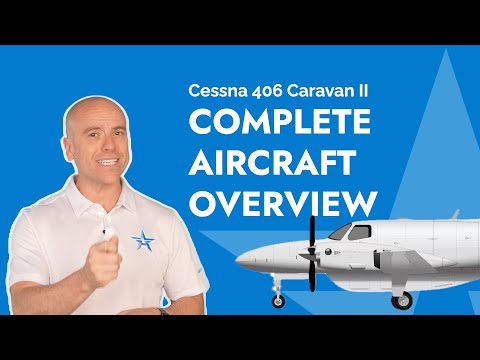
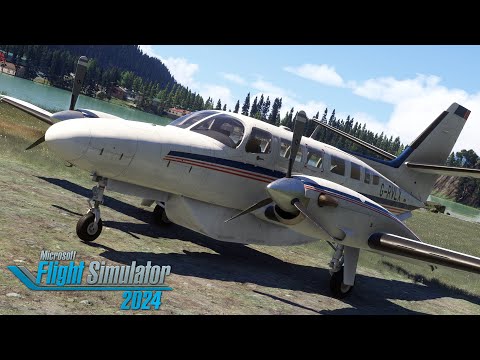
Photos
.jpg)
.jpg)
Articles and other links
-
Wikipedia: Reims-Cessna F406 Caravan II (History & Variants) en.wikipedia.org
-
Simple Flying: A Look At The Reims F406 Caravan II Workhorse simpleflying.com
-
Oddball Pilot: Aircraft Walkthrough and Mission Profile oddballpilot.com
-
Aeropedia: Cessna F406 Caravan II Development History aeropedia.com.au
-
SKYbrary: CESSNA Caravan 2 (F406) Technical Data skybrary.aero