Range Map
Origin: → · two fingers to move map
Payload vs. Range
Fuel on board
Cargo
nm
Range
Trip Preview
Name a destination in the map header above and this becomes your trip: time en route, what you burn, what it costs, and whether you get there without stopping — at the load you have set.
→
Over max payload by . At this load it cannot lift a single occupant. Please adjust your payload inputs.
We do not have a cruise speed on file for this aircraft, so there is no honest time or cost to give you for this leg.
En route
Fuel burned
Direct cost
Fuel cost
Tanks run dry about past before at this burn.
Mission Profile
- High-Performance
- Complex
- High-Altitude
- Pressurization
- Multi-Engine
- Instrument
.jpg)
Estimated Ownership Costs
Create a free account to view or request ownership cost data.
About the Raytheon 300 Super King Air
Type certificated 1984
Overview
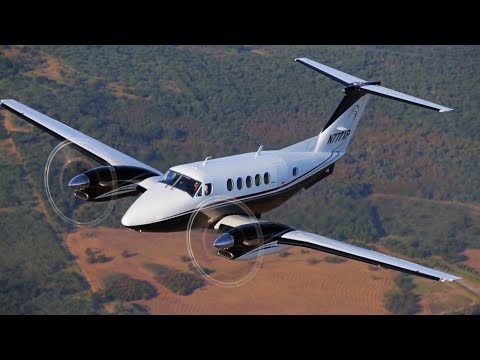
The Beechcraft King Air 300 is the second-generation Super King Air, a twin-turboprop introduced by Beech in 1984 as the high-performance evolution of the Model 200. The 300 retained the family’s defining straight-wing planform but added 1,050 SHP Pratt & Whitney Canada PT6A-60A engines (up from 850 SHP in the 200), aerodynamic refinements, and a strengthened airframe. Production ran through 1988, when the type was superseded by the longer-fuselage King Air 350 with the same engines and a redesigned wing.
The marketing nameplate evolved with the manufacturer’s corporate identity. Beech Aircraft Corporation became a Raytheon subsidiary in 1980, four years before the 300 entered service. Early airframes wore the Beechcraft badge; later production was variously marketed as Beech Super King Air 300 or Raytheon 300 Super King Air. The FAA type designator across all variants is BE30.
The 300 occupies a discrete used-market segment between the more numerous Model 200 and the more capable 350. Operationally it offers more performance than a 200 (faster cruise, higher single-engine ceiling, more useful load) and less cabin volume than a 350. The parts and maintenance ecosystem shared across the King Air family carries over.
Key Features for GA Buyers
- Twin PT6A-60A power. Each engine produces 1,050 SHP, a substantial step up from the 200’s 850-SHP PT6A-42. Hot-and-high climb performance, single-engine ceiling, and altitude capability all benefit from the additional power. The -60A operates within the broad PT6A overhaul ecosystem, with a published factory TBO of 3,600 hours and a Hot Section Inspection at 1,800 hours.
- Pressurised cabin. Standard cabin pressurisation supports cruise from FL270 to FL350. The cabin accommodates up to eight passengers in a typical executive arrangement with a private aft lavatory.
- Cruise performance. High-speed cruise at FL280 sits in the 310 to 320 KTAS range, with 90 to 110 GPH total fuel burn depending on power setting and altitude. Range at long-range cruise extends past 1,500 NM with reserves, putting most domestic city pairs within nonstop reach.
- Mature maintenance ecosystem. The King Air series is the most-produced cabin-class turboprop family ever built. Phase inspections, parts, and type-rated shop coverage are widely available. Engine programs (P&WC ESP, JSSI) cover most -60A operators.
- Upgrade paths. Blackhawk’s PT6A-67 conversions and Raisbeck performance kits are widely fitted to the 300 and extend range, climb, and cruise margins. Avionics retrofits to Garmin G1000NXi, GTN 750/650, and ADS-B Out are routine.
Trade-offs
- Niche between siblings. The 300 sits between two more-popular King Airs. The 200 has the larger fleet and the lowest operating costs in the family; the 350 has more cabin and the same engines on a longer airframe. Used 300s take longer to move than comparable 200s or 350s of similar vintage.
- Higher operating cost than the 200. Total fuel burn is roughly 90 to 110 GPH vs. 75 to 90 GPH on a 200 of similar mission. Variable hourly costs run $1,300 to $1,500 at strict variable (fuel, engine reserves, maintenance). Fully-loaded total cost including crew and fixed amortization runs $2,500 to $3,000.
- Engine reserves dominate. PT6A-60A overhauls run roughly $500K per engine before LLCs, with second overhauls (LLCs replaced) approaching $1M. At 400 hours per year and a 3,600-hour TBO, base engine reserve accrual runs roughly $55K per engine per year. LLC replacement at second overhaul pushes combined reserves to $150K per year or higher.
- Crew expectations. The 300 is single-pilot certified, but most insurance underwriters require turboprop time and recurrent training (typically Simuflite or FlightSafety initial plus annual recurrent). First-time turboprop owners should budget for initial and annual recurrent training costs.
- Phase inspection cycle. King Airs use Beech phase inspections rather than a Part 91 annual. Phases 1 through 4 over a 24-month cycle, plus the HUIP inspection, generate uneven scheduled maintenance costs. Expense falls unevenly across the cycle, not spread like a piston annual.
See Also
- Beechcraft King Air 200 – direct family predecessor; lower operating cost, smaller wing. Compare
- Beechcraft King Air 350 – direct family successor; same -60A engines, longer airframe, larger cabin. Compare
- Cessna Conquest II – twin-turboprop contemporary; pressurised cabin-class competitor. Compare
- Piper PA-42-720 Cheyenne III – twin-turboprop competitor; PT6A-equipped, similar role. Compare
- Pilatus PC-12 – single-engine turboprop step-down; lower operating cost, larger cabin door, different mission profile. Compare
Technical Specifications
Dimensions & Weights
- Height
- 14 ft
- Length
- 44 ft
- Parking area (ft²2)
- 3,150 ft²
- Max Takeoff Weight
- 14,000 lbs
- Max Landing Weight
- 14,000 lbs
- Useful Load
- 5,263 lbs
- Fuel Capacity
- 539 gal
Performance
- Cruise Speed
- 315 KTAS
- Never-Exceed (VNE)
- Source: FAA Type Certificate Data Sheet 259 KIAS
- Max Structural Cruise (VNO)
- Source: FAA Type Certificate Data Sheet 259 KIAS
- Approach Speed
- 107 KIAS
- Stall, Clean (VS1)
- Estimated/derived; not a published figure 93 KIAS
- Range
- 1480 NM
- Service Ceiling
- Source: FAA Type Certificate Data Sheet 35,000 ft
- Rate of Climb
- 867 - 2844 fpm
- Takeoff over 50 ft obstacle
- 3,600 ft
- Landing over 50 ft obstacle
- 4,133 ft
Engines
Log in to view or request powerplant data.
Sources
Where the figures on this page come from. Raytheon 300 Super King Air specifications are traced to published references; estimated values are flagged inline next to the figure.
Similar to the Raytheon 300 Super King Air
Similar TurbopropsBeechcraft King Air 200
Beechcraft King Air 350
Compare the Raytheon 300 Super King Air to other aircraft
External Media
Articles and other links
-
Beechcraft Super King Air (Wikipedia, covers Model 300) en.wikipedia.org
-
U.S. Army King Air 300 surpasses 50,000 flight hours (Textron Aviation) media.txtav.com
-
King Air 300, Reborn (AOPA Pilot) www.aopa.org
-
-
King Air 300: Stock Versus Blackhawk (Twin & Turbine) www.twinandturbine.com
-
A Tale of Two King Airs (King Air Magazine) kingairmagazine.com
-
U.S. Army King Air 300 Special Mission Aircraft Hit Milestone (Aviation Week) aviationweek.com
-
Beechcraft King Air 300 (Business Jet Traveler) bjtonline.com
-
King Air Mods (Flying Magazine) www.flyingmag.com