Range Map
Origin: → · two fingers to move map
Payload vs. Range
Fuel on board
Cargo
nm
Range
Trip Preview
Name a destination in the map header above and this becomes your trip: time en route, what you burn, what it costs, and whether you get there without stopping — at the load you have set.
→
Over max payload by . At this load it cannot lift a single occupant. Please adjust your payload inputs.
We do not have a cruise speed on file for this aircraft, so there is no honest time or cost to give you for this leg.
En route
Fuel burned
Direct cost
Fuel cost
Tanks run dry about past before at this burn.
Mission Profile
_01.jpg)
Estimated Ownership Costs
Create a free account to view or request ownership cost data.
About the Piper Archer II
Type certificated 1975 Source: FAA Type Certificate Data Sheet
Overview
The Piper Archer II (PA-28-181) is a four-seat, fixed-gear, single-engine piston aircraft built from 1976 to 1994. It mates the 180-horsepower Lycoming O-360 to the semi-tapered wing Piper introduced across the late Cherokee line, a combination that produces more climb and useful load than the 150- and 160-horsepower Cherokees and Warriors below it. Over its run it became one of the most common four-seat trainers and personal aircraft in general aviation.
The Archer II sits one rung above the Warrior in the PA-28 family: same airframe, more power, and a payload that lets it carry four adults with a usable fuel load. Cruise runs about 128 knots at 75% power on roughly 10.5 gallons per hour, fixed-gear simple, with the docile low-wing handling the Cherokee line is known for. It cross-shops against the Cessna 172 on the high-wing side and steps up to the retractable Arrow within Piper’s own range. Between the 160-horsepower Warrior II below it and the retractable Arrow above, the Archer II is the fixed-gear Cherokee that makes a four-adult load routine rather than careful: about 160 pounds more useful load than the Warrior on the same airframe, with the power to climb on a hot day. It is the rung to settle on for fixed-gear cross-country flying when retractable complexity holds no appeal.
Key Features for GA Buyers
- Lycoming O-360 powerplant. The 180-horsepower O-360-A4M is carbureted, naturally aspirated, and direct-drive, with a 2,000-hour recommended TBO and a reputation for reaching it with routine maintenance.
- Four-adult payload. A 2,550-pound gross weight and useful load above 1,100 pounds let the Archer II carry four occupants with a practical fuel load, a step up from the Warrior.
- Semi-tapered wing. The tapered outboard wing smooths low-speed handling and improves glide over the earlier constant-chord ‘Hershey Bar’ Cherokees.
- Parts and maintenance network. The PA-28 family is among the best-supported airframes in general aviation; almost any shop knows it, and parts availability spans the full production run.
Trade-offs
- Fixed-gear cruise. Fixed gear keeps maintenance and insurance down but caps cruise near 128 knots, slower than the retractable Arrow on the same power.
- Single cabin door. Like most Cherokees, all entry and loading is through the one right-side door, an awkward shuffle for the left-seat pilot.
- Climb at gross on hot days. The fixed-pitch propeller cannot be optimised for both climb and cruise; full-gross climb performance degrades at high density altitude.
- Vintage airframes. Most examples are decades old; avionics, interior, and corrosion inspection belong in the ownership budget.
See Also
- Piper Cherokee Warrior II – the 160-horsepower rung below: lower cost and fuel burn, less payload and climb. Compare
- Cherokee Arrow – the retractable, constant-speed step-up: faster cruise, complex endorsement, more systems. Compare
- Piper Cherokee 235 – the big-engine Cherokee hauler: far more payload and a 235-horsepower O-540, higher operating cost. Compare
- Cessna 172 Skyhawk – the high-wing arch-competitor: similar mission and price, different cockpit visibility and parts network. Compare
Featured in our buying guides
Technical Specifications
Dimensions & Weights
- Height
- 7 ft
- Length
- 24 ft
- Parking area (ft²2)
- 1,312 ft²
- Max Takeoff Weight
- Source: FAA Type Certificate Data Sheet 2,550 lbs
- Max Landing Weight
- 2,550 lbs
- Useful Load
- 1,134 lbs
- Fuel Capacity
- 48 gal
Performance
- Cruise Speed
- Source: third-party reference 128 KTAS
- Never-Exceed (VNE)
- Source: manufacturer figure 154 KIAS
- Max Structural Cruise (VNO)
- Source: manufacturer figure 125 KIAS
- Approach Speed
- 66 KIAS
- Stall, Clean (VS1)
- 53 KIAS
- Range
- 600 NM
- Service Ceiling
- 13,236 ft
- Rate of Climb
- 667 fpm
- Takeoff over 50 ft obstacle
- 1,608 ft
- Landing over 50 ft obstacle
- 1,390 ft
Engine
Log in to view or request powerplant data.
Sources
Where the figures on this page come from. Piper Archer II specifications are traced to published references; estimated values are flagged inline next to the figure.
Similar to the Piper Archer II
Similar PistonsAero Commander 200
Beechcraft Bonanza 33
Beechcraft Bonanza A36
Compare the Piper Archer II to other aircraft
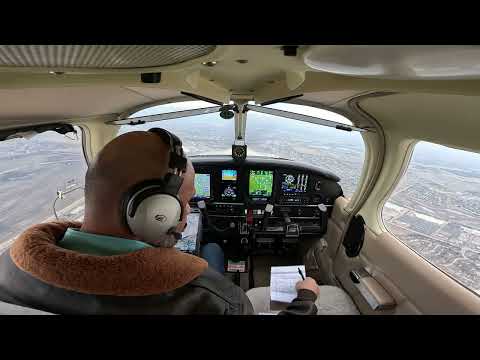
External Media


Articles and other links
-
Wikipedia: Piper PA-28 Cherokee Series History and Variants en.wikipedia.org
-
Aviation Consumer: Piper Archer Used Aircraft Guide & Ownership Deep Dive aviationconsumer.com
-
AVweb: Buying a Used Piper Archer - Performance, Payload, and Efficiency avweb.com
-
Piper Flyer: The Best Pipers for Personal Travel (Archer II vs. Dakota) www.piperflyer.com
-
Piper Owner Society: Archer II Specifications and Reliability Profile piperowner.org
-
Piper Aircraft: 85+ Years of Aviation History and Innovation www.piper.com
-