Range Map
• nm at current load
• click map to move • two fingers to move map
Payload vs. Range
gal
Fuel on board
lbs
Extra weight
nm
Range
Mission Profile
Estimated Ownership Costs
Create a free account to view or request ownership cost data.

About the Cessna 172 Skyhawk
Overview
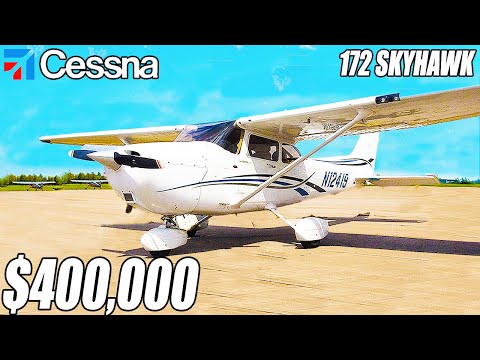
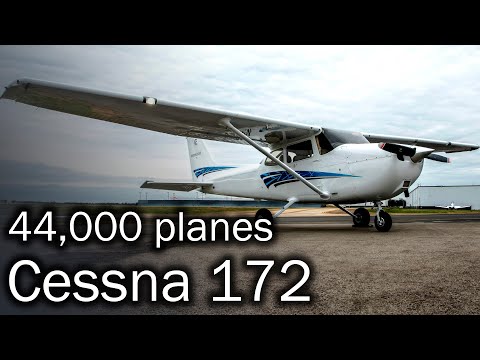
The Cessna 172 Skyhawk is the most produced aircraft in history, with over 44,000 built since its introduction in 1956. That number is not incidental: it reflects a design that has proven genuinely difficult to improve on for the private owner and flight school market. Stable, forgiving, and mechanically straightforward, the 172 has become the default reference point against which most four-seat singles are compared.
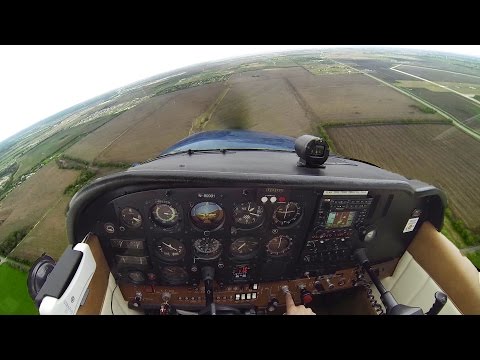
These specs reflect the current production standard, the 172S Skyhawk SP, which features a 180 HP fuel-injected Lycoming IO-360-L2A engine and is typically delivered with Garmin G1000 NXi avionics. The airspeed limits are taken straight from FAA TCDS 3A12: maneuvering 105 KIAS, maximum structural cruising 129 KIAS, and never-exceed 163 KIAS. Earlier variants, from the carbureted 172N and R through the 180 HP 172S, differ in engine, avionics fit, and useful load, but share the same airframe and handling character. The used market is deep across all variants, and the support infrastructure, parts availability, and type-specific knowledge base are unmatched in GA.
Key Features for GA Buyers
-
Handling and Stability. The 172 is deliberately benign: it resists stalls, recovers predictably, and tolerates poor technique better than most types. This is why it dominates flight training, and it is also why experienced pilots value it as a low-workload cross-country platform.
-
Support Infrastructure. Parts availability, maintenance knowledge, and type-specific resources are deeper for the 172 than for any other GA aircraft. Insurance is straightforward and affordable, and resale liquidity is the best in the class.
-
Avionics Flexibility. The used market spans steam-gauge panel aircraft to full G1000 glass, so buyers can match avionics fit to budget without compromising on airframe quality. Retrofit options are also mature and well-documented.
-
Tricycle Gear. Compared with its tailwheel predecessor the Cessna 170, the 172 requires no endorsement beyond the private certificate and is substantially easier to manage on the ground. That is a genuine operational advantage for most private owners.
Trade-offs
- Useful Load. At 895 lb on the 172S, full fuel (53 usable gal / 318 lb) leaves limited margin for passengers and bags. Two adults with luggage and full tanks is a common weight-and-balance exercise.
- Cruise Speed. 124 KTAS is competitive for the class but unremarkable. Pilots stepping up from the 172 often cite speed as the primary motivation – and the retractable 172RG Cutlass RG was Cessna’s own answer to that itch.
- New Aircraft Price. New 172S pricing has risen sharply: current list exceeds $400,000. The used market remains the practical entry point for most buyers.
- Service Ceiling. 14,000 ft limits utility in the mountain states without careful route planning, particularly in summer density-altitude conditions.
See Also
- Cessna 170 – the tailwheel predecessor the 172 replaced in production: same airframe philosophy, higher training burden. Compare
- Cessna 172RG Cutlass RG – the retractable-gear, constant-speed-prop variant of the same family: adds a complex rating and meaningful cruise speed. Compare
- Cessna Skylane 182 – the natural step-up: more power, higher useful load, longer range, and a significantly higher ceiling. Compare
- Cessna 177 Cardinal – a contemporary Cessna alternative with a cantilever wing and wider cabin, often overlooked against the 172’s dominance. Compare
- Piper Cherokee Warrior II – the primary low-wing competitor: similar mission and price bracket, different handling character and visibility trade-offs. Compare
Technical Specifications
Dimensions & Weights
- Height
- 8.9 ft
- Length
- 27.2 ft
- Parking area (ft2)
- 1484.42 ft2
- Max Takeoff Weight
- 2,550 lbs
- Max Landing Weight
- 2,550 lbs
- Useful Load
- 895 lbs
- Fuel Capacity
- Source: FAA Type Certificate Data Sheet 53 gal
Performance
- Cruise Speed
- 124 KTAS
- Never-Exceed (VNE)
- Source: third-party reference 163 KIAS
- Max Structural Cruise (VNO)
- Source: third-party reference 129 KIAS
- Approach Speed
- 61 KIAS
- Stall, Clean (VS1)
- 53 KIAS
- Range
- 640 NM
- Service Ceiling
- 14,000 ft
- Rate of Climb
- 730 fpm
- Takeoff over 50 ft obstacle
- 1,630 ft
- Landing ground roll
- 1,335 ft
Engine
Log in to view or request powerplant data.
Sources
Where the figures on this page come from. Cessna 172 Skyhawk specifications are traced to published references; estimated values are flagged inline next to the figure.
Similar to the Cessna 172 Skyhawk
Similar PistonsAero Commander 200
Beechcraft Bonanza 33
Beechcraft Bonanza A36
See how the Cessna 172 Skyhawk stacks up against similar aircraft