Range Map
• nm at current load
• click map to move • two fingers to move map
Payload vs. Range
gal
Fuel on board
lbs
Extra weight
nm
Range
Mission Profile
- High-Performance
- High-Altitude
Estimated Ownership Costs
Create a free account to view or request ownership cost data.
About the Cessna T206 Turbo Stationair
Overview
The Cessna T206 Turbo Stationair is the high-altitude member of the Stationair family. By adding a turbocharged 310-horsepower Lycoming TIO-540-AJ1A to the proven 206 airframe, Cessna built a utility single that holds its power well above the altitudes where the naturally aspirated 206 starts to fade. With a service ceiling of 27,000 feet, the T206H is the “go anywhere, carry anything” choice for pilots who routinely cross mountains or operate from high, hot fields without giving up the clamshell cargo doors that define the type.
Key Features for GA Buyers
- Altitude performance: The turbocharger sustains rated power well into the teens, so cruise speed and climb hold up where a non-turbo single would be struggling.
- Real payload: Useful load near 1,300 lb keeps the T206 in the rare class of singles that can carry people, bags, and fuel together.
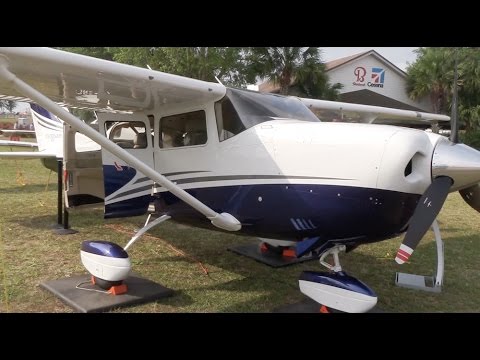
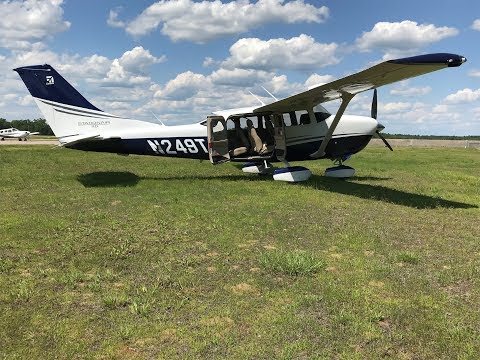
- Cargo access: The signature double rear doors load stretchers, bikes, and bulky gear that simply will not fit through a conventional cabin door.
- Rugged stance: Heavy-duty fixed gear suits unimproved strips and adapts to float and ski installations.
Trade-offs
- More to manage: A turbocharged engine runs hotter and demands disciplined power and cooling management; neglect shortens cylinder life despite the 2,000-hour TBO.
- Fuel flow at altitude: Expect 16 to 20 GPH when you actually use the turbocharger for high-speed, high-altitude cruise.
- No pressurisation: The cabin is unpressurised, so flight in the high teens and low twenties means oxygen for everyone aboard.
See Also
- Cessna 206 Stationair – the naturally aspirated sibling for lower-altitude utility work. Compare
- Cessna 207 Stationair 7 – the stretched seven-place utility hauler. Compare
- Cessna 210 Centurion – the retractable-gear ancestor that prioritizes speed over cabin access. Compare
Base model
Cessna 206 StationairTechnical Specifications
Dimensions & Weights
- Height
- 9.3 ft
- Length
- 28.3 ft
- Parking area (ft2)
- 1531.8 ft2
- Max Takeoff Weight
- 3,600 lbs
- Max Landing Weight
- 3,600 lbs
- Useful Load
- 1,343 lbs
- Fuel Capacity
- Source: FAA Type Certificate Data Sheet 88 gal
Performance
- Cruise Speed
- 164 KTAS
- Never-Exceed (VNE)
- Source: FAA Type Certificate Data Sheet 182 KIAS
- Max Structural Cruise (VNO)
- Source: FAA Type Certificate Data Sheet 149 KIAS
- Approach Speed
- 75 KIAS
- Stall, Clean (VS1)
- 50 KIAS
- Range
- 703 NM
- Service Ceiling
- 27,000 ft
- Rate of Climb
- 1050 fpm
- Takeoff over 50 ft obstacle
- 1,740 ft
- Landing ground roll
- 735 ft
Engine
Log in to view or request powerplant data.
Sources
Where the figures on this page come from. Cessna T206 Turbo Stationair specifications are traced to published references; estimated values are flagged inline next to the figure.
Similar to the Cessna T206 Turbo Stationair
Similar PistonsBeechcraft Bonanza B36TC
Cessna T210 Turbo Centurion
HELIO U-10 Super Courier
See how the Cessna T206 Turbo Stationair stacks up against similar aircraft
External Media



Articles and other links
-
Wikipedia: Cessna Turbo 206H - Technical Development and Performance en.wikipedia.org
-
Textron Aviation: Turbo Stationair HD - Performance, Weights, and Range cessna.txtav.com
-
AOPA Pilot: Cessna Turbo 206 - A Utility Hauler Gets a Front-Office Makeover www.aopa.org
-
Aircraft Cost Calculator: Cessna T206H Ownership Price & Operating Costs www.aircraftcostcalculator.com
-
Aviation Consumer: Cessna 206 Turbo Stationair Review & Market Analysis aviationconsumer.com