Range Map
Origin: → · two fingers to move map
Payload vs. Range
Fuel on board
Cargo
nm
Range
Trip Preview
Name a destination in the map header above and this becomes your trip: time en route, what you burn, what it costs, and whether you get there without stopping — at the load you have set.
→
Over max payload by . At this load it cannot lift a single occupant. Please adjust your payload inputs.
We do not have a cruise speed on file for this aircraft, so there is no honest time or cost to give you for this leg.
En route
Fuel burned
Direct cost
Fuel cost
Tanks run dry about past before at this burn.
Mission Profile
- Complex

Estimated Ownership Costs
Create a free account to view or request ownership cost data.
About the Blackshape Gabriel
Type certificated 2017
Overview
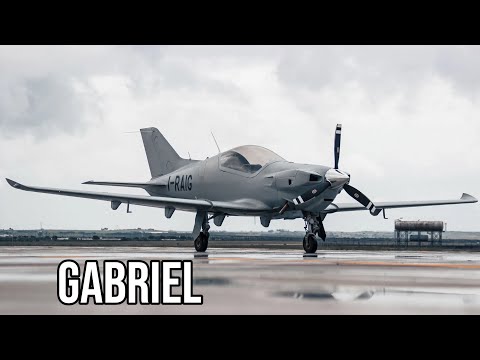
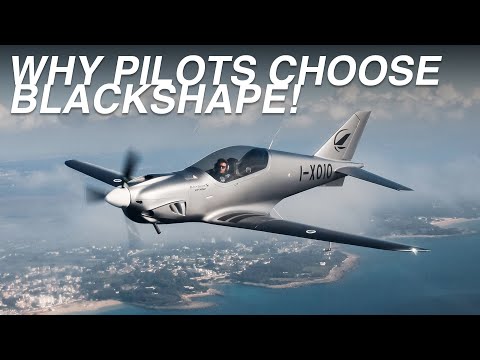
The Blackshape Gabriel (BK160) is the certified sibling to the Prime: the same carbon-fiber tandem shape, built to a type certificate on a heavier, more capable airframe. Where the Prime is an Experimental ultralight on a 100 hp Rotax, the Gabriel runs a certified 160 hp Lycoming IO-320-D1B with a Hartzell constant-speed propeller. It holds an EASA type certificate (EASA.A.607, under CS-VLA with a special condition that raises the weight limit to 850 kg / 1,874 lb), and its US variant, the BK160-200, earned an FAA type certificate in 2024.
That type certificate is the whole point of the Gabriel. It costs more to buy and run than the Prime and climbs no higher, but it is certified where the Prime is Experimental, which is what a flight school or a syllabus-bound owner needs. The buyer here is the operator who wants the carbon-tandem airplane inside a certified airframe on a familiar Lycoming; a private owner content with Experimental paperwork saves money and stays with the Prime.
Key Features for GA Buyers
- Type-certificated. EASA certified under CS-VLA with a special condition for the 850 kg weight, and FAA type-certificated as the BK160-200 in 2024 – a certified airframe, not an Experimental one.
- Familiar powerplant. The Lycoming IO-320 and Hartzell constant-speed prop give schools and mechanics a maintenance profile they already know, wrapped in a modern composite structure.
- Occupant protection. The carbon airframe is stressed to +4.4/-2 g and adds anti-blast fuel tanks, five-point harnesses, and a ballistic recovery parachute.
- Jet-trainer cockpit. Tandem controls and a modern glass panel mimic the sightline and workflow of a military trainer, useful for ab-initio and screening programs.
Trade-offs
- Payload versus fuel. With about 540 lb of useful load and 34 gallons aboard, two large adults plus full fuel needs a careful weight-and-balance – plan legs, not full-tank-and-go.
- Modest altitude. The naturally aspirated IO-320 caps practical operations around 11,500 to 12,500 ft; this is a low-and-medium-altitude trainer, not a mountain cruiser.
- Retractable-gear discipline. The retractable gear and constant-speed prop add inspection burden and require a complex-aircraft endorsement beyond a fixed-gear trainer.
- Certified-airplane costs. A certified composite retractable with a parachute carries higher acquisition, insurance, and scheduled-reserve costs (parachute repack, prop overhaul) than a basic LSA.
See Also
- Blackshape Prime – the Experimental ultralight version on a 100 hp Rotax Compare
- Shark 600 – a composite retractable two-seat cruiser in the same performance class Compare
- Pelegrin Tarragon – a carbon-fiber retractable two-seater with similar cruise Compare
Technical Specifications
Dimensions & Weights
- Height
- 8 ft
- Length
- Source: FAA Type Certificate Data Sheet 24 ft
- Parking area (ft²2)
- 1,163 ft²
- Max Takeoff Weight
- Source: FAA Type Certificate Data Sheet 1,874 lbs
- Max Landing Weight
- 1,874 lbs
- Useful Load
- Source: manufacturer figure 540 lbs
- Fuel Capacity
- Source: FAA Type Certificate Data Sheet 34 gal
Performance
- Cruise Speed
- Source: manufacturer figure 150 KTAS
- Never-Exceed (VNE)
- Source: FAA Type Certificate Data Sheet 172 KIAS
- Max Structural Cruise (VNO)
- Source: FAA Type Certificate Data Sheet 148 KIAS
- Approach Speed
- Estimated/derived; not a published figure 65 KIAS
- Stall, Clean (VS1)
- Estimated/derived; not a published figure 52 KIAS
- Range
- Source: manufacturer figure 400 NM
- Service Ceiling
- Source: manufacturer figure 12,500 ft
- Rate of Climb
- 1550 fpm
- Takeoff over 50 ft obstacle
- 1,640 ft
- Landing over 50 ft obstacle
- 2,300 ft
Engine
Log in to view or request powerplant data.
Sources
Where the figures on this page come from. Blackshape Gabriel specifications are traced to published references; estimated values are flagged inline next to the figure.
-
EASA TCDS EASA.A.607, Issue 10 www.easa.europa.eu
-
Blackshape -- BK160-TR blackshapeaircraft.com
-
-
Federal Register -- Special Class Airworthiness Criteria, Blackshape BK160-200 www.federalregister.gov
-
AOPA -- New Gabriel trainer makes US debut www.aopa.org
-
Blackshape / airforce-technology www.airforce-technology.com
Similar to the Blackshape Gabriel
Similar PistonsGlobe GC-1 Swift
Blackshape Prime
Compare the Blackshape Gabriel to other aircraft