Fairchild Dornier 328 Jet
Jet • twin engine • High Wing • Retractable gear
Range Visualization
Origin: · click map to move · nm at current load
Payload vs. Range
Customize assumptions
Default: 190 lbs (FAA standard)
Default: 30 lbs
Mission Profile
- High-Altitude
- Pressurization
- Multi-Engine
- Instrument
About the Fairchild Dornier 328 Jet
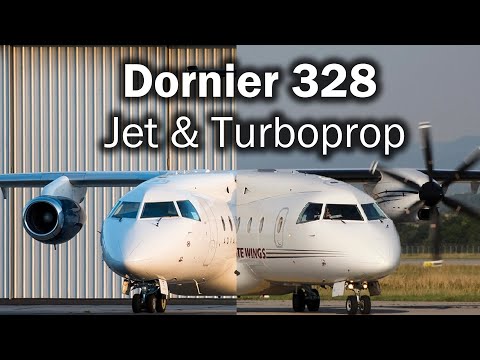
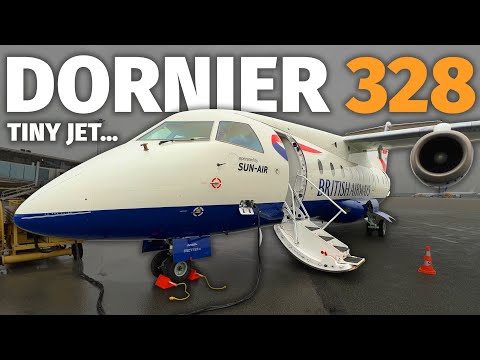
The Fairchild Dornier 328JET is a unique ‘engine swap’ success story, taking the rugged airframe of the 328 turboprop and mounting Pratt & Whitney PW306B turbofans. The result is a regional jet with an oversized cabin and exceptional short-field performance that rivals or exceeds many purpose-built business jets. For the General Aviation buyer, it offers a ‘heavy jet’ experience (G-IV sized cabin) at the acquisition price of a mid-size turboprop.
Key Features for GA Buyers
- Massive Cabin: Features a 6‘2” stand-up headroom and a wide 3-abreast seating layout. In corporate ‘Envoy’ configurations, it provides a luxury environment far beyond traditional light/mid-size jets.
- Short-Field Prowess: Unlike most jets of this size, it can operate out of runways shorter than 4,500 ft, significantly expanding the list of accessible regional airports.
- Steep Approach Capability: Built for rugged European regional operations, it handles challenging approaches and mountainous terrain with ease.
- Modern Glass Cockpit: Equipped with the Honeywell Primus 2000 avionics suite, offering high-end features like FMS and integrated radio systems.
Trade-offs
- Wing Configuration: Corrected to High Wing. The high-mounted engines stay clear of debris but contribute to a higher center of gravity and specific handling characteristics.
- Speed vs. Fuel: While much faster than the turboprop version, it cruises at ~400 knots, which is slower than competitors like the Embraer ERJ-135 or CRJ-200.
- Support Longevity: Since the manufacturer is no longer in business, parts sourcing (specifically landing gear components) can lead to longer maintenance downtimes.
Technical Specifications
Dimensions
- Wingspan
- 68.8 ft
- Length
- 69.8 ft
- Height
- 23.75 ft
- Parking area (ft2)
- 5894.24 ft2
Weights
- Max Takeoff Weight
- 34,524 lbs
- Max Landing Weight
- 31,725 lbs
- Useful Load
- 13,757 lbs
- Fuel Capacity
- 1195 gal
Performance
- Cruise Speed
- 405 KTAS
- Never-Exceed (Vne)
- 405 KIAS
- Max Structural Cruise (Vno)
- 335 KIAS
- Approach Speed
- 115 KIAS
- Stall, Clean (Vs1)
- 98 KIAS
- Range
- 1480 NM
- Service Ceiling
- 35,000 ft
- Rate of Climb
- 3690 fpm
- Takeoff over 50 ft obstacle
- 4,485 ft
- Landing ground roll
- 4,285 ft
See how the Fairchild Dornier 328 Jet stacks up against similar aircraft
External Media
Other Links
-
Wikipedia: Fairchild Dornier 328JET (History & Variants) en.wikipedia.org
-
GlobalAir: Dornier 328JET Specifications and Performance www.globalair.com
-
The Points Guy: Why I Love the Dornier 328JET (Passenger Perspective) thepointsguy.com
-
Runway Girl Network: Flying the Elusive 328JET runwaygirlnetwork.com
-
SKYbrary: Fairchild Dornier 328JET Technical Profile skybrary.aero