Range Map
Origin: → · two fingers to move map
Payload vs. Range
Fuel on board
Cargo
nm
Range
Trip Preview
Name a destination in the map header above and this becomes your trip: time en route, what you burn, what it costs, and whether you get there without stopping — at the load you have set.
→
Over max payload by . At this load it cannot lift a single occupant. Please adjust your payload inputs.
We do not have a cruise speed on file for this aircraft, so there is no honest time or cost to give you for this leg.
En route
Fuel burned
Direct cost
Fuel cost
Tanks run dry about past before at this burn.
Mission Profile
 (11-28-2022).jpg)
Estimated Ownership Costs
Create a free account to view or request ownership cost data.
About the Cessna 162 Skycatcher
Overview
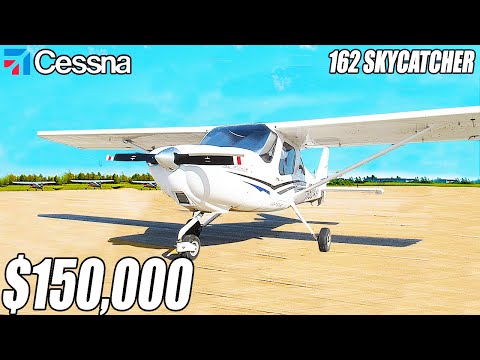
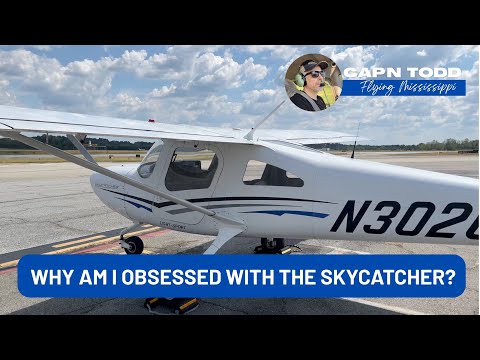
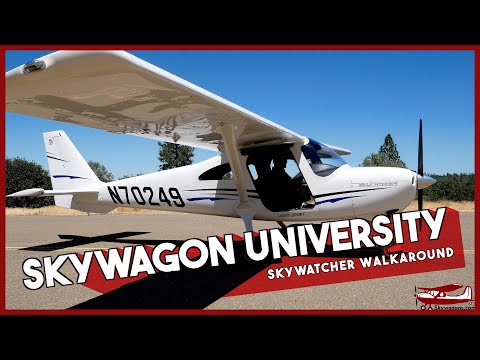
The Cessna 162 Skycatcher is a two-seat, high-wing, strut-braced light-sport aircraft built by Cessna from 2009 to 2013. It was Cessna’s bid to bring a factory-supported aircraft, carrying the Cessna name and dealer network, into the light-sport training market. The airframe was assembled in China, which drew build-quality criticism during the production run, and Cessna ended factory support when production stopped, so it is an orphaned type today. It pairs a 100 hp Continental O-200-D with a standard Garmin G300 glass panel, cruises around 112 KTAS, and carries two people on 24 usable gallons.
For a buyer, the Skycatcher is a modern, glass-equipped two-seater at a light-sport price, attractive for its low fuel burn (about 5.75 GPH) and an accessible condition inspection (roughly $800 to $1,000) rather than a certified annual. The trade is its orphaned status: airframe-specific parts increasingly come from salvage, the resale market is thin, and the 490 lb useful load leaves little margin once two adults and fuel are aboard. It suits a cost-focused owner or club that values the glass panel and LSA economics and can accept the parts and liquidity risk.
Key Features for GA Buyers
- Garmin G300 glass panel: Standard equipment on every 162. A full glass cockpit was uncommon in this class when the type was built and remains uncommon in the used LSA and trainer market.
- LSA operating costs: The O-200-D burns about 5.5 to 6 GPH at cruise, and the airframe is built for inspection access, with fuel lines, control cables, and connections visible without removing panels. The condition inspection (roughly $800 to $1,000) runs well below a certified trainer’s annual.
- Modern airframe: Every surviving example was built between 2009 and 2013, a far younger fleet than the 1960s and 1970s two-seat trainers it was meant to replace.
- Gull-wing doors: The doors open out and up, and the aircraft is approved to taxi with them fully open. The wing strut sits behind the door, so entry and exit do not require stepping over the main gear.
- Control stick: Replaces the traditional Cessna yoke. Pilots transitioning from 150 and 152 trainers report lighter control feel.
Trade-offs
- Useful load: Maximum useful load is 490 lbs. With full fuel aboard (24 usable gallons, about 144 lbs), roughly 346 lbs remains for occupants and baggage, and production examples often came in heavier than the standard empty weight, so two average adults with bags will be at or near the limit. This is not a full-fuel, two-large-adults airplane for most pilots.
- Orphaned type: Cessna ended factory support when production stopped, and airframe-specific parts are increasingly salvage-sourced. ADS-B Out compliance uses the Garmin GDL 82, the only Textron-approved installation, at roughly $5,000 to $8,000 if not already done.
- Build quality: The China-assembled airframe drew build-quality criticism during production; weigh it carefully at pre-buy.
- Restricted operations: Approved for day and night VFR only. LSA rules cap operations (no flight above 10,000 ft MSL except within 2,000 ft of terrain, and a 120-knot Vh limit). These restrictions are intrinsic to the light-sport category, not specific to the 162.
- Thin resale market: The surviving fleet is small and liquidity is limited, with ADS-B status having an outsized effect on asking price.
See Also
- Cessna 150 – the trainer the 162 was meant to replace; older airframe, simpler avionics, far better parts availability Compare
- Cessna 152 – the other trainer it targeted; Lycoming O-235 with a longer TBO and a mature parts ecosystem Compare
- Pipistrel Virus SW – a competing LSA; 147 KTAS cruise and 810 nm range against the 162’s 112 KTAS and 470 nm Compare
- Flight Design CT – a competing LSA from the same production era; 775 nm range against the 162’s 470 nm Compare
Featured in our buying guides
Technical Specifications
Dimensions & Weights
- Height
- 9 ft
- Length
- 23 ft
- Parking area (ft²2)
- 1,120 ft²
- Max Takeoff Weight
- Source: manufacturer figure 1,320 lbs
- Max Landing Weight
- 1,320 lbs
- Useful Load
- Source: manufacturer figure 490 lbs
- Fuel Capacity
- Source: manufacturer figure 24 gal
Performance
- Cruise Speed
- Source: manufacturer figure 112 KTAS
- Never-Exceed (VNE)
- Source: manufacturer figure 148 KIAS
- Max Structural Cruise (VNO)
- Source: manufacturer figure 124 KIAS
- Approach Speed
- 51 KIAS
- Stall, Clean (VS1)
- Source: manufacturer figure 41 KIAS
- Range
- 470 NM
- Service Ceiling
- Source: manufacturer figure 14,625 ft
- Rate of Climb
- 880 fpm
Engine
Log in to view or request powerplant data.
Sources
Where the figures on this page come from. Cessna 162 Skycatcher specifications are traced to published references; estimated values are flagged inline next to the figure.
Similar to the Cessna 162 Skycatcher
Similar PistonsAero Commander 200
Aviat A-1 Husky
Beechcraft Bonanza 33
Compare the Cessna 162 Skycatcher to other aircraft