Range Map
• nm at current load
• click map to move • two fingers to move map
Payload vs. Range
gal
Fuel on board
lbs
Extra weight
nm
Range
Mission Profile
- High-Performance
- Complex
- High-Altitude
- Multi-Engine
Estimated Ownership Costs
Create a free account to view or request ownership cost data.
About the Beechcraft Queen Air B80
Type certificated 1965 Source: FAA Type Certificate Data Sheet
Overview
The Beechcraft Queen Air B80 is the heaviest and most powerful piston variant in the Queen Air family, built from 1966 to 1977. It pairs the long, high-lift wing with two geared, supercharged 380-horsepower Lycoming IGSO-540 engines, raising gross weight to 8,800 pounds and seating up to thirteen. The B80 was the immediate structural predecessor of the King Air 90, which put a PT6A turboprop on much the same airframe.
For a buyer, the B80 is the Queen Air with the most payload and the most cabin: a useful load often above 3,000 pounds, club-seating options, and the full cabin-class layout, frequently fitted with deice and radar for genuine all-weather work. It is also the thirstiest and most maintenance-intensive of the line. The 380-horsepower IGSO-540 engines burn about 41 gallons an hour combined and carry a short 1,200-hour TBO, so engine condition and reserve dominate the ownership math. It suits an owner who needs the payload and cabin and will fund two complex, geared engines to keep them.
Key Features for GA Buyers
- The most payload in the line. An 8,800-pound gross weight and a useful load often above 3,000 pounds carry a full cabin, baggage, and meaningful fuel at once.
- Thirteen-seat cabin-class cabin. Center aisle, airstair door, and club-seating options, frequently equipped with deice boots and radar for all-weather use.
- Structural bridge to the King Air 90. Shares wing and airframe with the turbine King Air 90, so the structure is heavily proven and well supported.
Trade-offs
- Geared, supercharged 380 hp engines. The IGSO-540 is the most demanding powerplant in the family, with a short 1,200-hour TBO and an overhaul bill to match; gentle operation is mandatory.
- Fuel burn. About 41 gallons per hour combined, the highest of the Queen Airs.
- Maintenance intensity. A heavy, complex cabin twin with supercharged engines carries the highest annual budget of the piston line; deferred maintenance is expensive to unwind.
- Insurance and training. Weight, complexity, and geared engines mean underwriters require formal initial and recurrent training.
See Also
- Beechcraft Queen Air 65 – the “Straight 65” line foundation; shorter wing, smaller engines, shorter range. Compare
- Beechcraft Queen Air 70 – the hybrid sibling that shares this long wing but keeps the 340 hp engines. Compare
- Beechcraft King Air 90 – the turboprop development of this airframe with PT6A power. Compare
- Beechcraft King Air 100 – the stretched, faster turboprop a step up in the King Air line. Compare
- Cessna 421C Golden Eagle – the pressurised, geared-engine cabin-twin competitor. Compare
Base model
Beechcraft Queen Air 65Technical Specifications
Dimensions & Weights
- Height
- 14.5 ft
- Length
- 35.5 ft
- Parking area (ft2)
- 2440.13 ft2
- Max Takeoff Weight
- Source: FAA Type Certificate Data Sheet 8,800 lbs
- Max Landing Weight
- 8,800 lbs
- Useful Load
- 3,522 lbs
- Fuel Capacity
- Source: FAA Type Certificate Data Sheet 214 gal
Performance
- Cruise Speed
- 196 KTAS
- Never-Exceed (VNE)
- Source: FAA Type Certificate Data Sheet 234 KIAS
- Max Structural Cruise (VNO)
- Source: FAA Type Certificate Data Sheet 178 KIAS
- Approach Speed
- 85 KIAS
- Range
- 1018 NM
- Service Ceiling
- 26,800 ft
- Rate of Climb
- 210 - 1275 fpm
- Takeoff over 50 ft obstacle
- 2,556 ft
- Landing ground roll
- 2,572 ft
Engines
Log in to view or request powerplant data.
Sources
Where the figures on this page come from. Beechcraft Queen Air B80 specifications are traced to published references; estimated values are flagged inline next to the figure.
See how the Beechcraft Queen Air B80 stacks up against similar aircraft
External Media
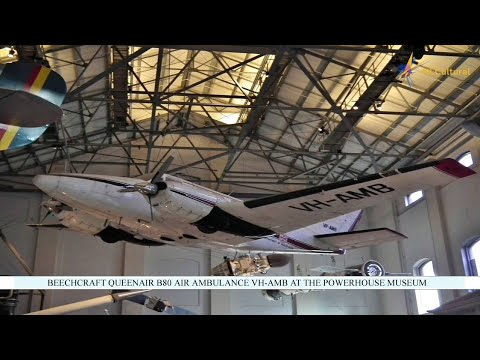


Image Galleries

Articles and other links
-
Wikipedia: Beechcraft Queen Air en.wikipedia.org
-
GlobalAir: Queen Air B-80 Specifications, Performance, and Range www.globalair.com
-
Aviation Week Archive: Queen Air Power and Performance Increased aviationweek.com
-
Aircraft Cost Calculator: Beechcraft Queen Air B80 Operating Costs www.aircraftcostcalculator.com
-
Beech Queen Air 80 Owner's Manual (Reproduction) www.pilotmall.com