Overview
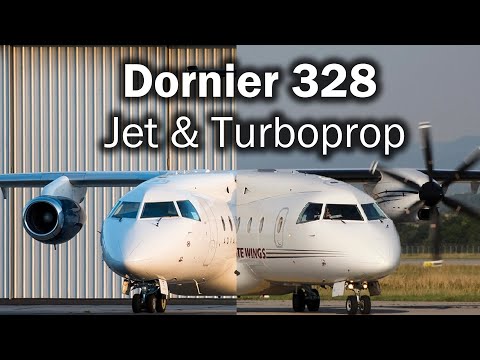
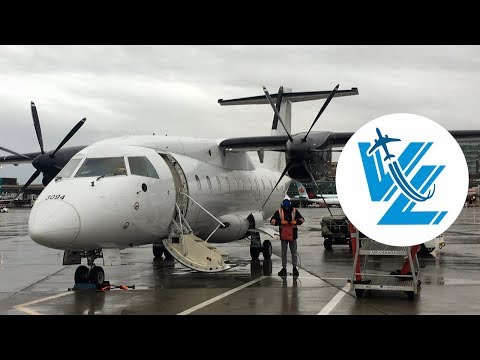
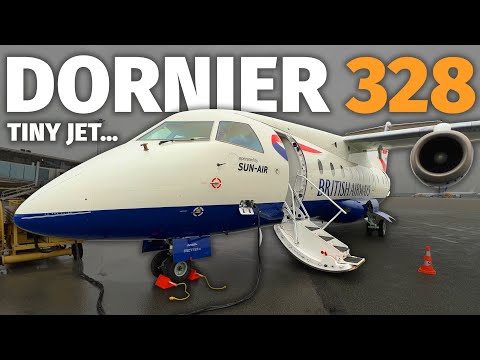
Fairchild Aircraft is the American airframer whose name, over eight decades, came to sit atop three distinct general-aviation lineages: the original Fairchild trainers and transports, the Swearingen cabin-class Merlin and Metro turboprops it absorbed in the 1970s, and the Dornier 328 regional turboprop and jet it built after acquiring Dornier’s regional-aircraft business in the 1990s. The company entered receivership in 2002; its type certificates and product support live on today through successor firms rather than an active Fairchild production line. Choose My Plane lists the Fairchild-lineage types under this single maker, each model carrying its historically correct brand.
Heritage
Sherman Fairchild founded the company in 1924, initially to build a camera-carrying aircraft for his aerial-survey business. Through the 1930s and 1940s Fairchild became a significant builder of trainers and transports, notably for the United States military in the Second World War. The modern general-aviation lineage arrived by acquisition. In 1971 Fairchild took over Ed Swearingen’s San Antonio operation, and the pressurized SA226 and SA227 designs became the Fairchild Swearingen Merlin (executive) and Metro (commuter) turboprops. In 1996 Fairchild Aerospace acquired a majority of Dornier’s regional-aircraft division to form Fairchild Dornier, adding the fast Dornier 328 turboprop and, from 1999, its PW306-powered 328JET. Overexpansion into the larger 728 program and a collapsing post-2001 regional market pushed Fairchild Dornier into insolvency in 2002.
Design Signature
Two engineering instincts run through the Fairchild-lineage fleet. The Swearingen Merlins and Metros are narrow, low-wing, Garrett TPE331-powered pressurized twins built for speed and efficiency: a small frontal area, a long fuselage, and the exacting operating discipline the TPE331 rewards. The Dornier 328 is the opposite instinct, a high-wing supercritical-wing airframe engineered for near-jet turboprop cruise and short-field access, later re-engined as one of the widest-cabin regional jets of its size. The Dornier Do 228, developed by Dornier before the Fairchild era, carries a third signature entirely: a square-section STOL utility twin still in production today.
For Owners
For the owner-operator, the Fairchild-lineage turboprops are among the least expensive routes into fast, pressurized, cabin-class performance, with acquisition costs well below a comparable King Air. The trade is support: with no active Fairchild production line, parts and expertise for the Merlin, Metro, and 328 come through successor and third-party channels. Product support for the Merlin and Metro passed to M7 Aerospace of San Antonio (the “M7” in this maker’s current name) and later to Elbit and Ontic; the Dornier 328 type certificate now rests with Germany’s Deutsche Aircraft, which is developing the modernised D328eco; and the Do 228 remains in low-rate production under General Atomics AeroTec Systems. A shop that knows the specific type is the single most valuable thing an owner can line up before buying.